Zhou Xin, von der Mark Klaus, Henry Stephen, Norton William, Adams Henry, de Crombrugghe Benoit
Department of Genetics, The University of Texas MD Anderson Cancer Center, Houston, Texas, United States of America.
Department of Experimental Medicine 1, Nikolaus-Fiebiger-Center of Molecular Medicine, University of Erlangen-Nuremberg, Erlangen, Germany.
PLoS Genet. 2014 Dec 4;10(12):e1004820. doi: 10.1371/journal.pgen.1004820. eCollection 2014 Dec.
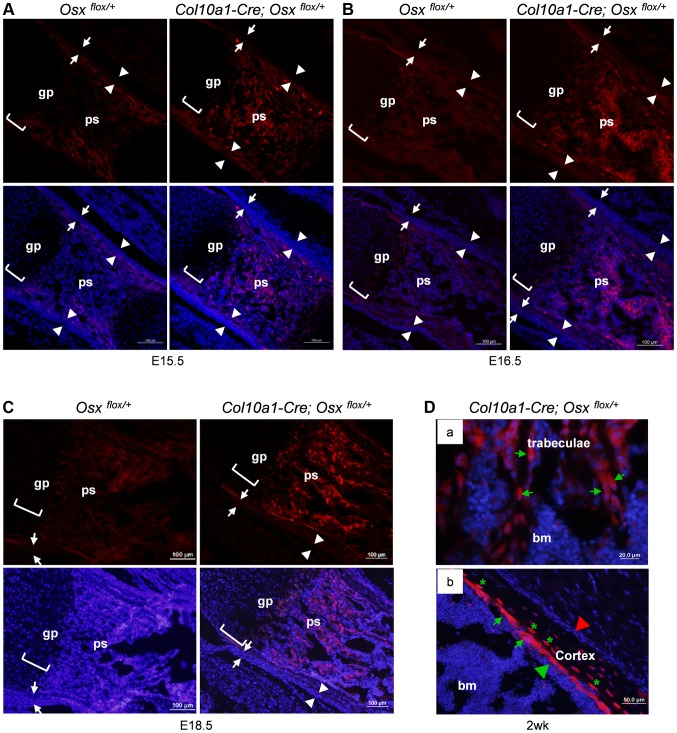
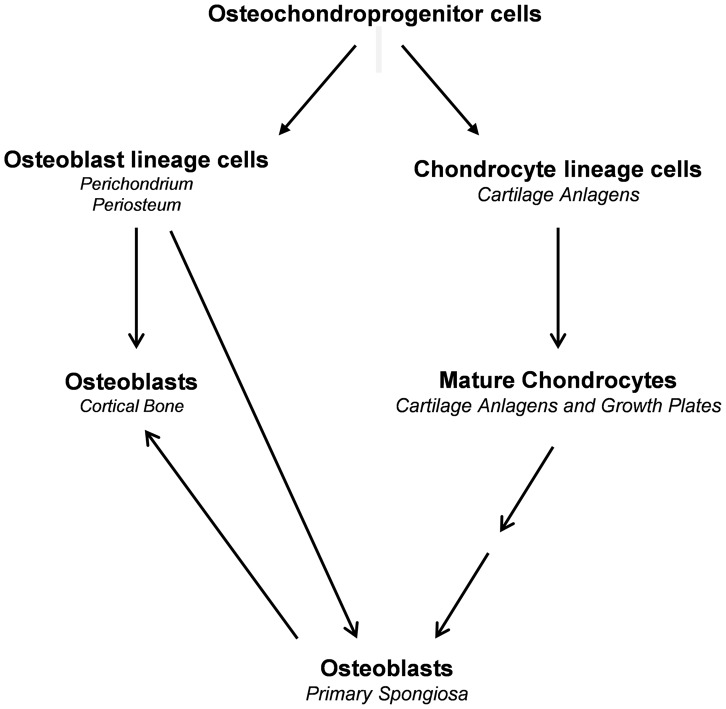
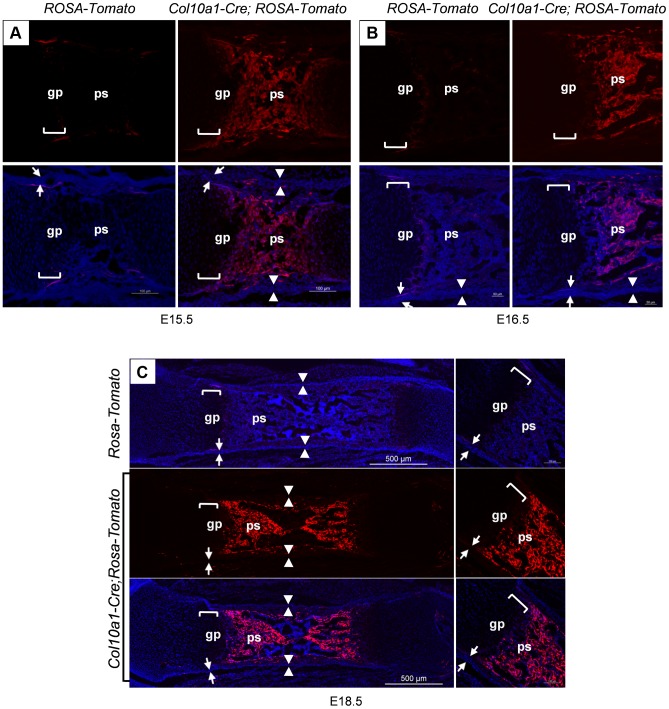
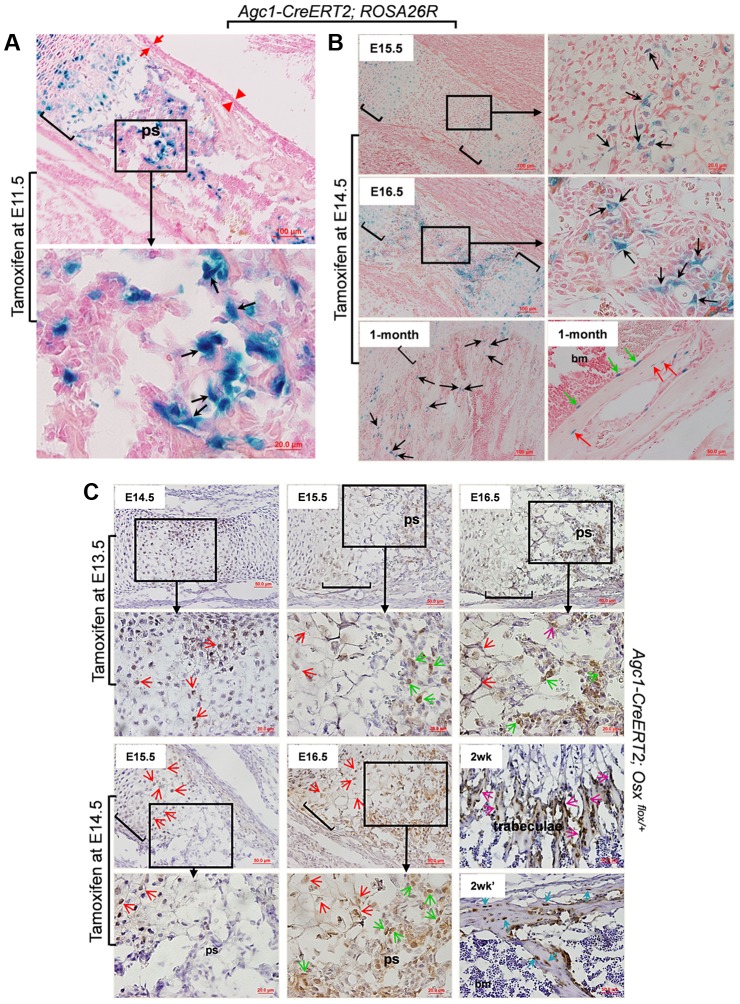
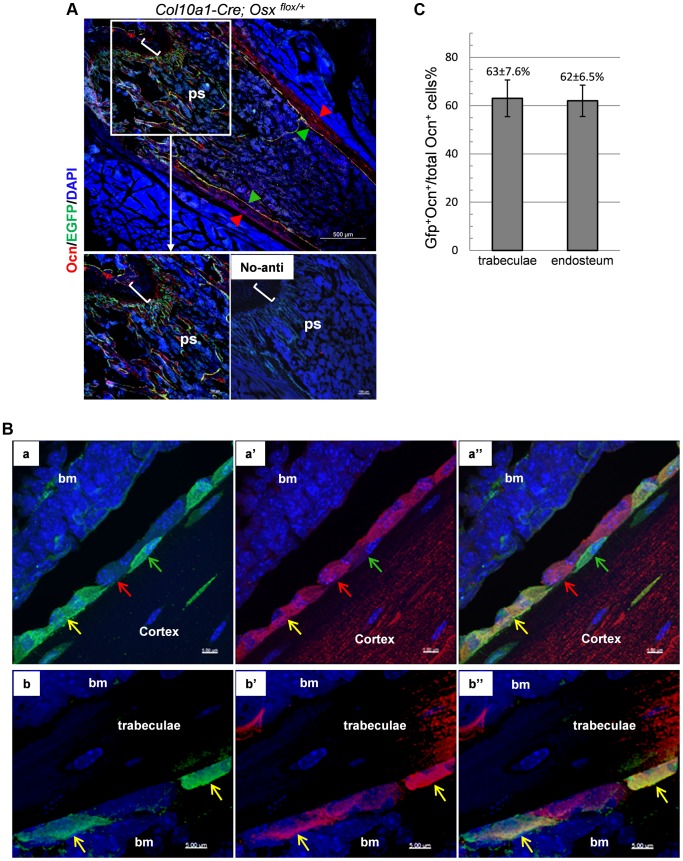
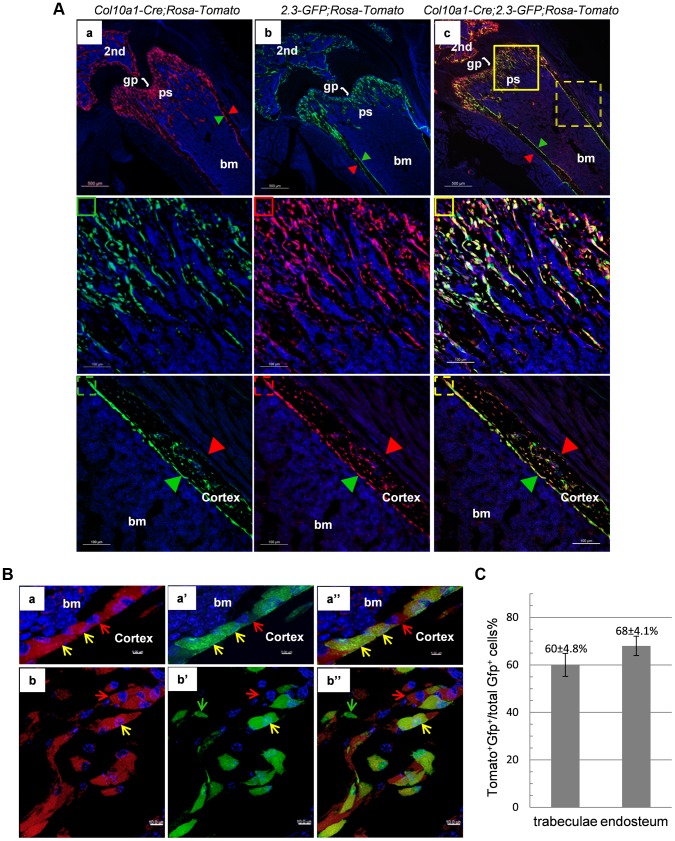
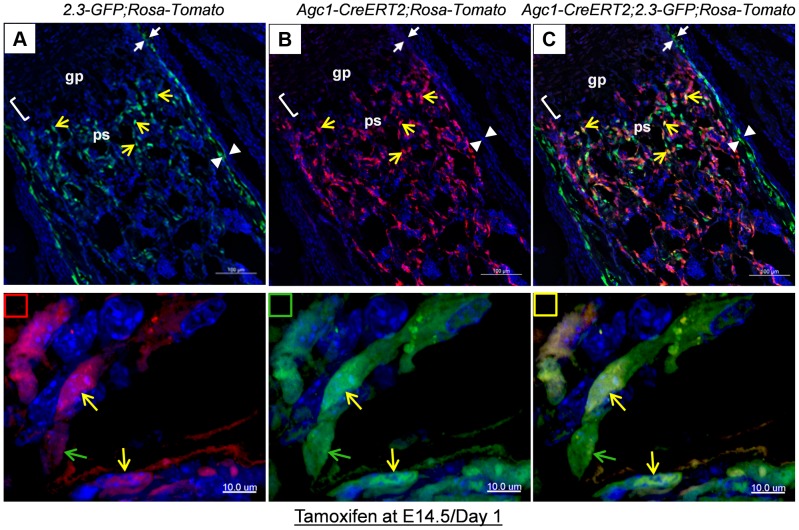
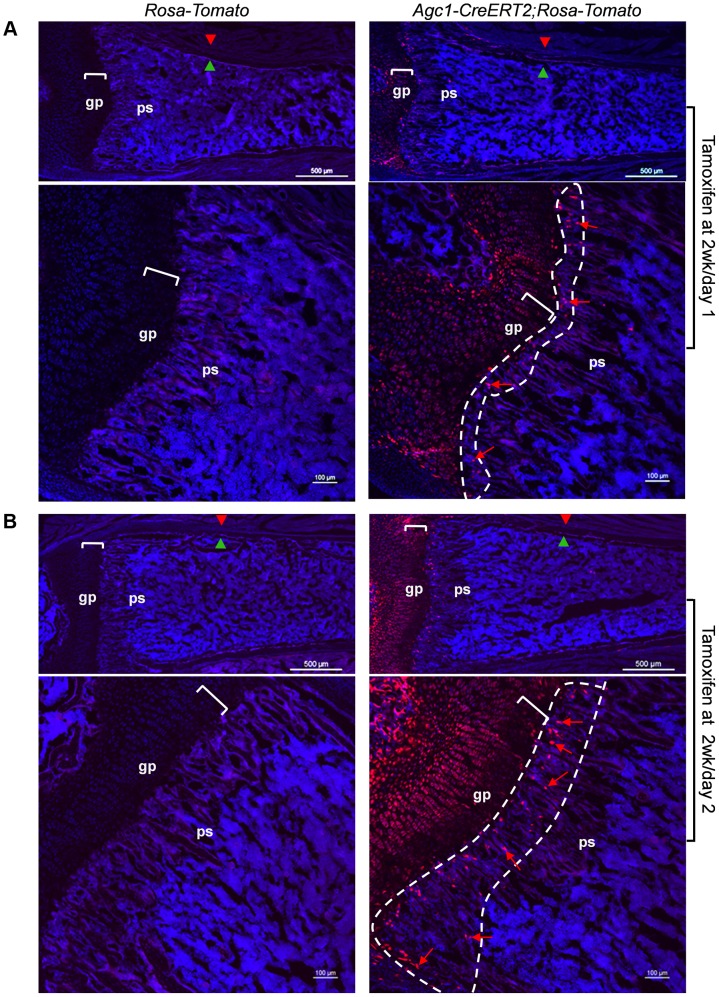
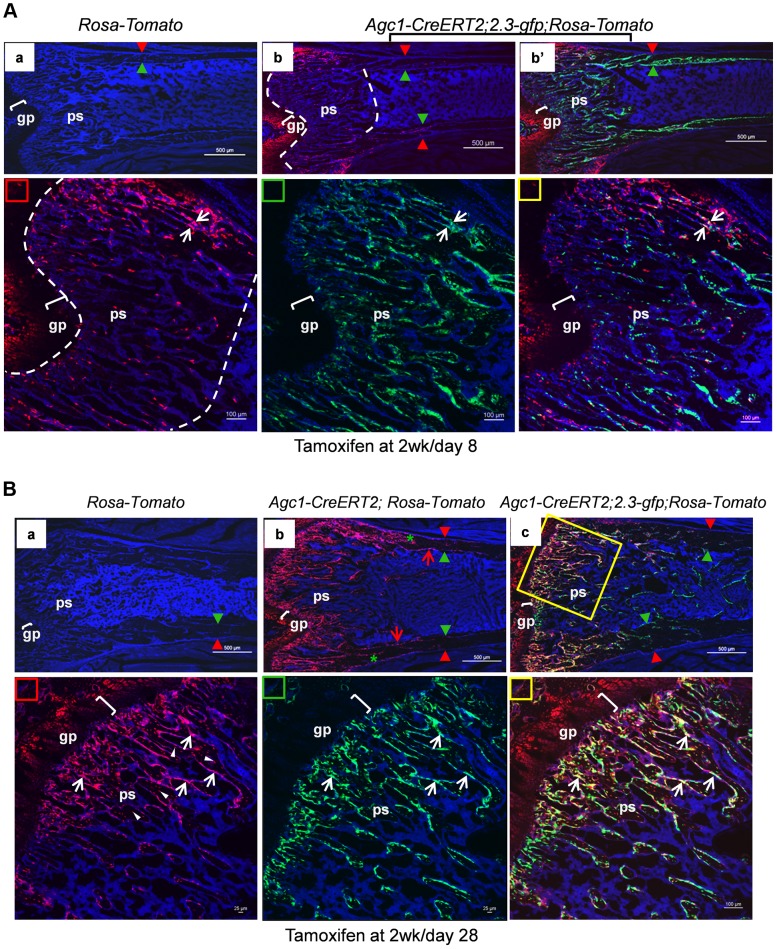
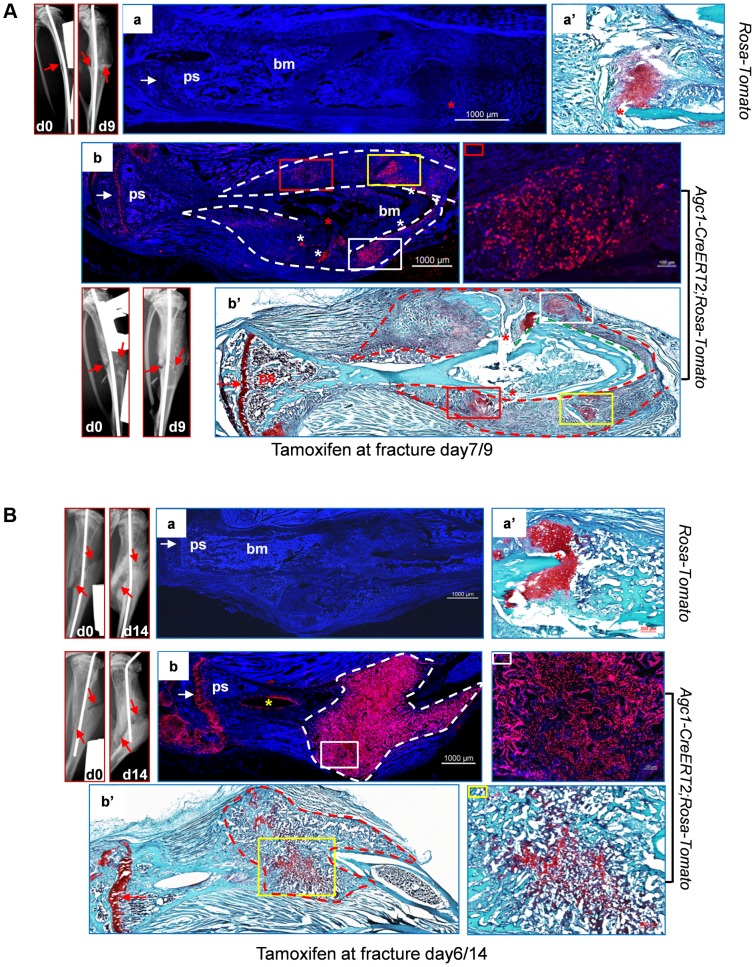
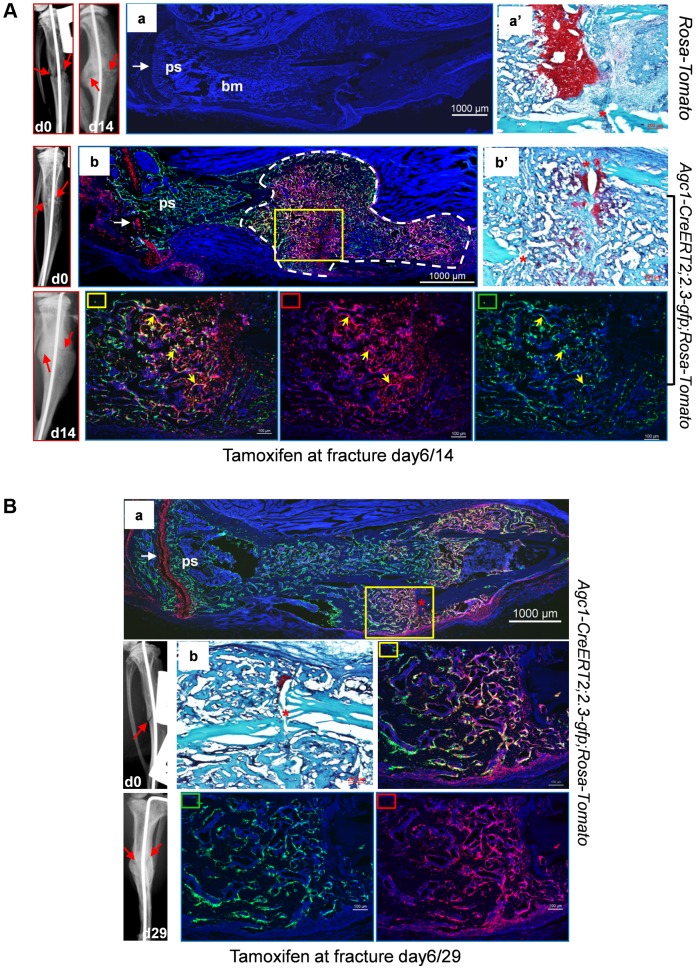
One of the crucial steps in endochondral bone formation is the replacement of a cartilage matrix produced by chondrocytes with bone trabeculae made by osteoblasts. However, the precise sources of osteoblasts responsible for trabecular bone formation have not been fully defined. To investigate whether cells derived from hypertrophic chondrocytes contribute to the osteoblast pool in trabecular bones, we genetically labeled either hypertrophic chondrocytes by Col10a1-Cre or chondrocytes by tamoxifen-induced Agc1-CreERT2 using EGFP, LacZ or Tomato expression. Both Cre drivers were specifically active in chondrocytic cells and not in perichondrium, in periosteum or in any of the osteoblast lineage cells. These in vivo experiments allowed us to follow the fate of cells labeled in Col10a1-Cre or Agc1-CreERT2 -expressing chondrocytes. After the labeling of chondrocytes, both during prenatal development and after birth, abundant labeled non-chondrocytic cells were present in the primary spongiosa. These cells were distributed throughout trabeculae surfaces and later were present in the endosteum, and embedded within the bone matrix. Co-expression studies using osteoblast markers indicated that a proportion of the non-chondrocytic cells derived from chondrocytes labeled by Col10a1-Cre or by Agc1-CreERT2 were functional osteoblasts. Hence, our results show that both chondrocytes prior to initial ossification and growth plate chondrocytes before or after birth have the capacity to undergo transdifferentiation to become osteoblasts. The osteoblasts derived from Col10a1-expressing hypertrophic chondrocytes represent about sixty percent of all mature osteoblasts in endochondral bones of one month old mice. A similar process of chondrocyte to osteoblast transdifferentiation was involved during bone fracture healing in adult mice. Thus, in addition to cells in the periosteum chondrocytes represent a major source of osteoblasts contributing to endochondral bone formation in vivo.
软骨内成骨的关键步骤之一是,由软骨细胞产生的软骨基质被成骨细胞形成的骨小梁所替代。然而,负责小梁骨形成的成骨细胞的确切来源尚未完全明确。为了研究源自肥大软骨细胞的细胞是否对小梁骨中的成骨细胞池有贡献,我们使用EGFP、LacZ或Tomato表达,通过Col10a1-Cre对肥大软骨细胞进行基因标记,或通过他莫昔芬诱导的Agc1-CreERT2对软骨细胞进行基因标记。两种Cre驱动蛋白在软骨细胞中特异性活跃,而在软骨膜、骨膜或任何成骨细胞谱系细胞中均不活跃。这些体内实验使我们能够追踪在Col10a1-Cre或Agc1-CreERT2表达的软骨细胞中标记的细胞的命运。在软骨细胞标记后,无论是在产前发育期间还是出生后,初级海绵骨中都存在大量标记的非软骨细胞。这些细胞分布在整个小梁表面,随后出现在骨内膜中,并嵌入骨基质内。使用成骨细胞标记物的共表达研究表明,源自Col10a1-Cre或Agc1-CreERT2标记的软骨细胞的一部分非软骨细胞是功能性成骨细胞。因此,我们的结果表明,初始骨化前的软骨细胞以及出生前后的生长板软骨细胞都有能力进行转分化成为成骨细胞。源自表达Col10a1的肥大软骨细胞的成骨细胞占一个月大小鼠软骨内骨中所有成熟成骨细胞的约60%。成年小鼠骨折愈合过程中也涉及类似的软骨细胞向成骨细胞转分化过程。因此,除骨膜中的细胞外,软骨细胞是体内软骨内成骨的成骨细胞的主要来源。