Bond Michelle R, Ghosh Salil K, Wang Peng, Hanover John A
National Institute of Diabetes and Digestive and Kidney Diseases, National Institutes of Health, Bethesda, Maryland, United States of America.
Center for Biologics Evaluation and Research, Food and Drug Administration, Silver Spring, Maryland, United States of America.
PLoS One. 2014 Dec 4;9(12):e113231. doi: 10.1371/journal.pone.0113231. eCollection 2014.
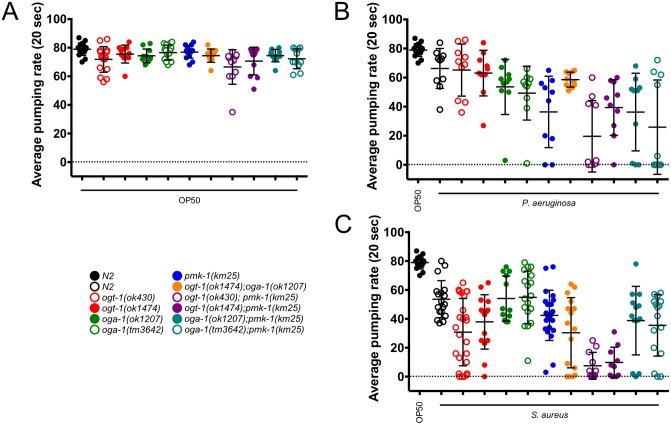
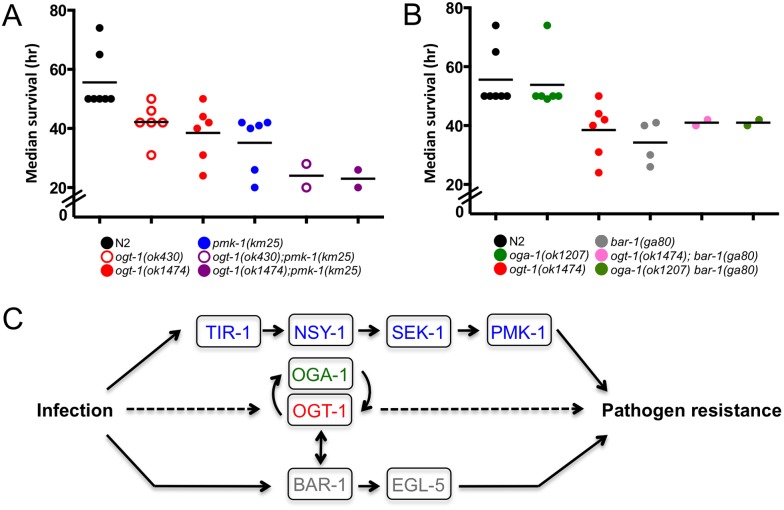
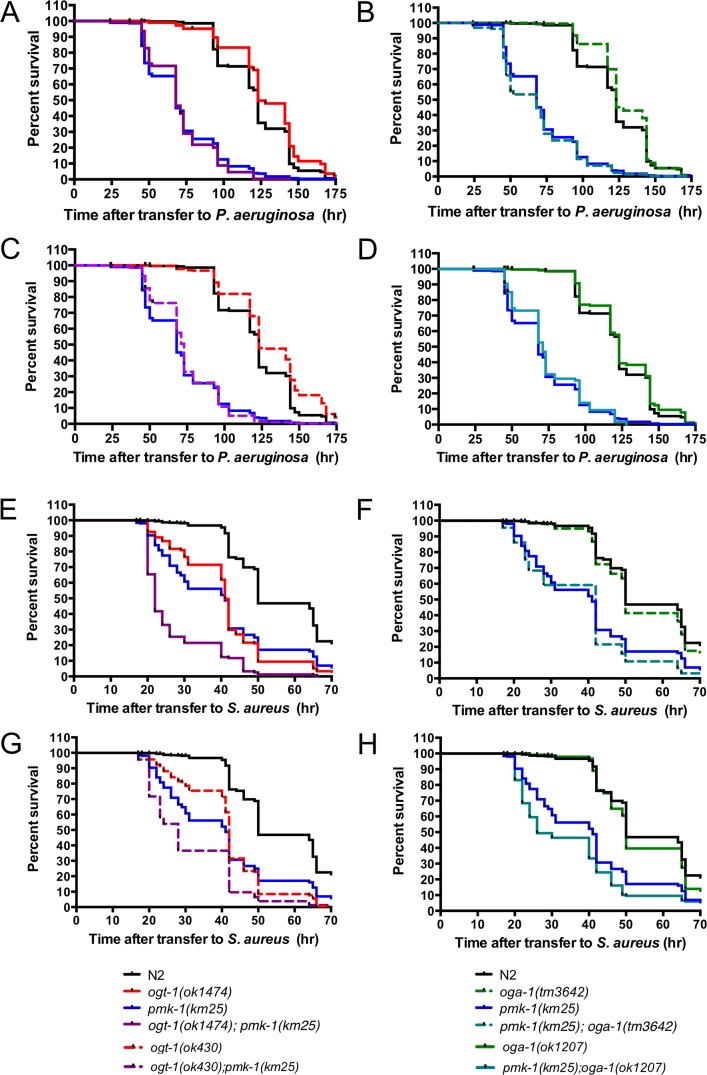
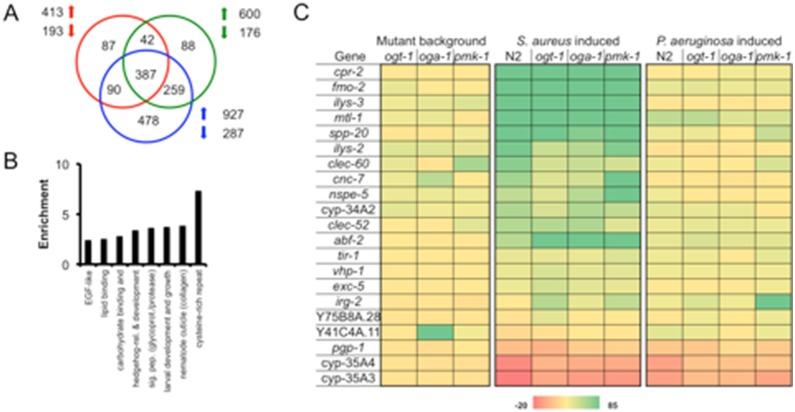
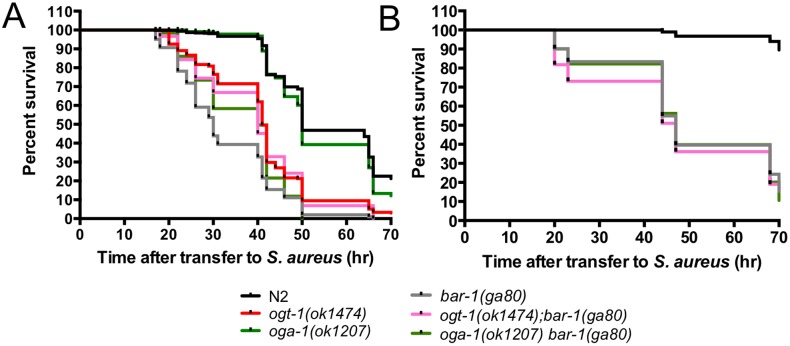
Discriminating pathogenic bacteria from bacteria used as a food source is key to Caenorhabidits elegans immunity. Using mutants defective in the enzymes of O-linked N-acetylglucosamine (O-GlcNAc) cycling, we examined the role of this nutrient-sensing pathway in the C. elegans innate immune response. Genetic analysis showed that deletion of O-GlcNAc transferase (ogt-1) yielded animals hypersensitive to the human pathogen S. aureus but not to P. aeruginosa. Genetic interaction studies revealed that nutrient-responsive OGT-1 acts through the conserved β-catenin (BAR-1) pathway and in concert with p38 MAPK (PMK-1) to modulate the immune response to S. aureus. Moreover, whole genome transcriptional profiling revealed that O-GlcNAc cycling mutants exhibited deregulation of unique stress- and immune-responsive genes. The participation of nutrient sensor OGT-1 in an immunity module evolutionarily conserved from C. elegans to humans reveals an unexplored nexus between nutrient availability and a pathogen-specific immune response.
区分致病细菌和用作食物来源的细菌是秀丽隐杆线虫免疫的关键。我们利用O-连接的N-乙酰葡糖胺(O-GlcNAc)循环酶有缺陷的突变体,研究了这种营养感知途径在秀丽隐杆线虫先天免疫反应中的作用。遗传分析表明,缺失O-GlcNAc转移酶(ogt-1)会使动物对人类病原体金黄色葡萄球菌高度敏感,但对铜绿假单胞菌不敏感。遗传相互作用研究表明,营养响应性OGT-1通过保守的β-连环蛋白(BAR-1)途径并与p38丝裂原活化蛋白激酶(PMK-1)协同作用来调节对金黄色葡萄球菌的免疫反应。此外,全基因组转录谱分析表明,O-GlcNAc循环突变体表现出独特的应激和免疫反应基因的失调。营养传感器OGT-1参与从秀丽隐杆线虫到人类进化保守的免疫模块,揭示了营养可用性与病原体特异性免疫反应之间未被探索的联系。