Li Yuanjing, Cai Ming, Cao Li, Qin Xing, Zheng Tiantian, Xu Xiaohua, Sandvick Taylor M, Hutchinson Kirk, Wold Loren E, Hu Keli, Sun Qinghua, Thomas D Paul, Ren Jun, He Guanglong
Department of Cardiology, The First Affiliated Hospital of Chongqing Medical University, Chongqing, People's Republic of China.
Endocrinology and Breast Surgery, The First Affiliated Hospital of Chongqing Medical University, Chongqing, People's Republic of China.
PLoS One. 2014 Dec 4;9(12):e114205. doi: 10.1371/journal.pone.0114205. eCollection 2014.
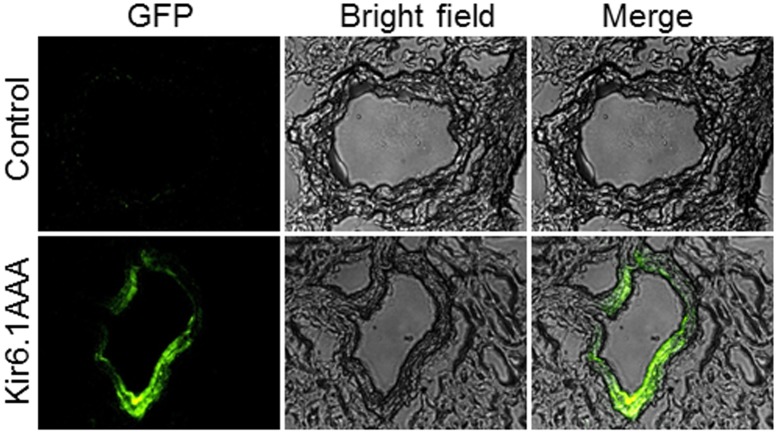
Exercise training offers cardioprotection against ischemia and reperfusion (I/R) injury. However, few essential signals have been identified to underscore the protection from injury. In the present study, we hypothesized that exercise-induced acceleration of myocardial tissue oxygenation recovery contributes to this protection. C57BL/6 mice (4 weeks old) were trained on treadmills for 45 min/day at a treading rate of 15 m/min for 8 weeks. At the end of 8-week exercise training, mice underwent 30-min left anterior descending coronary artery occlusion followed by 60-min or 24-h reperfusion. Electron paramagnetic resonance oximetry was performed to measure myocardial tissue oxygenation. Western immunoblotting analyses, gene transfection, and myography were examined. The oximetry study demonstrated that exercise markedly shortened myocardial tissue oxygenation recovery time following reperfusion. Exercise training up-regulated Kir6.1 protein expression (a subunit of ATP-sensitive K(+)channel on vascular smooth muscle cells, VSMC sarc-K(ATP)) and protected the heart from I/R injury. In vivo gene transfer of dominant negative Kir6.1AAA prolonged the recovery time and enlarged infarct size. In addition, transfection of Kir6.1AAA increased the stiffness and reduced the relaxation capacity in the vasculature. Together, our study demonstrated that exercise training up-regulated Kir6.1, improved tissue oxygenation recovery, and protected the heart against I/R injury. This exercise-induced cardioprotective mechanism may provide a potential therapeutic intervention targeting VSMC sarc-K(ATP) channels and reperfusion recovery.
运动训练可提供针对缺血再灌注(I/R)损伤的心脏保护作用。然而,很少有重要信号被确定来强调免受损伤的保护机制。在本研究中,我们假设运动诱导的心肌组织氧合恢复加速有助于这种保护作用。将4周龄的C57BL/6小鼠在跑步机上以15米/分钟的速度每天训练45分钟,持续8周。在8周运动训练结束时,小鼠接受30分钟的左冠状动脉前降支闭塞,随后进行60分钟或24小时的再灌注。采用电子顺磁共振血氧测定法测量心肌组织氧合。进行了蛋白质免疫印迹分析、基因转染和肌张力测定。血氧测定研究表明,运动显著缩短了再灌注后心肌组织氧合恢复时间。运动训练上调了Kir6.1蛋白表达(血管平滑肌细胞上ATP敏感性钾通道(VSMC sarc-K(ATP))的一个亚基),并保护心脏免受I/R损伤。显性负性Kir6.1AAA的体内基因转移延长了恢复时间并增大了梗死面积。此外,Kir6.1AAA的转染增加了血管的硬度并降低了舒张能力。总之,我们的研究表明运动训练上调了Kir6.1,改善了组织氧合恢复,并保护心脏免受I/R损伤。这种运动诱导的心脏保护机制可能为针对VSMC sarc-K(ATP)通道和再灌注恢复的潜在治疗干预提供依据。