Xu Lei, Zhou Xinying, Peppelenbosch Maikel P, Pan Qiuwei
Department of Gastroenterology and Hepatology, Erasmus MC-University Medical Center and Postgraduate School Molecular Medicine, Room Na-617, 'sGravendijkwal 230, 3015 CE, Rotterdam, The Netherlands.
Arch Virol. 2015 Feb;160(2):435-9. doi: 10.1007/s00705-014-2303-0. Epub 2014 Dec 5.
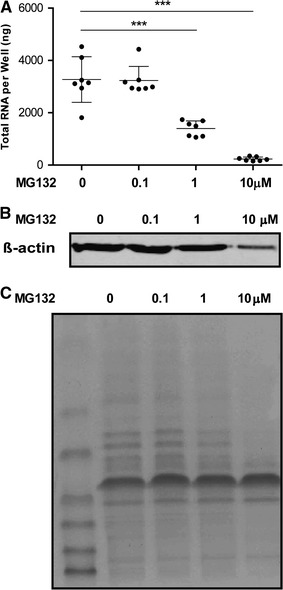
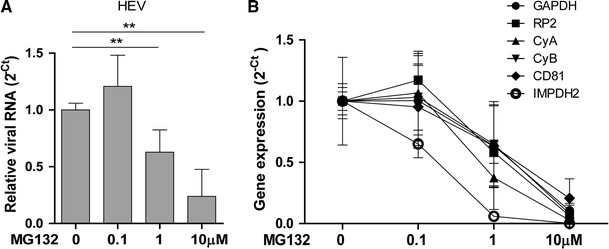
The ubiquitin proteasome system plays important role in virus infection. A previous study showed that the proteasome inhibitor MG132 could potentially affect hepatitis E virus (HEV) replication. In this study, we found that MG132 could inhibit HEV and hepatitis C virus (HCV) replication-related luciferase activity in subgenomic models. Furthermore, treatment with MG132 in a HEV infectious model resulted in a dramatic reduction in the intracellular level of HEV RNA. Surprisingly, MG132 concurrently inhibited the expression of a luciferase gene used as a control as well as a wide range of host genes. Consistently, the total cellular RNA and protein content was concurrently reduced by MG132 treatment, suggesting a nonspecific antiviral effect.
泛素蛋白酶体系统在病毒感染中发挥重要作用。先前的一项研究表明,蛋白酶体抑制剂MG132可能会影响戊型肝炎病毒(HEV)的复制。在本研究中,我们发现MG132可在亚基因组模型中抑制HEV和丙型肝炎病毒(HCV)复制相关的荧光素酶活性。此外,在HEV感染模型中用MG132处理导致HEV RNA的细胞内水平显著降低。令人惊讶的是,MG132同时抑制用作对照的荧光素酶基因以及多种宿主基因的表达。一致地,MG132处理同时降低了总细胞RNA和蛋白质含量,提示其具有非特异性抗病毒作用。