Dollé Laurent, Theise Neil D, Schmelzer Eva, Boulter Luke, Gires Olivier, van Grunsven Leo A
Department of Biomedical Sciences, Liver Cell Biology Lab, Vrije Universiteit Brussel, Brussels, Belgium;
Departments of Pathology and Medicine, Beth Israel Medical Center of Albert Einstein College of Medicine, New York, New York;
Am J Physiol Gastrointest Liver Physiol. 2015 Feb 15;308(4):G233-50. doi: 10.1152/ajpgi.00069.2014. Epub 2014 Dec 4.
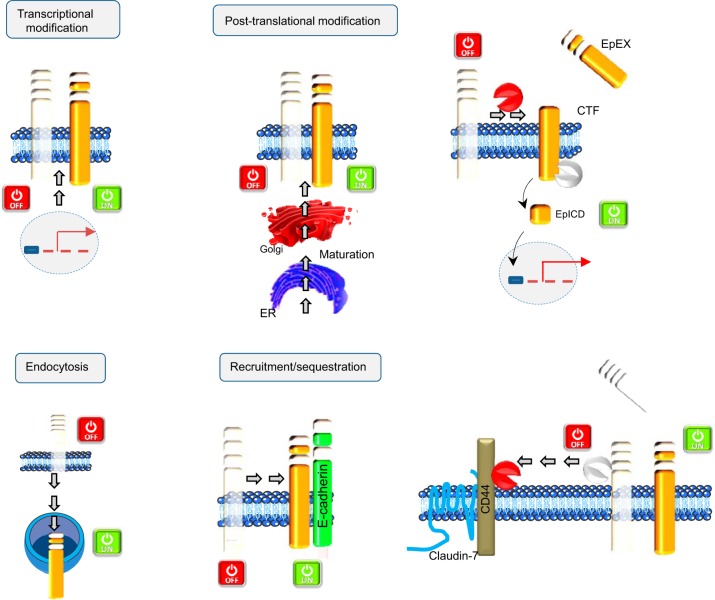
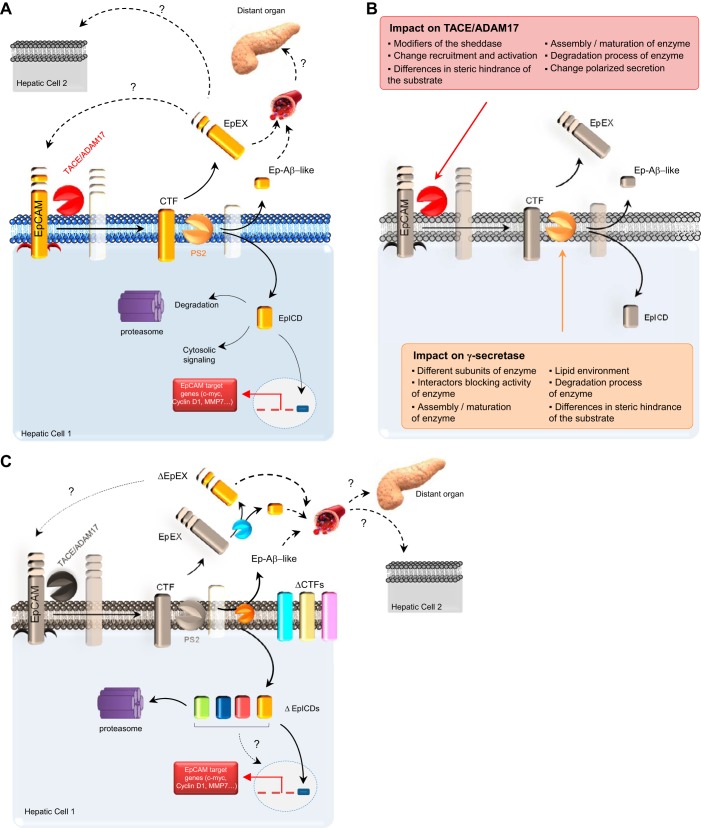
Epithelial cell adhesion molecule (EpCAM) is a transmembrane glycoprotein, which is frequently and highly expressed on carcinomas, tumor-initiating cells, selected tissue progenitors, and embryonic and adult stem cells. During liver development, EpCAM demonstrates a dynamic expression, since it can be detected in fetal liver, including cells of the parenchyma, whereas mature hepatocytes are devoid of EpCAM. Liver regeneration is associated with a population of EpCAM-positive cells within ductular reactions, which gradually lose the expression of EpCAM along with maturation into hepatocytes. EpCAM can be switched on and off through a wide panel of strategies to fine-tune EpCAM-dependent functional and differentiative traits. EpCAM-associated functions relate to cell-cell adhesion, proliferation, maintenance of a pluripotent state, regulation of differentiation, migration, and invasion. These functions can be conferred by the full-length protein and/or EpCAM-derived fragments, which are generated upon regulated intramembrane proteolysis. Control by EpCAM therefore not only depends on the presence of full-length EpCAM at cellular membranes but also on varying rates of the formation of EpCAM-derived fragments that have their own regulatory properties and on changes in the association of EpCAM with interaction partners. Thus spatiotemporal localization of EpCAM in immature liver progenitors, transit-amplifying cells, and mature liver cells will decisively impact the regulation of EpCAM functions and might be one of the triggers that contributes to the adaptive processes in stem/progenitor cell lineages. This review will summarize EpCAM-related molecular events and how they relate to hepatobiliary differentiation and regeneration.
上皮细胞粘附分子(EpCAM)是一种跨膜糖蛋白,在癌、肿瘤起始细胞、特定组织祖细胞以及胚胎和成人干细胞上频繁且高度表达。在肝脏发育过程中,EpCAM呈现动态表达,因为在胎儿肝脏中可以检测到它,包括实质细胞,而成熟肝细胞中则没有EpCAM。肝再生与小胆管反应中的一群EpCAM阳性细胞相关,这些细胞随着向肝细胞的成熟而逐渐失去EpCAM的表达。EpCAM可以通过多种策略开启和关闭,以微调依赖于EpCAM的功能和分化特性。与EpCAM相关的功能涉及细胞间粘附、增殖、多能状态的维持、分化调节、迁移和侵袭。这些功能可以由全长蛋白和/或经调节性膜内蛋白水解产生的EpCAM衍生片段赋予。因此,EpCAM的调控不仅取决于细胞膜上全长EpCAM的存在,还取决于具有自身调节特性的EpCAM衍生片段形成的不同速率以及EpCAM与相互作用伙伴结合的变化。因此,EpCAM在未成熟肝祖细胞、过渡扩增细胞和成熟肝细胞中的时空定位将决定性地影响EpCAM功能的调控,并且可能是促成干/祖细胞谱系适应性过程的触发因素之一。本综述将总结与EpCAM相关的分子事件以及它们与肝胆分化和再生的关系。