Childress Billy-Clyde, Montney Joshua D, Albro Elise A
a Sullivan University College of Pharmacy ; Louisville , KY USA.
Hum Vaccin Immunother. 2014;10(9):2729-32. doi: 10.4161/hv.29340. Epub 2014 Nov 19.
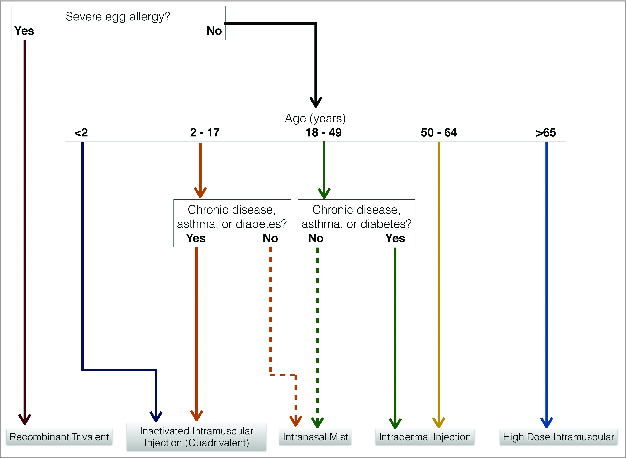
Years ago, intramuscular influenza vaccines were the only option for those who wanted to arm themselves against the flu. Today there are alternatives, including intradermal injections and intranasal sprays. In order to select the right influenza vaccine for their patients, pharmacists, and other healthcare professionals must have a basic understanding of the immune system. Influenza vaccines elicit different levels of immune response involving innate and adaptive immunity, which are critical to fighting infection. For the 2013-2014 flu season, there were 13 different formulations of influenza vaccines on the market with vast differences in indications, contraindications, and effectiveness. The CDC does not recommend one vaccine over another, but recommends that all patients be vaccinated against the flu. Preventing the spread of influenza is no simple task; however, the most recent evidence on influenza vaccines and sufficient knowledge of the immune system will allow pharmacists and other healthcare providers to better advocate for vaccines, determine which are most appropriate, and ensure their proper administration.
数年前,对于那些想要预防流感的人来说,肌肉注射流感疫苗是唯一的选择。如今有了其他选择,包括皮内注射和鼻内喷雾。为了为患者选择合适的流感疫苗,药剂师和其他医疗保健专业人员必须对免疫系统有基本的了解。流感疫苗会引发不同程度的免疫反应,涉及固有免疫和适应性免疫,这对于对抗感染至关重要。在2013 - 2014年流感季节,市场上有13种不同配方的流感疫苗,在适应症、禁忌症和有效性方面存在巨大差异。美国疾病控制与预防中心并不推荐某种疫苗优于另一种,而是建议所有患者接种流感疫苗。预防流感传播并非易事;然而,关于流感疫苗的最新证据以及对免疫系统的充分了解将使药剂师和其他医疗保健提供者能够更好地宣传疫苗,确定哪种疫苗最合适,并确保正确接种。