Mimouna Sanda, Bazin Marie, Mograbi Baharia, Darfeuille-Michaud Arlette, Brest Patrick, Hofman Paul, Vouret-Craviari Valérie
a Institute for Research on Cancer and Aging; IRCAN U1081 UMR CNRS/UNS 7284 ; Nice , France.
Autophagy. 2014;10(12):2333-45. doi: 10.4161/15548627.2014.984275.
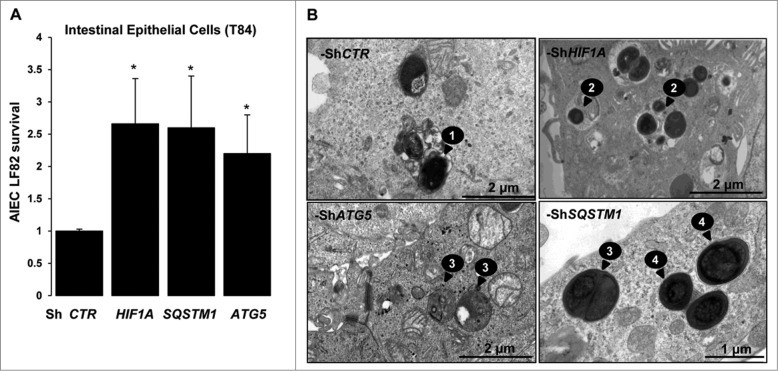
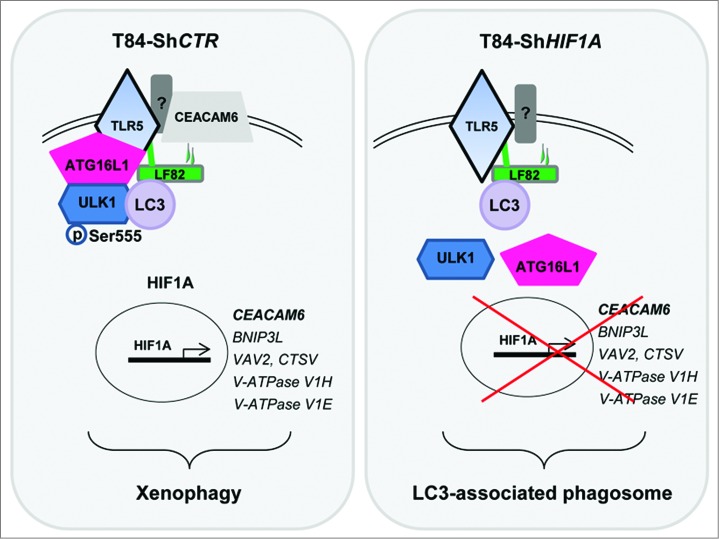
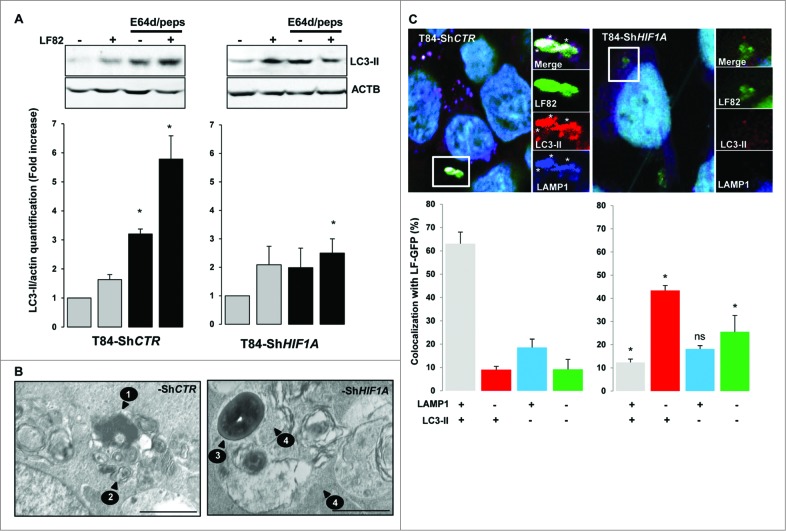
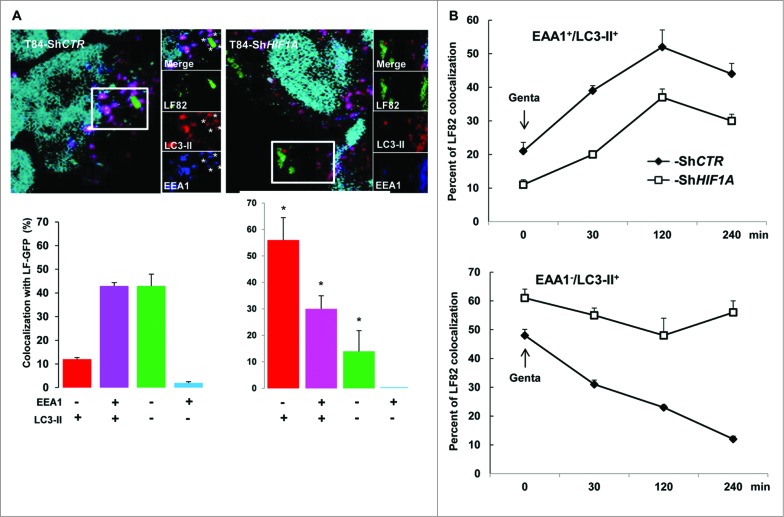
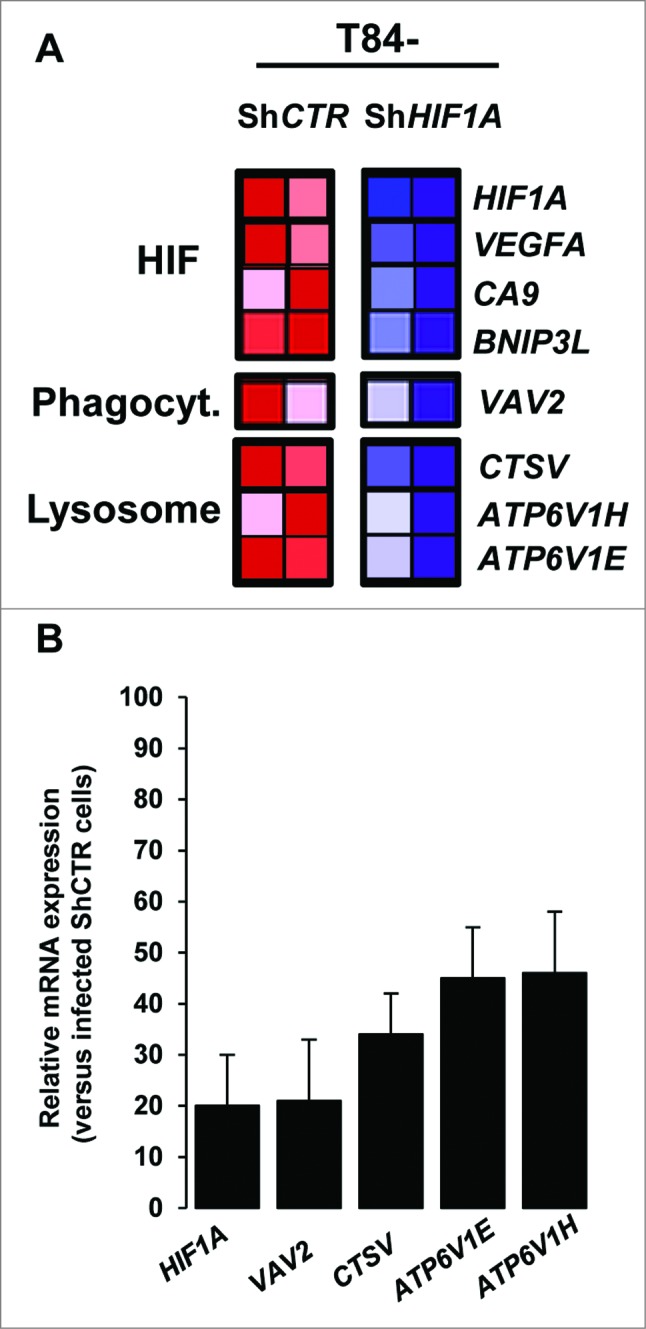
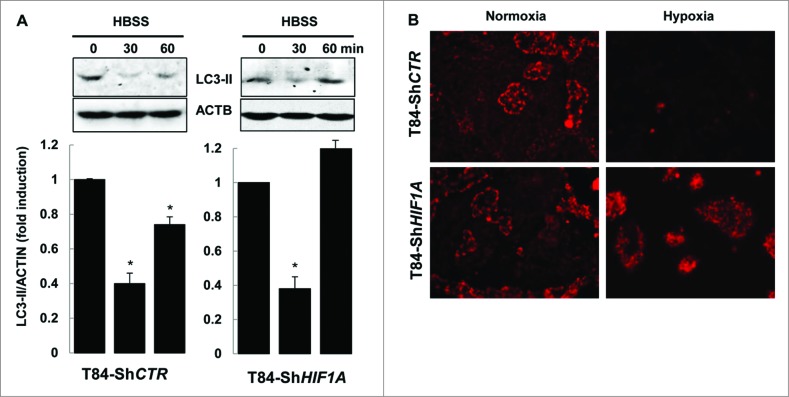
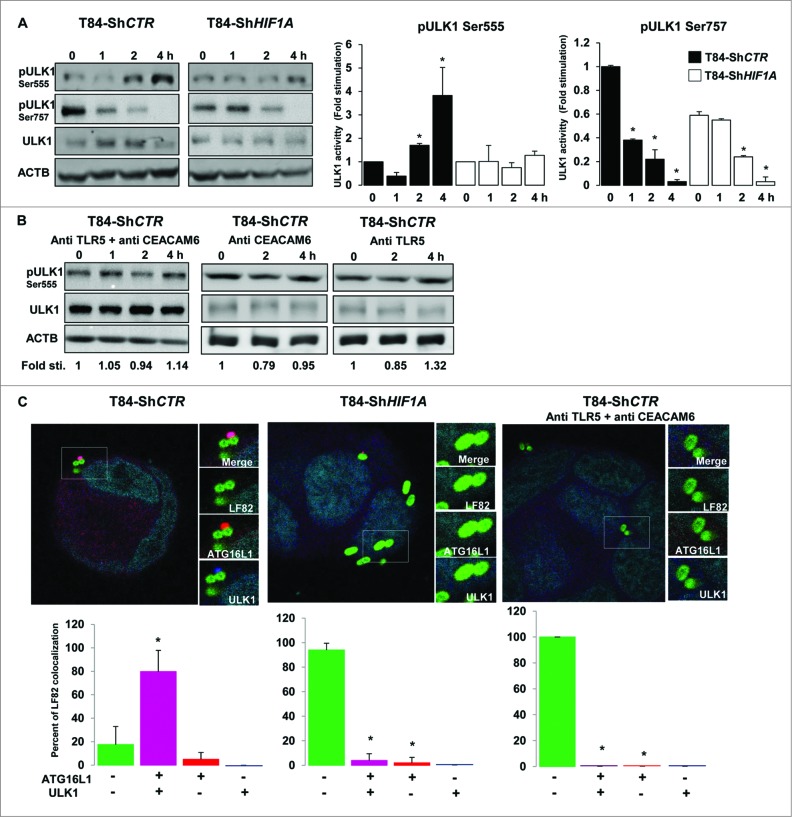
The hypoxia inducible transcription factor HIF1 activates autophagy, a general catabolic pathway involved in the maintenance of cellular homeostasis. Dysfunction in both autophagy and HIF1 has been implicated in an increasing number of human diseases, including inflammatory bowel disease (IBD), such as Crohn disease (CD). Adherent invasive E. coli (AIEC) colonize ileal mucosa of CD patients and strongly promote gastrointestinal inflammatory disorders by activation of HIF-dependent responses. Here, we aim to characterize the contribution of HIF1 in xenophagy, a specialized form of autophagy involved in the degradation of intracellular bacteria. Our results showed that endogenous HIF1A knockdown increased AIEC survival in intestinal epithelial cells. We demonstrate that the increase in survival rate correlates with a dramatic impairment of the autophagic flux at the autolysosomal maturation step. Furthermore, we show that AIEC remained within single-membrane LC3-II-positive vesicles and that they were unable to induce the phosphorylation of ULK1. These results suggested that, in the absence of HIF1A, AIEC were found within LC3-associated phagosomes. Using blocking antibodies against TLR5 and CEACAM6, the 2 well-known AIEC-bound receptors, we showed that downstream receptor signaling was necessary to mediate ULK1 phosphorylation. Finally, we provide evidence that HIF1 mediates CEACAM6 expression and that CEACAM6 is necessary to recruit ULK1 in a bacteria-containing signaling hub. Collectively, these results identify a new function for HIF1 in AIEC-dedicated xenophagy, and suggest that coactivation of autophagy and HIF1A expression may be a potential new therapy to resolve AIEC infection in CD patients.
缺氧诱导转录因子HIF1激活自噬,这是一种参与维持细胞稳态的普遍分解代谢途径。自噬和HIF1功能障碍与越来越多的人类疾病有关,包括炎症性肠病(IBD),如克罗恩病(CD)。粘附侵袭性大肠杆菌(AIEC)定殖于CD患者的回肠粘膜,并通过激活HIF依赖性反应强烈促进胃肠道炎症紊乱。在这里,我们旨在表征HIF1在异噬(一种参与细胞内细菌降解的自噬特殊形式)中的作用。我们的结果表明,内源性HIF1A敲低增加了AIEC在肠上皮细胞中的存活率。我们证明存活率的增加与自噬通量在自溶酶体成熟步骤的显著受损相关。此外,我们表明AIEC保留在单膜LC3-II阳性囊泡内,并且它们无法诱导ULK1的磷酸化。这些结果表明,在没有HIF1A的情况下,AIEC存在于LC3相关吞噬体中。使用针对TLR5和CEACAM6这两种众所周知的AIEC结合受体的阻断抗体,我们表明下游受体信号传导对于介导ULK1磷酸化是必要的。最后,我们提供证据表明HIF1介导CEACAM6的表达,并且CEACAM6是在含细菌信号枢纽中募集ULK所需的。总的来说,这些结果确定了HIF1在AIEC特异性异噬中的新功能,并表明自噬和HIF1A表达的共同激活可能是解决CD患者AIEC感染的潜在新疗法。