Gutiérrez-Estrada Alejandra, Ramírez-Santos Jesús, Gómez-Eichelmann María Del Carmen
Department of Molecular Biology and Biotechnology, Institute of Biomedical Research, National Autonomous University of México, P.O. Box 70228, México City, 04510 México.
Springerplus. 2014 Nov 6;3:656. doi: 10.1186/2193-1801-3-656. eCollection 2014.
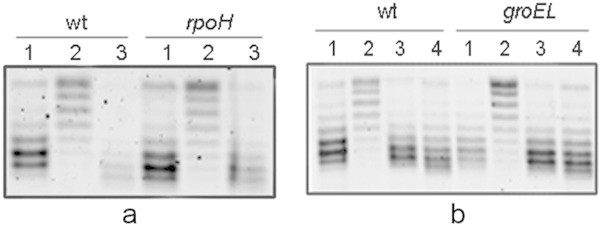
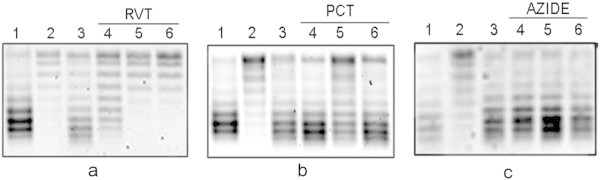
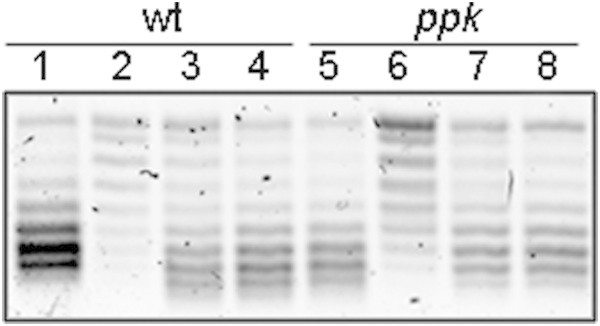
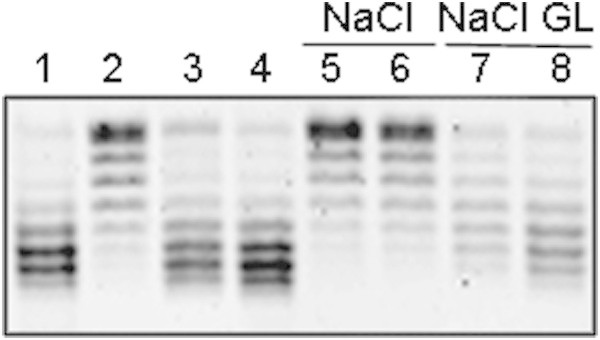
Escherichia coli stationary-phase (SP) cells contain relaxed DNA molecules and recover DNA supercoiling once nutrients become available. In these cells, the reactivation of DNA gyrase, which is a DNA topoisomerase type IIA enzyme, is responsible for the recovery of DNA supercoiling. The results presented in this study show that DNA gyrase reactivation does not require cellular chaperones or polyphosphate. Glucose addition to SP cells induced a slow recovery of DNA supercoiling, whereas resveratrol, which is an inhibitor of ATP synthase, inhibited the enzyme reactivation. These results suggest that DNA gyrase, which is an ATP-dependent enzyme, remains soluble in SP cells, and that its reactivation occurs primarily due to a rapid increase in the cellular ATP concentration.
大肠杆菌稳定期(SP)细胞含有松弛的DNA分子,一旦有营养物质可用,就会恢复DNA超螺旋结构。在这些细胞中,作为IIA型DNA拓扑异构酶的DNA促旋酶的重新激活负责DNA超螺旋结构的恢复。本研究给出的结果表明,DNA促旋酶的重新激活不需要细胞伴侣蛋白或多聚磷酸盐。向SP细胞中添加葡萄糖会导致DNA超螺旋结构缓慢恢复,而作为ATP合酶抑制剂的白藜芦醇则会抑制该酶的重新激活。这些结果表明,作为一种ATP依赖性酶的DNA促旋酶在SP细胞中保持可溶状态,其重新激活主要是由于细胞ATP浓度的快速增加。