Sundaram Neisha, Schaetti Christian, Purohit Vidula, Kudale Abhay, Weiss Mitchell G
Department of Epidemiology and Public Health, Swiss Tropical and Public Health Institute, Basel, Switzerland University of Basel, Basel, Switzerland.
Centre for Health Research and Development, The Maharashtra Association of Anthropological Sciences, Pune, Maharashtra, India.
BMJ Open. 2014 Dec 8;4(12):e006350. doi: 10.1136/bmjopen-2014-006350.
To identify and compare sociocultural features of pandemic influenza with reference to illness-related experience, meaning and behaviour in urban and rural areas of India.
Cross-sectional, mixed-methods, cultural epidemiological survey with vignette-based interviews. Semistructured explanatory model interviews were used to study community ideas of the 2009 influenza pandemic. In-depth interviews elaborated respondents' experience during the pandemic.
Urban and rural communities, Pune district, western India.
Survey of urban (n=215) and rural (n=221) residents aged between 18 and 65 years. In-depth interviews of respondents with a history of 2009 pandemic influenza (n=6).
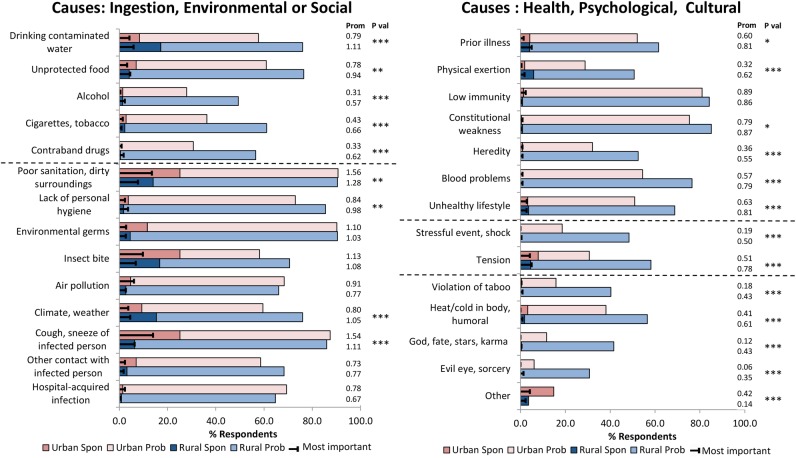
More urban (36.7%) than rural respondents (16.3%, p<0.001) identified the illness in the vignette as 'swine flu'. Over half (56.7%) believed the illness would be fatal without treatment, but with treatment 96% predicted full recovery. Worry ('tension') about the illness was reported as more troubling than somatic symptoms. The most common perceived causes-'exposure to a dirty environment' and 'cough or sneeze of an infected person'-were more prominent in the urban group. Among rural respondents, climatic conditions, drinking contaminated water, tension and cultural ideas on humoral imbalance from heat-producing or cold-producing foods were more prominent. The most widely reported home treatment was herbal remedies; more rural respondents suggested reliance on prayer, and symptom relief was more of a priority for urban respondents. Government health services were preferred in the urban communities, and rural residents relied more than urban residents on private facilities. The important preventive measures emphasised were cleanliness, wholesome lifestyle and vaccines, and more urban respondents reported the use of masks. In-depth interviews indicated treatment delays during the 2009 pandemic, especially among rural patients.
Although the term was well known, better recognition of pandemic influenza cases is needed, especially in rural areas. Improved awareness, access to treatment and timely referrals by private practitioners are also required to reduce treatment delays.
参照印度城乡地区与疾病相关的经历、意义和行为,识别并比较大流行性流感的社会文化特征。
采用基于 vignette 的访谈进行横断面、混合方法、文化流行病学调查。运用半结构化解释模型访谈来研究社区对 2009 年流感大流行的看法。深入访谈阐述了受访者在大流行期间的经历。
印度西部浦那地区的城乡社区。
对 18 至 65 岁的城市居民(n = 215)和农村居民(n = 221)进行调查。对有 2009 年大流行性流感病史的受访者(n = 6)进行深入访谈。
在 vignette 中,将疾病识别为“猪流感”的城市受访者(36.7%)多于农村受访者(16.3%,p < 0.001)。超过半数(56.7%)的人认为该疾病若不治疗将致命,但接受治疗后 96%的人预计能完全康复。报告称对疾病的担忧(“紧张”)比躯体症状更令人困扰。最常见的感知病因——“接触肮脏环境”和“感染者咳嗽或打喷嚏”——在城市组中更为突出。在农村受访者中,气候条件、饮用受污染的水、紧张以及关于热性或寒性食物导致体液失衡的文化观念更为突出。最常报告的家庭治疗方法是草药疗法;更多农村受访者建议依靠祈祷,而缓解症状对城市受访者来说更为重要。城市社区更倾向于政府卫生服务,农村居民比城市居民更依赖私人机构。强调的重要预防措施是清洁、健康的生活方式和疫苗,更多城市受访者报告使用口罩。深入访谈表明,在 2009 年大流行期间存在治疗延误情况,尤其是在农村患者中。
尽管这个术语广为人知,但仍需要更好地识别大流行性流感病例,尤其是在农村地区。还需要提高认识、改善治疗可及性以及私人执业者及时转诊,以减少治疗延误。