The Maharashtra Association of Anthropological Sciences, Centre for Health Research and Development, Pune, India.
Savitribai Phule Pune University, Pune, India.
Int J Health Policy Manag. 2018 Feb 1;7(2):154-166. doi: 10.15171/ijhpm.2017.54.
Prior experience and the persisting threat of influenza pandemic indicate the need for global and local preparedness and public health response capacity. The pandemic of 2009 highlighted the importance of such planning and the value of prior efforts at all levels. Our review of the public health response to this pandemic in Pune, India, considers the challenges of integrating global and national strategies in local programmes and lessons learned for influenza pandemic preparedness.
Global, national and local pandemic preparedness and response plans have been reviewed. In-depth interviews were undertaken with district health policy-makers and administrators who coordinated the pandemic response in Pune.
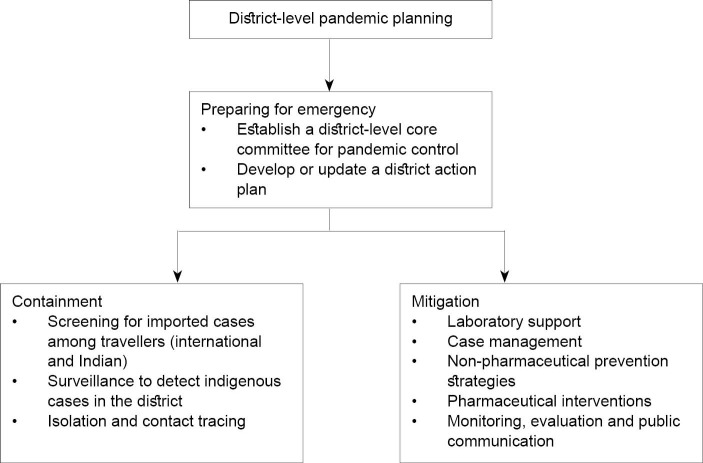
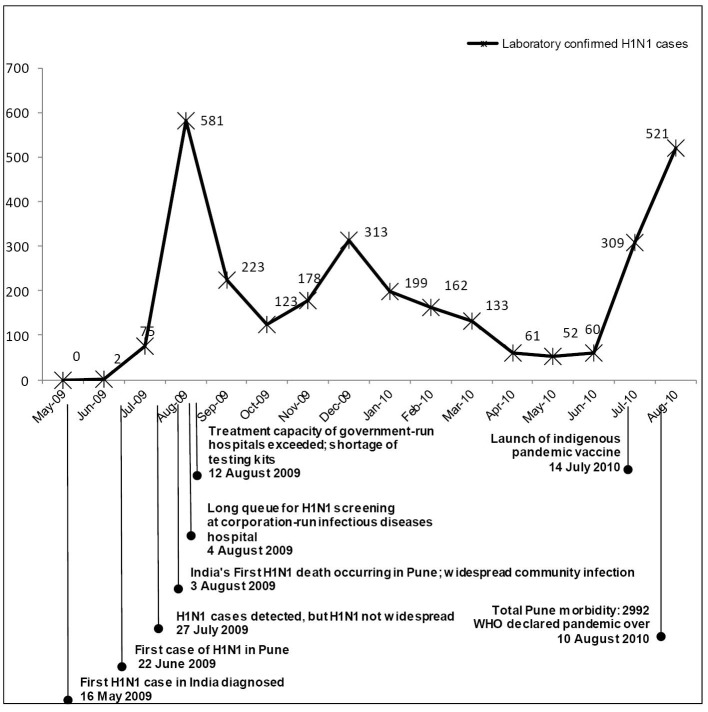
In the absence of a comprehensive district-level pandemic preparedness plan, the response had to be improvised. Media reporting of the influenza pandemic and inaccurate information that was reported at times contributed to anxiety in the general public and to widespread fear and panic. Additional challenges included inadequate public health services and reluctance of private healthcare providers to treat people with flu-like symptoms. Policy-makers developed a response strategy that they referred to as the Pune plan, which relied on powers sanctioned by the Epidemic Act of 1897 and resources made available by the union health ministry, state health department and a government diagnostic laboratory in Pune.
The World Health Organization's (WHO's) global strategy for pandemic control focuses on national planning, but state-level and local experience in a large nation like India shows how national planning may be adapted and implemented. The priority of local experience and requirements does not negate the need for higher level planning. It does, however, indicate the importance of local adaptability as an essential feature of the planning process. Experience and the implicit Pune plan that emerged are relevant for pandemic preparedness and other public health emergencies.
既往经验和流感大流行的持续威胁表明,全球和地方都需要做好准备并具备公共卫生应对能力。2009 年的大流行凸显了这种规划的重要性,以及各级前期工作的价值。我们对印度浦那市公共卫生应对此次大流行的情况进行了审查,探讨了在地方规划中整合全球和国家战略的挑战,以及为流感大流行防范工作汲取的经验教训。
我们对全球、国家和地方的大流行防范和应对计划进行了审查。对协调浦那市大流行应对工作的地区卫生政策制定者和管理者进行了深入访谈。
由于缺乏全面的地区一级大流行防范计划,应对工作不得不临时进行。流感大流行的媒体报道和有时不准确的信息报道导致公众普遍感到焦虑,并引发了广泛的恐惧和恐慌。其他挑战包括公共卫生服务不足以及私立医疗服务提供者不愿治疗有流感样症状的人。政策制定者制定了一项应对战略,他们称之为“浦那计划”,该计划依赖于 1897 年《传染病法》授权的权力以及联邦卫生部、邦卫生部门和浦那一家政府诊断实验室提供的资源。
世界卫生组织(世卫组织)的大流行控制全球战略侧重于国家规划,但印度这样一个大国的州级和地方经验表明,国家规划可能会如何进行调整和实施。地方经验和需求的重点并没有否定更高一级规划的必要性。然而,它确实表明了地方适应性作为规划过程的一个基本特征的重要性。经验和由此产生的隐含的“浦那计划”与大流行防范和其他公共卫生突发事件有关。