Department of Biological Sciences, Columbia University, New York, New York 10027, USA.
Department of Biological Sciences, Columbia University, New York, New York 10027, USA
RNA. 2015 Feb;21(2):213-29. doi: 10.1261/rna.048009.114. Epub 2014 Dec 9.
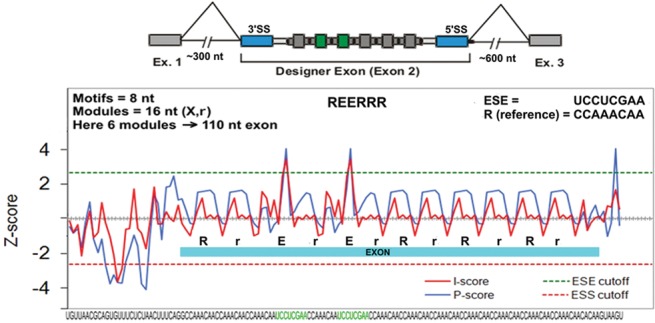
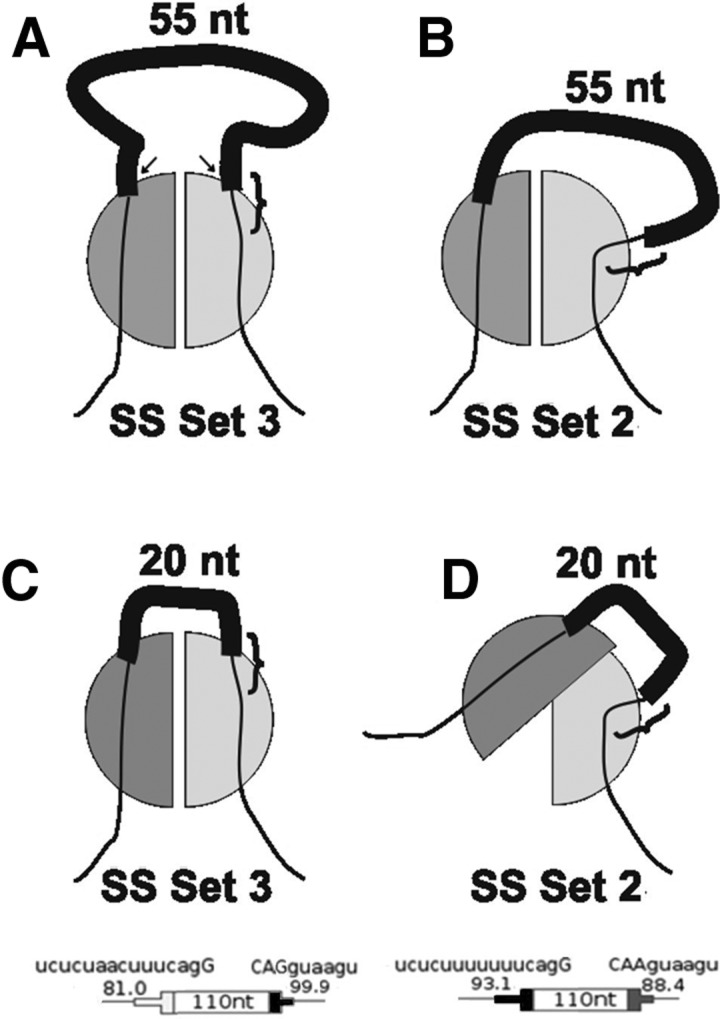
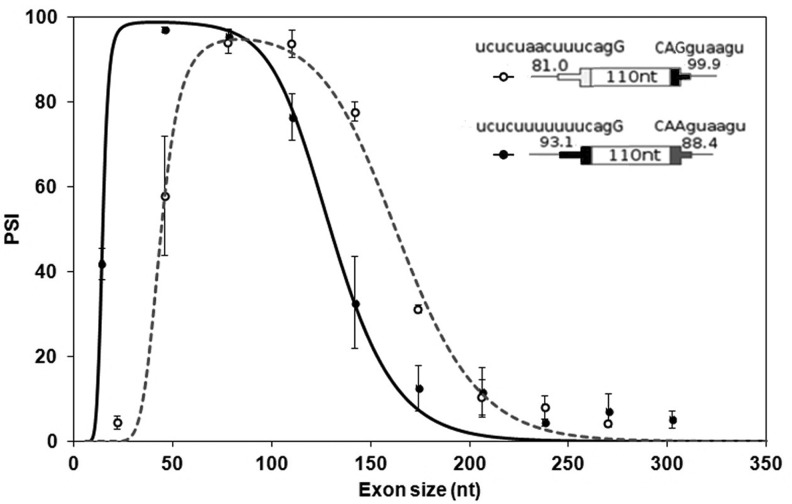
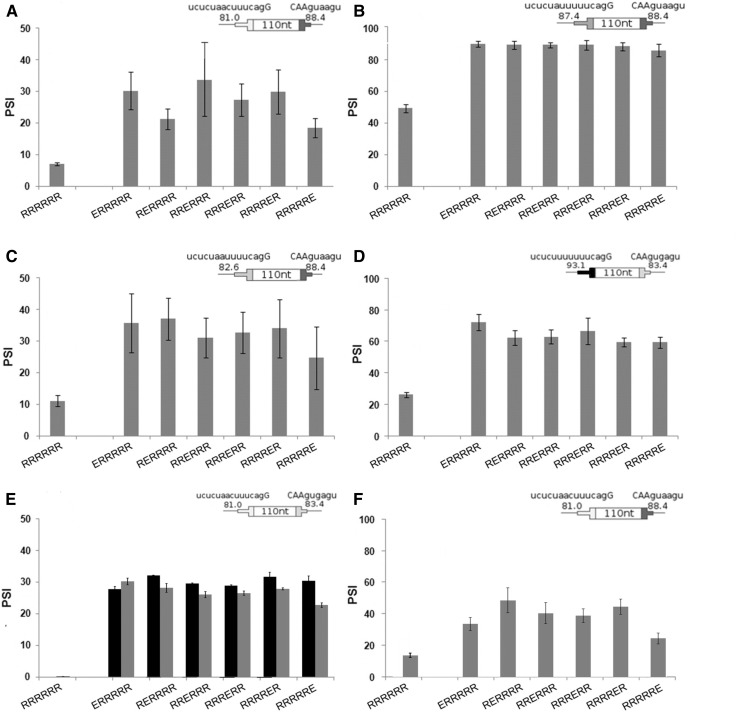
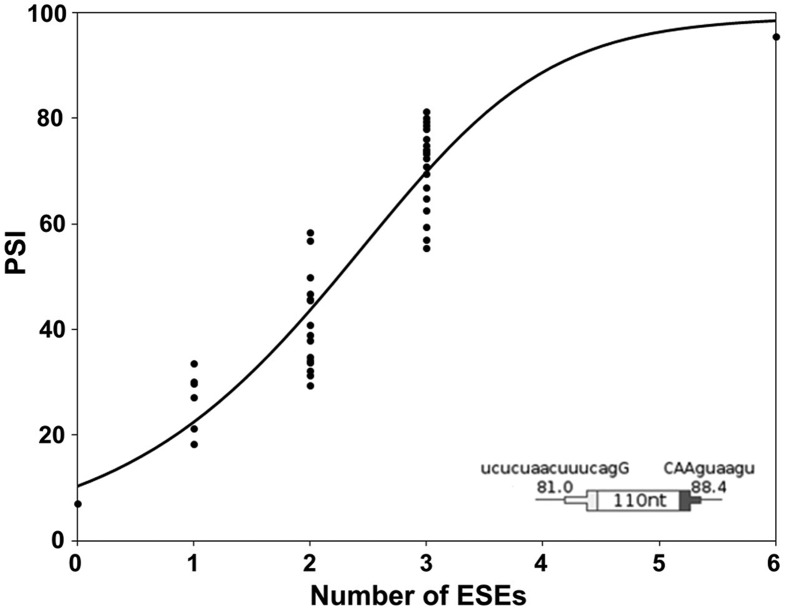
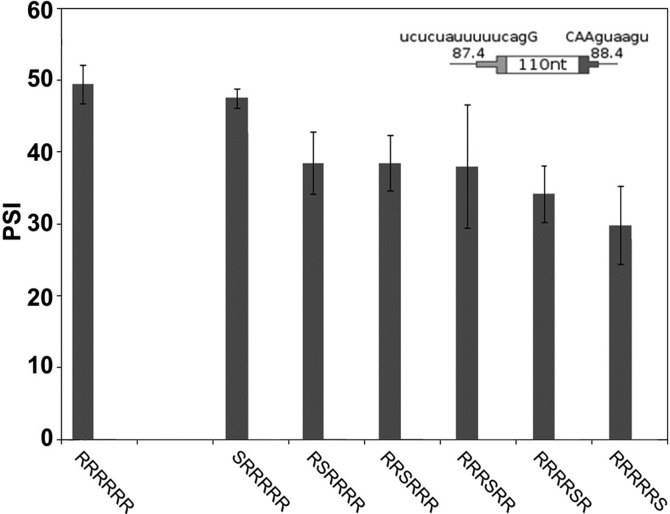
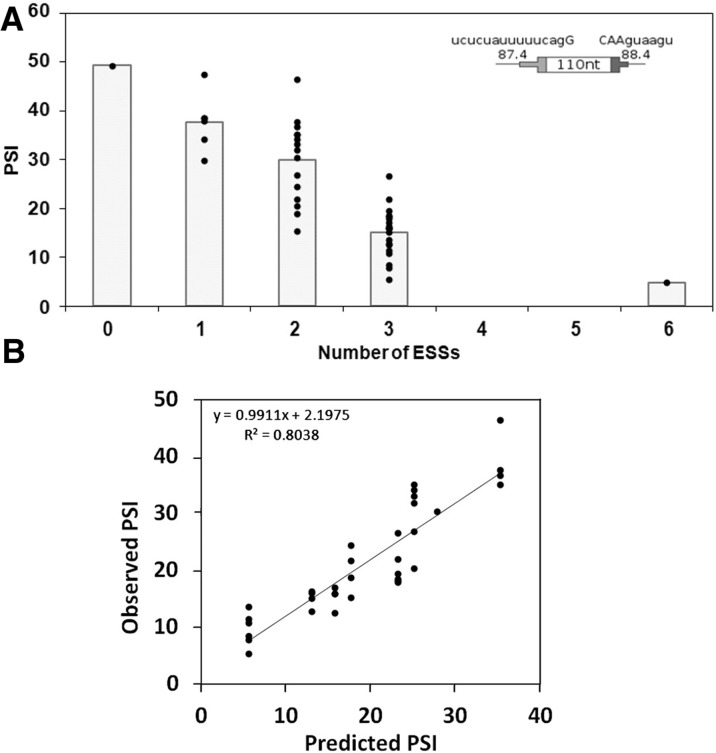
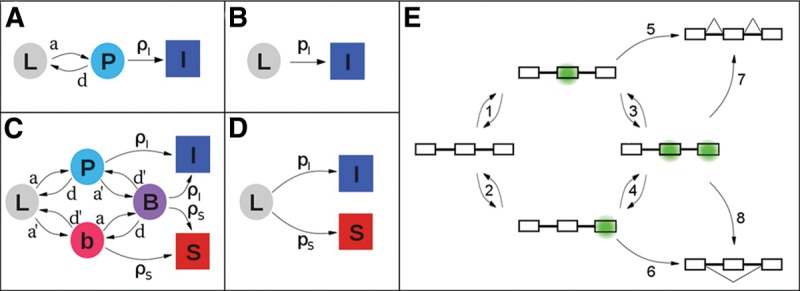
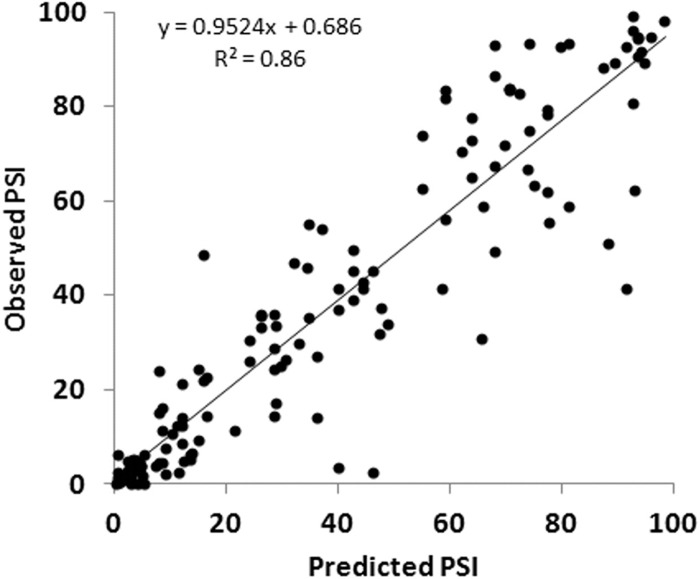
Pre-mRNA molecules in humans contain mostly short internal exons flanked by longer introns. To explain the removal of such introns, exon recognition instead of intron recognition has been proposed. We studied this exon definition using designer exons (DEs) made up of three prototype modules of our own design: an exonic splicing enhancer (ESE), an exonic splicing silencer (ESS), and a Reference Sequence (R) predicted to be neither. Each DE was examined as the central exon in a three-exon minigene. DEs made of R modules showed a sharp size dependence, with exons shorter than 14 nt and longer than 174 nt splicing poorly. Changing the strengths of the splice sites improved longer exon splicing but worsened shorter exon splicing, effectively displacing the curve to the right. For the ESE we found, unexpectedly, that its enhancement efficiency was independent of its position within the exon. For the ESS we found a step-wise positional increase in its effects; it was most effective at the 3' end of the exon. To apply these results quantitatively, we developed a biophysical model for exon definition of internal exons undergoing cotranscriptional splicing. This model features commitment to inclusion before the downstream exon is synthesized and competition between skipping and inclusion fates afterward. Collision of both exon ends to form an exon definition complex was incorporated to account for the effect of size; ESE/ESS effects were modeled on the basis of stabilization/destabilization. This model accurately predicted the outcome of independent experiments on more complex DEs that combined ESEs and ESSs.
人类的前体 mRNA 分子主要包含短的内部外显子,两侧是较长的内含子。为了解释这种内含子的去除,提出了外显子识别而不是内含子识别。我们使用由我们自己设计的三个原型模块组成的设计外显子 (DE) 研究了这种外显子定义:一个外显子剪接增强子 (ESE)、一个外显子剪接沉默子 (ESS) 和一个预测既不是 ESE 也不是 ESS 的参考序列 (R)。每个 DE 都作为三外显子迷你基因的中心外显子进行了检查。由 R 模块组成的 DE 表现出明显的大小依赖性,14 个核苷酸以下和 174 个核苷酸以上的外显子剪接效果较差。改变剪接位点的强度可以改善较长外显子的剪接,但会恶化较短外显子的剪接,从而有效地将曲线向右移动。对于我们发现的 ESE,出乎意料的是,其增强效率与其在exon 内的位置无关。对于 ESS,我们发现其效果呈逐步递增的位置依赖性;它在外显子的 3' 端最为有效。为了定量应用这些结果,我们开发了一种用于共转录剪接的内含子外显子定义的生物物理模型。该模型的特点是在下游外显子合成之前就决定包含,并且在之后竞争跳过和包含命运。将两个exon 末端碰撞形成exon 定义复合物的过程被纳入其中,以解释大小的影响;ESE/ESS 效应是基于稳定/失稳来建模的。该模型准确预测了结合了 ESE 和 ESS 的更复杂的 DE 上独立实验的结果。