Bordonaro Michael, Drago Eric, Atamna Wafa, Lazarova Darina L
Department of Basic Sciences, The Commonwealth Medical College, 525 Pine Street, Scranton, PA 18509, United States of America.
California Northstate University, College of Medicine, 9700 West Taron Drive, Elk Grove, CA 95757, United States of America.
PLoS One. 2014 Dec 11;9(12):e115068. doi: 10.1371/journal.pone.0115068. eCollection 2014.
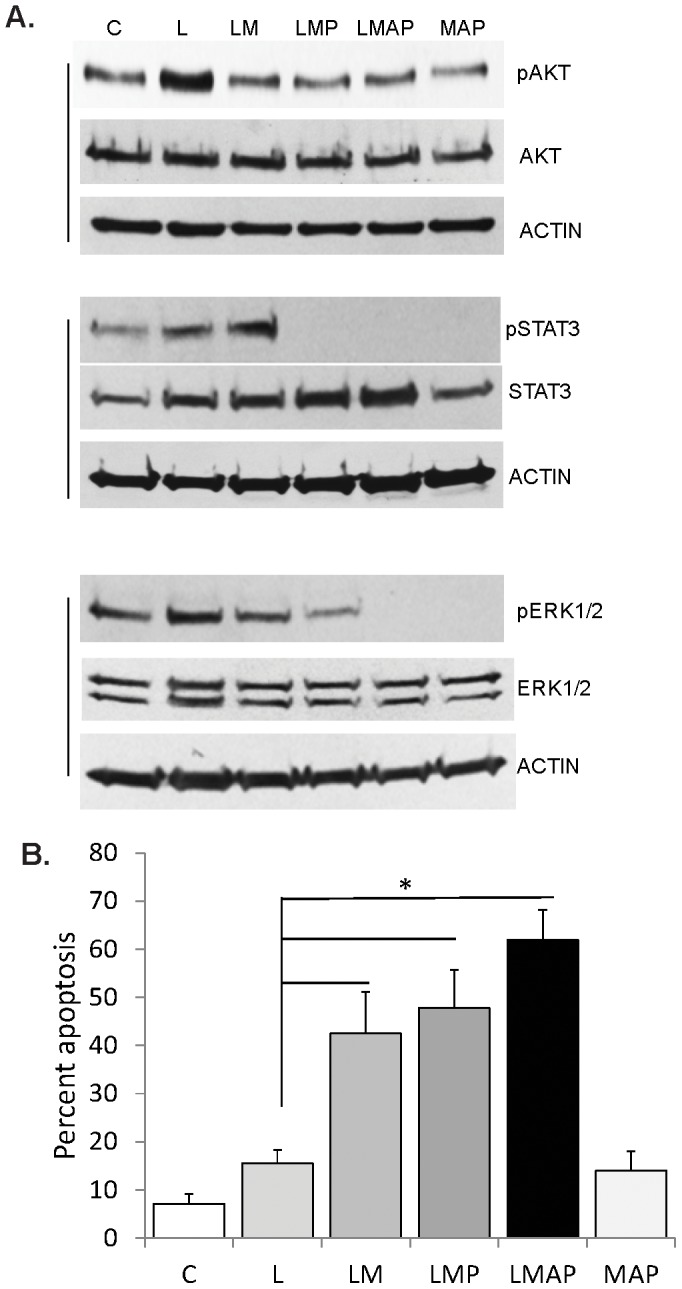
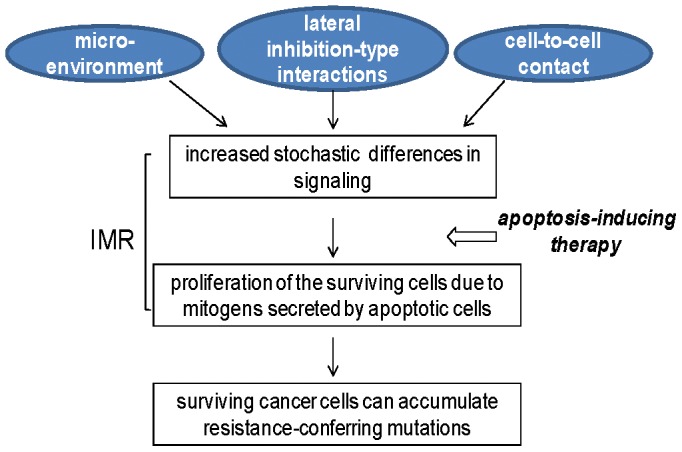
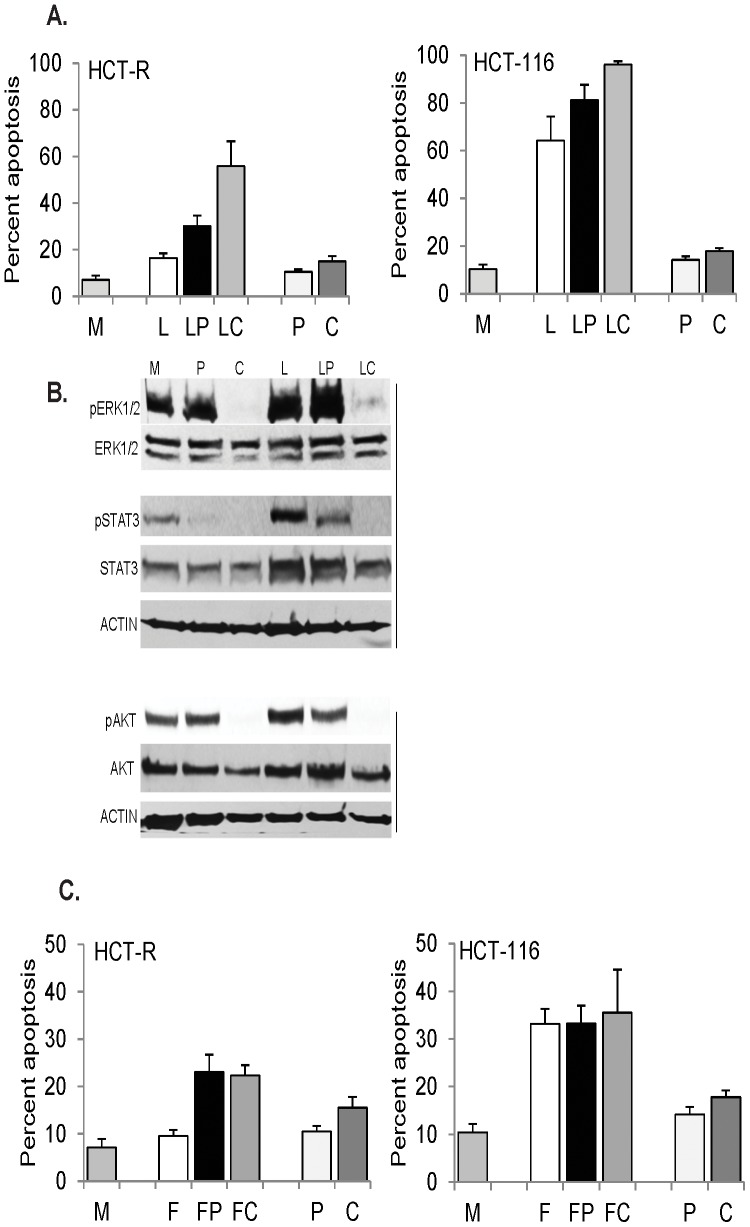
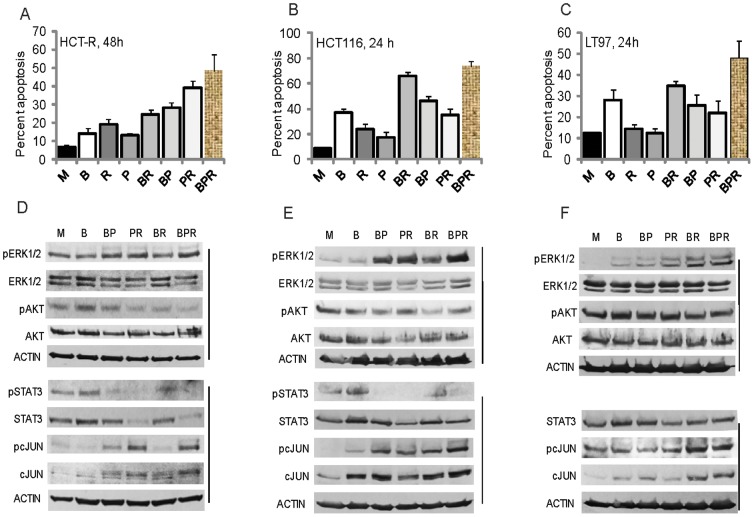
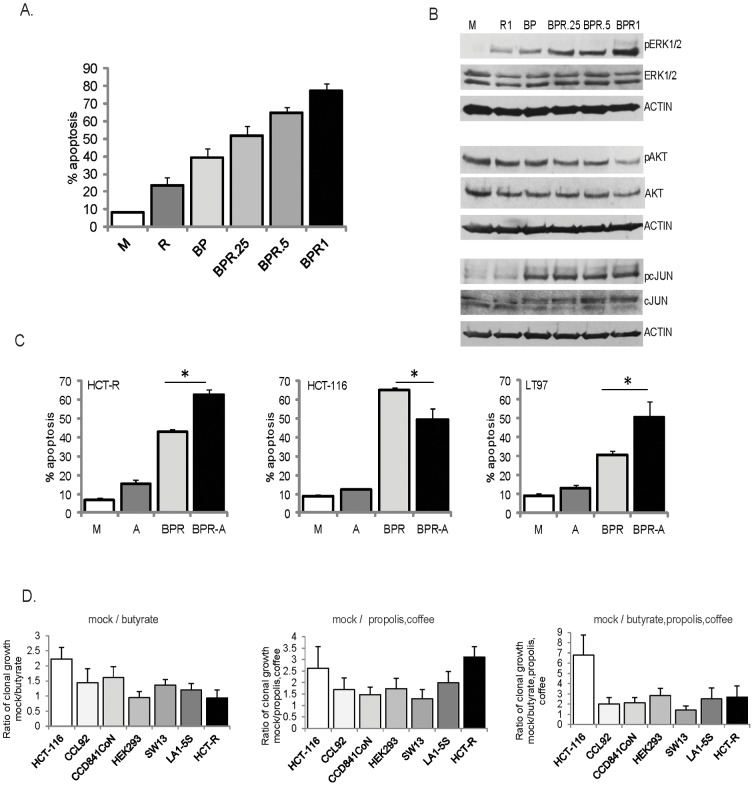
Mutations in the WNT/beta-catenin pathway are present in the majority of all sporadic colorectal cancers (CRCs), and histone deacetylase inhibitors induce apoptosis in CRC cells with such mutations. This apoptosis is counteracted by (1) the signaling heterogeneity of CRC cell populations, and (2) the survival pathways induced by mitogens secreted from apoptotic cells. The phenomena of signaling heterogeneity and apoptosis-induced survival constitute the immediate mechanisms of resistance to histone deacetylase inhibitors, and probably other chemotherapeutic agents. We explored the strategy of augmenting CRC cell death by inhibiting all survival pathways induced by the pro-apoptotic agent LBH589, a histone deacetylase inhibitor: AKT, JAK/STAT, and ERK signaling. The apoptosis-enhancing ability of a cocktail of synthetic inhibitors of proliferation was compared to the effects of the natural product propolis. We utilized colorectal adenoma, drug-sensitive and drug-resistant colorectal carcinoma cells to evaluate the apoptotic potential of the combination treatments. The results suggest that an effective approach to CRC combination therapy is to combine apoptosis-inducing drugs (e.g., histone deacetylase inhibitors, such as LBH589) with agents that suppress all compensatory survival pathways induced during apoptosis (such as the cocktail of inhibitors of apoptosis-associated proliferation). The same paradigm can be applied to a CRC prevention approach, as the apoptotic effect of butyrate, a diet-derived histone deacetylase inhibitor, is augmented by other dietary agents that modulate survival pathways (e.g., propolis and coffee extract). Thus, dietary supplements composed by fermentable fiber, propolis, and coffee extract may effectively counteract neoplastic growth in the colon.
WNT/β-连环蛋白信号通路的突变存在于大多数散发性结直肠癌(CRC)中,组蛋白去乙酰化酶抑制剂可诱导具有此类突变的CRC细胞凋亡。这种凋亡会受到以下因素的抵消:(1)CRC细胞群体的信号异质性,以及(2)凋亡细胞分泌的有丝分裂原所诱导的存活通路。信号异质性和凋亡诱导的存活现象构成了对组蛋白去乙酰化酶抑制剂以及可能其他化疗药物产生抗性的直接机制。我们探索了通过抑制促凋亡剂LBH589(一种组蛋白去乙酰化酶抑制剂)所诱导的所有存活通路来增强CRC细胞死亡的策略:AKT、JAK/STAT和ERK信号通路。将增殖合成抑制剂鸡尾酒的促凋亡能力与天然产物蜂胶的效果进行了比较。我们利用结直肠腺瘤、对药物敏感和耐药的结直肠癌细胞来评估联合治疗的凋亡潜力。结果表明,CRC联合治疗的一种有效方法是将诱导凋亡的药物(如组蛋白去乙酰化酶抑制剂,如LBH589)与抑制凋亡过程中诱导的所有代偿性存活通路的药物(如凋亡相关增殖抑制剂鸡尾酒)联合使用。同样的模式也可应用于CRC预防方法,因为饮食来源的组蛋白去乙酰化酶抑制剂丁酸盐的凋亡作用会被其他调节存活通路的饮食成分(如蜂胶和咖啡提取物)增强。因此,由可发酵纤维、蜂胶和咖啡提取物组成的膳食补充剂可能有效对抗结肠肿瘤的生长。