Liu Jing, Wang Yan, Fu Wei, Yang Chang-Shuan, Huang Jun-Jin
From the Department of Neonatology and NICU of Bayi Children's Hospital (JL, YW, WF, C-SY, J-JH), Beijing Military General Hospital, Beijing; and Graduate School of Southern Medical University (YW, WF), Guangzhou, China.
Medicine (Baltimore). 2014 Dec;93(27):e197. doi: 10.1097/MD.0000000000000197.
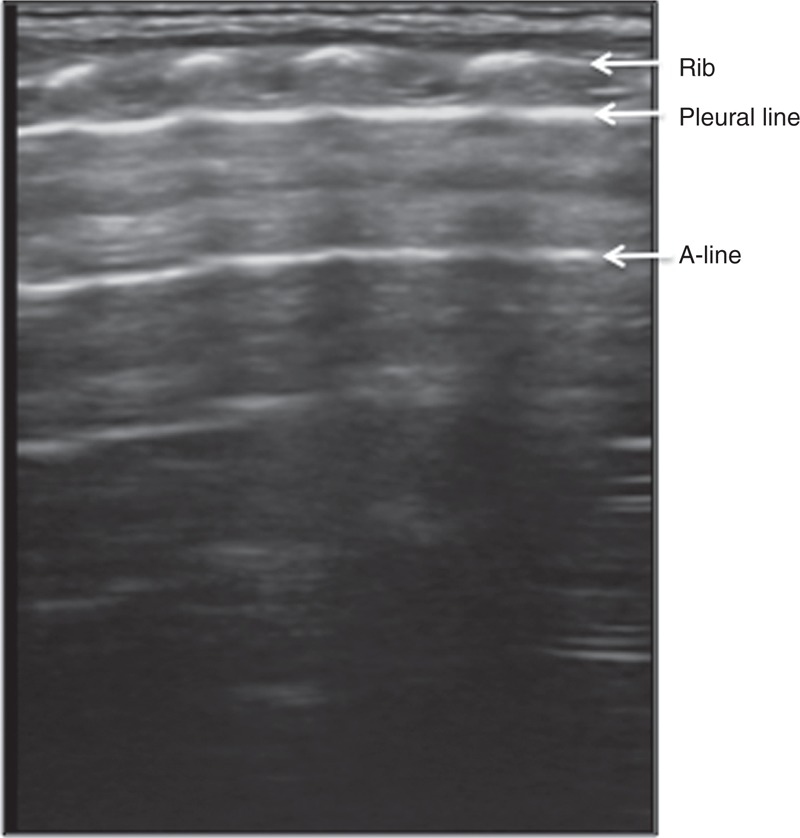
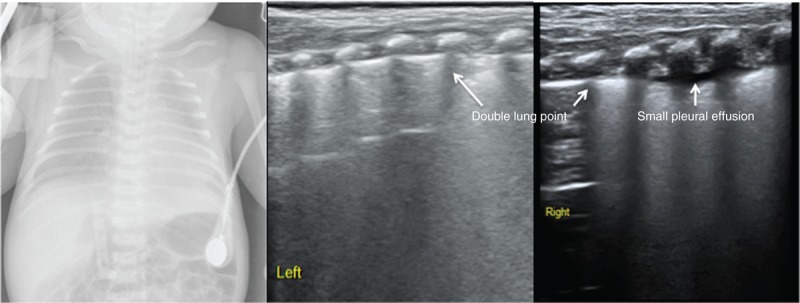
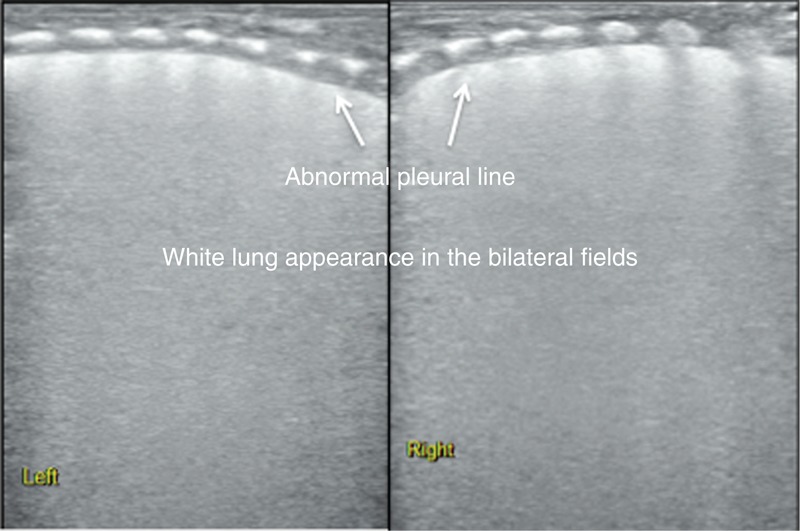
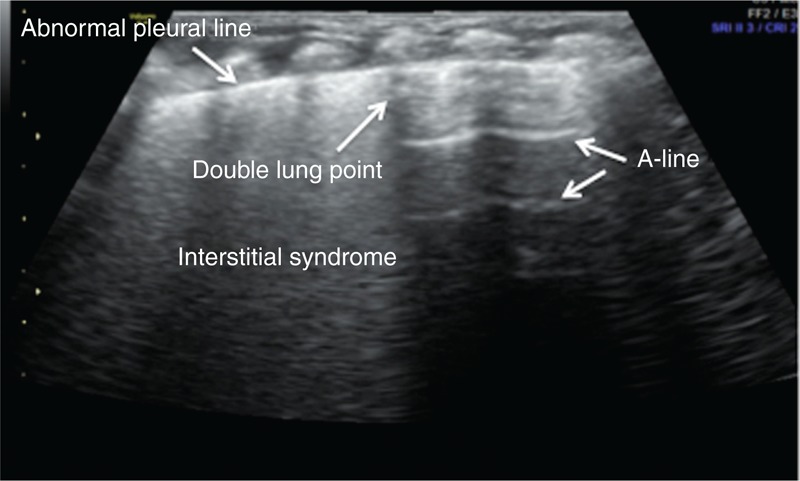
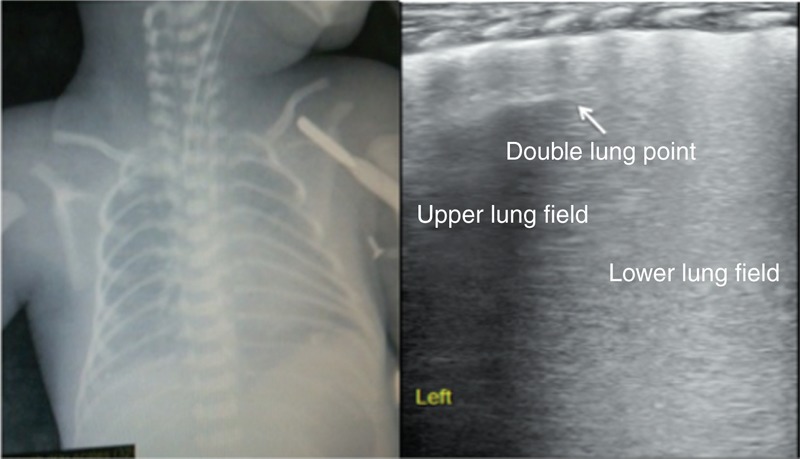
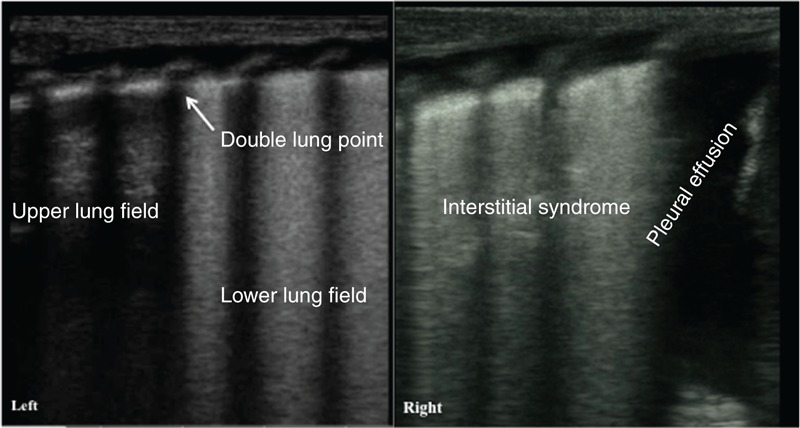
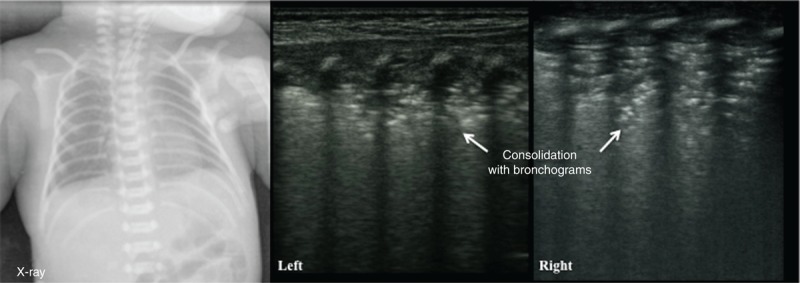
Transient tachypnea of the newborn (TTN) is one of the most common causes of perinatal dyspnea and is traditionally diagnosed by chest x-ray. This study aimed to explore the diagnostic value of lung ultrasonography (LUS) for TTN as well as differentiate it from respiratory distress syndrome (RDS) by using LUS. From January 2013 to February 2014, 60 infants who were diagnosed with TTN based on medical history, clinical manifestations, arterial blood gas analysis, and chest radiography were recruited to the study group. During the same period, 40 hospitalized neonates with nonlung diseases and 20 patients with RDS were recruited to the control group. In a quiet state, infants were placed in the supine, lateral, or prone position for the examination. Each lung of every infant was divided into 3 regions: the anterior, lateral, and posterior regions as bordered by the anterior axillary and posterior axillary lines. The probe was placed perpendicular to the ribs. Each region of both the lungs was carefully scanned.The common ultrasonographic manifestations of TTN were double-lung point (DLP), interstitial syndromes or white lungs, pleural line abnormalities, and A-line disappearance. A small number of infants (20%) with TTN exhibited pleural effusions, whereas the main ultrasonographic manifestation of RDS was lung consolidation with air bronchograms, which does not occur in TTN. The sensitivity and specificity of DLP for the diagnosis of TTN were 76.7% and 100%, respectively. LUS can accurately and reliably diagnose TTN. The DLP and lung consolidation possess great value in the diagnosis and differential diagnosis of TTN with RDS. Thus, we believe that LUS can be widely used in neonatal intensive care units.
新生儿暂时性呼吸急促(TTN)是围产期呼吸困难最常见的原因之一,传统上通过胸部X光进行诊断。本研究旨在探讨肺部超声检查(LUS)对TTN的诊断价值,并通过LUS将其与呼吸窘迫综合征(RDS)进行鉴别。2013年1月至2014年2月,根据病史、临床表现、动脉血气分析和胸部X光检查诊断为TTN的60例婴儿被纳入研究组。同期,40例患有非肺部疾病的住院新生儿和20例RDS患者被纳入对照组。在安静状态下,将婴儿置于仰卧位、侧卧位或俯卧位进行检查。每个婴儿的每侧肺被分为3个区域:由腋前线和腋后线界定的前区、外侧区和后区。探头垂直于肋骨放置。对双侧肺的每个区域进行仔细扫描。TTN常见的超声表现为双肺点(DLP)、间质综合征或白肺、胸膜线异常和A线消失。少数(20%)TTN婴儿出现胸腔积液,而RDS的主要超声表现为肺实变伴支气管充气征,这在TTN中不会出现。DLP诊断TTN的敏感性和特异性分别为76.7%和100%。LUS能够准确可靠地诊断TTN。DLP和肺实变在TTN与RDS的诊断及鉴别诊断中具有重要价值。因此,我们认为LUS可在新生儿重症监护病房广泛应用。