Liu Baoyan, Xu Huanfang, Ma Rui, Mo Qian, Yan Shiyan, Liu Zhishun
From the Department of Acupuncture and Moxibustion, Guang'anmen Hospital (BL, HX, RM, QM, ZL); and Clinical Evaluation Center, China Academy of Chinese Medical Sciences, Beijing, China (SY).
Medicine (Baltimore). 2014 Dec;93(27):e200. doi: 10.1097/MD.0000000000000200.
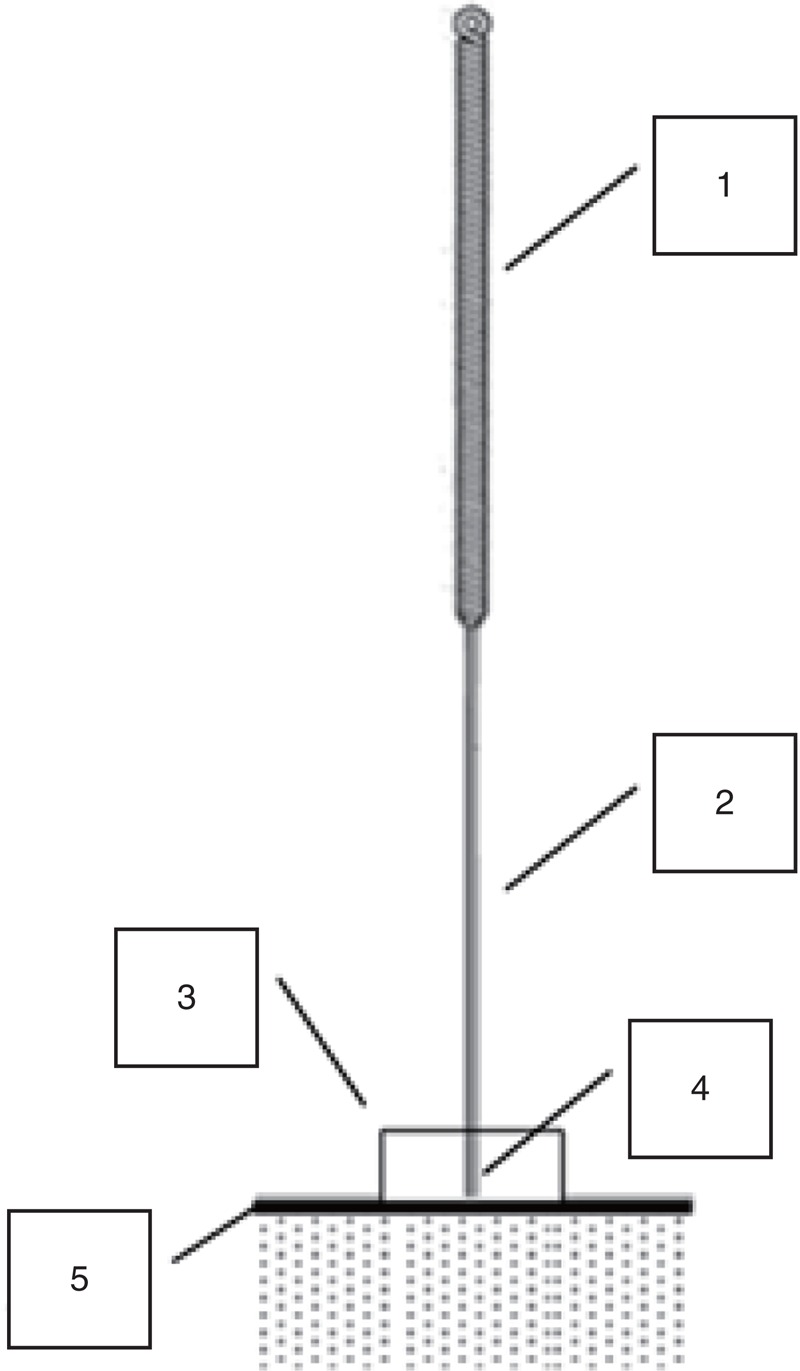
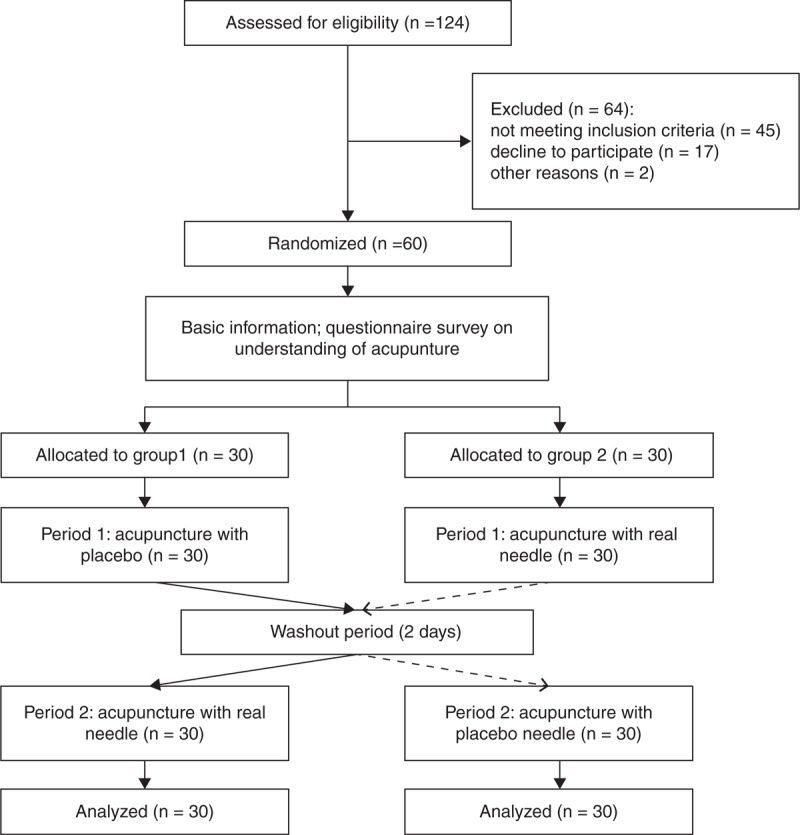
Placebo control is a useful method for determining the efficacy of a therapy. In acupuncture researches, the preferred method for placebo control is acupuncture using a placebo needle that has a blunt tip and achieves no skin penetration. We performed a crossover study to validate the blinding effect of a new type of placebo needle. Sixty volunteers were randomized to receive acupuncture using 2 types of needles with different sequences: sequence AB, involving first the pragmatic placebo needle and then the real needle, and sequence BA, in a reverse order. Placebo acupuncture was performed by administering the placebo needle through an adhesive pad without skin penetration on the acupoints LI4, RN12, BL25, and BL36. Real acupuncture was performed by needling through the pad and penetrating the skin to 15 mm using a real needle on the same acupoints. The acupuncture was administered every other day with 3 sessions for 1 type of needle. The primary outcome was the perception of needle penetration. Besides degree of acupuncture pain, type, and degree of needle sensation, needle acceptability and factors influencing the subject blinding effect were assessed. Needle penetration was felt by 100%, 90% (54/60), 88.3% (53/60), and 95% (57/60) of volunteers receiving placebo acupuncture and 98.3% (59/60), 96.7% (58/60), 95% (57/60), and 95% (57/60) of volunteers receiving real acupuncture on LI4, RN12, BL25, and BL36, respectively. Differences of the volunteers' perception of needle penetration between the placebo needle and real needle were not significant for the 4 acupoints (all P > 0.05). Volunteers experienced fewer distension sensations (P = 0.01), a lower degree of needle sensation (P = 0.007), and less pain (P = 0.006) during placebo acupuncture than during real acupuncture. The placebo needle was more easily accepted than the real needle (OR = 1.63, 95% CI, 1.01-2.64). The influences of age, sex, educational level, acupuncture experience, needle sensation, acupuncture pain, and needle acceptability on volunteers' perception of needle penetration were not significant. The pragmatic placebo needle is a valid control for acupuncture research. It produces a good subject blinding effect with a similar appearance to conventional acupuncture needles and no skin penetration when applied.
安慰剂对照是确定一种疗法疗效的有用方法。在针灸研究中,安慰剂对照的首选方法是使用钝头且不穿透皮肤的安慰剂针进行针灸。我们进行了一项交叉研究,以验证一种新型安慰剂针的盲法效果。60名志愿者被随机分组,按不同顺序接受两种针的针灸:顺序AB,先使用实用安慰剂针,然后使用真针;顺序BA,顺序相反。通过在穴位LI4、RN12、BL25和BL36上通过粘性贴片施用安慰剂针而不穿透皮肤来进行安慰剂针灸。通过穿过贴片并使用真针在相同穴位上穿透皮肤至15毫米来进行真针灸。每隔一天进行一次针灸,每种针进行3次疗程。主要结局是对针刺入的感知。除了针刺疼痛程度、针感类型和程度外,还评估了针的可接受性以及影响受试者盲法效果的因素。接受安慰剂针灸的志愿者中,分别有100%、90%(54/60)、88.3%(53/60)和95%(57/60)在LI4、RN12、BL25和BL36穴位上感觉到针刺入;接受真针灸的志愿者中,分别有98.3%(59/60)、96.7%(58/60)、95%(57/60)和95%(57/60)感觉到针刺入。在这4个穴位上,志愿者对安慰剂针和真针的针刺入感知差异均无统计学意义(所有P>0.05)。与真针灸相比,志愿者在安慰剂针灸期间经历的胀感更少(P=0.01)、针感程度更低(P=0.007)、疼痛更少(P=0.006)。安慰剂针比真针更容易被接受(OR=1.63,95%CI,1.01 - 2.64)。年龄、性别、教育水平、针灸经验、针感、针刺疼痛和针的可接受性对志愿者针刺入感知的影响均无统计学意义。实用安慰剂针是针灸研究的有效对照。它外观与传统针灸针相似,应用时不穿透皮肤,能产生良好的受试者盲法效果。