Saxer Gerda, Krepps Michael D, Merkley Eric D, Ansong Charles, Deatherage Kaiser Brooke L, Valovska Marie-Thérèse, Ristic Nikola, Yeh Ping T, Prakash Vittal P, Leiser Owen P, Nakhleh Luay, Gibbons Henry S, Kreuzer Helen W, Shamoo Yousif
Department of BioSciences, Rice University, Houston, Texas, United States of America.
United States Army Edgewood Chemical Biological Center, Aberdeen Proving Ground, Maryland, United States of America; EXCET, Inc, Springfield, Virginia, United States of America.
PLoS Genet. 2014 Dec 11;10(12):e1004872. doi: 10.1371/journal.pgen.1004872. eCollection 2014 Dec.
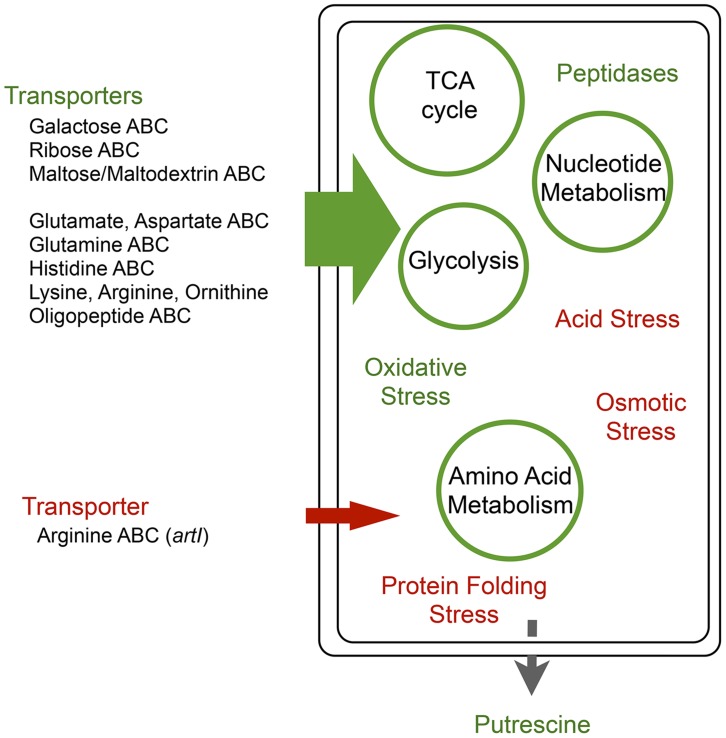
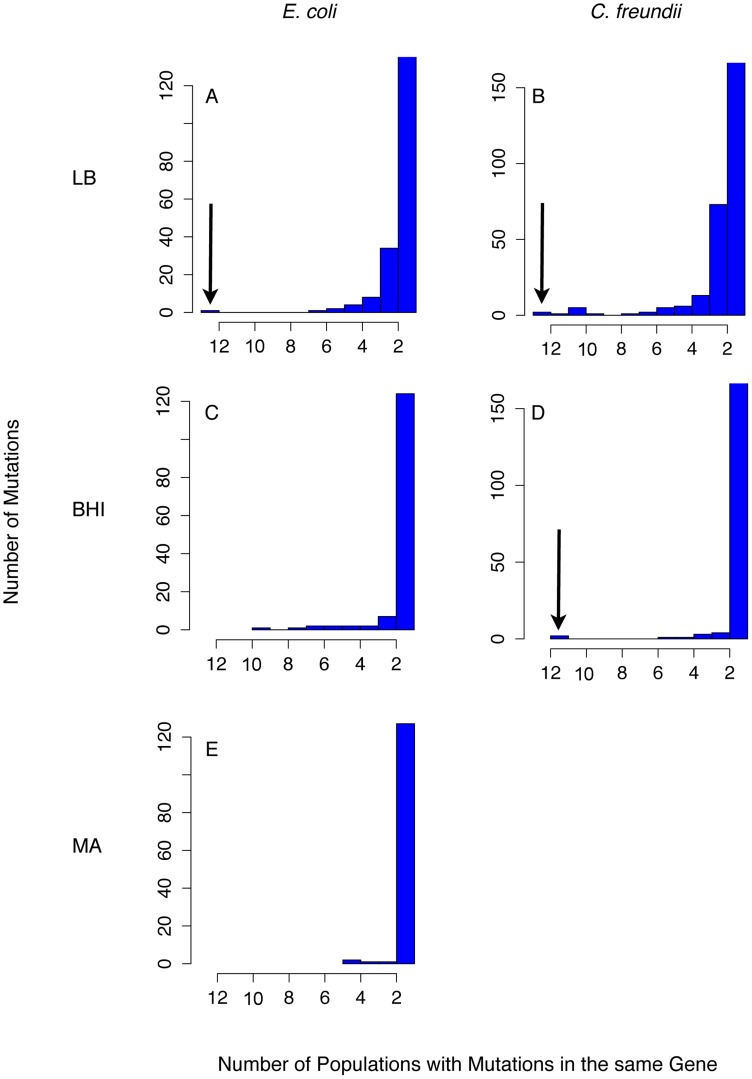
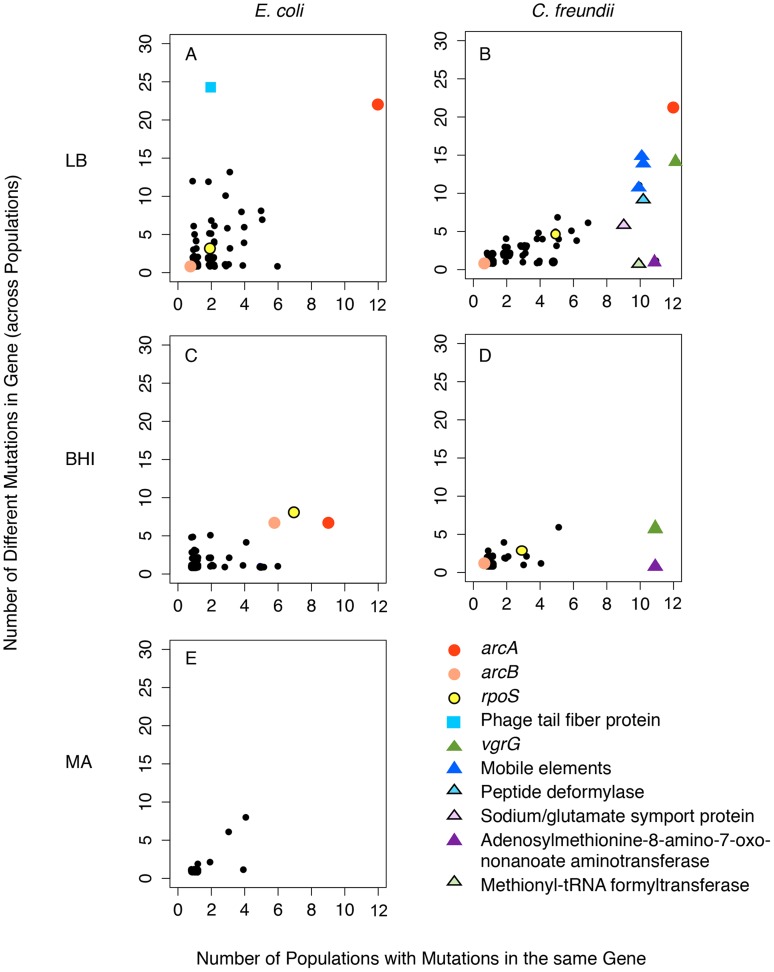
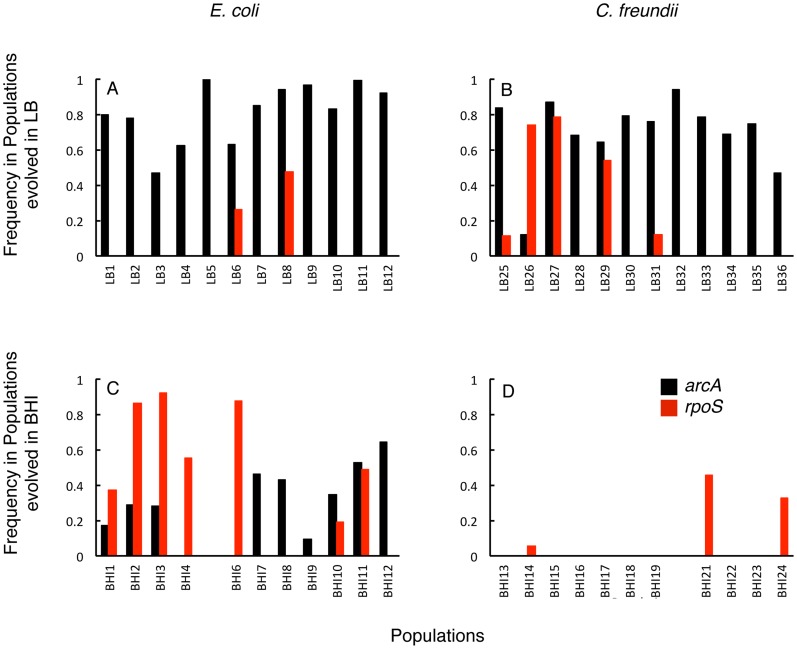
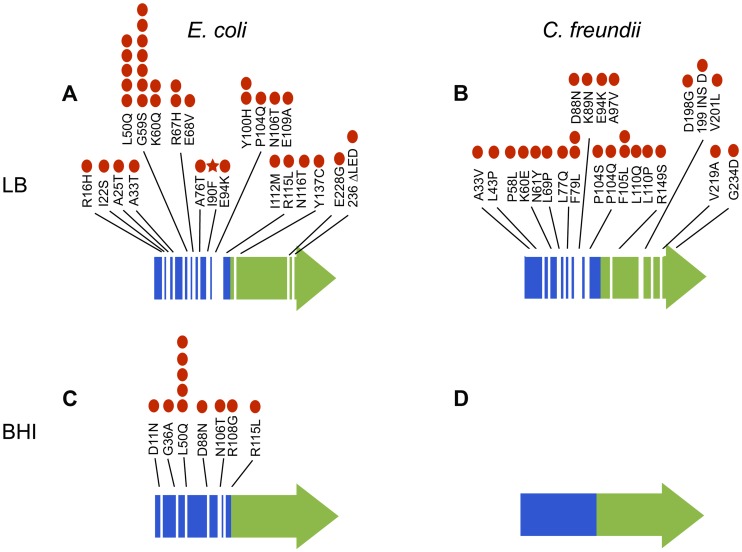
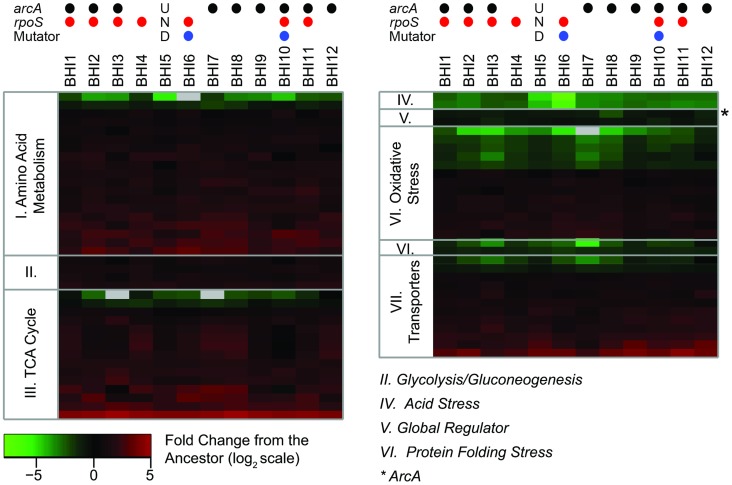
Adaptation to ecologically complex environments can provide insights into the evolutionary dynamics and functional constraints encountered by organisms during natural selection. Adaptation to a new environment with abundant and varied resources can be difficult to achieve by small incremental changes if many mutations are required to achieve even modest gains in fitness. Since changing complex environments are quite common in nature, we investigated how such an epistatic bottleneck can be avoided to allow rapid adaptation. We show that adaptive mutations arise repeatedly in independently evolved populations in the context of greatly increased genetic and phenotypic diversity. We go on to show that weak selection requiring substantial metabolic reprogramming can be readily achieved by mutations in the global response regulator arcA and the stress response regulator rpoS. We identified 46 unique single-nucleotide variants of arcA and 18 mutations in rpoS, nine of which resulted in stop codons or large deletions, suggesting that subtle modulations of ArcA function and knockouts of rpoS are largely responsible for the metabolic shifts leading to adaptation. These mutations allow a higher order metabolic selection that eliminates epistatic bottlenecks, which could occur when many changes would be required. Proteomic and carbohydrate analysis of adapting E. coli populations revealed an up-regulation of enzymes associated with the TCA cycle and amino acid metabolism, and an increase in the secretion of putrescine. The overall effect of adaptation across populations is to redirect and efficiently utilize uptake and catabolism of abundant amino acids. Concomitantly, there is a pronounced spread of more ecologically limited strains that results from specialization through metabolic erosion. Remarkably, the global regulators arcA and rpoS can provide a "one-step" mechanism of adaptation to a novel environment, which highlights the importance of global resource management as a powerful strategy to adaptation.
适应生态复杂的环境有助于深入了解生物在自然选择过程中所遇到的进化动态和功能限制。如果需要许多突变才能在适应性上取得哪怕是适度的提升,那么通过微小的增量变化来适应资源丰富多样的新环境可能很难实现。由于在自然界中不断变化的复杂环境很常见,我们研究了如何避免这种上位性瓶颈以实现快速适应。我们发现,在遗传和表型多样性大幅增加的情况下,适应性突变在独立进化的种群中反复出现。我们进一步表明,需要大量代谢重编程的弱选择可以通过全局响应调节因子arcA和应激反应调节因子rpoS中的突变轻易实现。我们鉴定出arcA的46个独特单核苷酸变体和rpoS中的18个突变,其中9个导致了终止密码子或大片段缺失,这表明ArcA功能的细微调节和rpoS的敲除在很大程度上导致了导致适应的代谢转变。这些突变允许进行更高阶的代谢选择,从而消除上位性瓶颈,而上位性瓶颈可能在需要许多变化时出现。对适应过程中的大肠杆菌种群进行蛋白质组学和碳水化合物分析发现,与三羧酸循环和氨基酸代谢相关的酶上调,腐胺分泌增加。种群间适应的总体效果是重新引导并有效利用丰富氨基酸的摄取和分解代谢。与此同时,由于代谢侵蚀导致的专业化,生态上更受限的菌株显著扩散。值得注意的是,全局调节因子arcA和rpoS可以提供一种适应新环境的“一步式”机制,这凸显了全局资源管理作为一种强大适应策略的重要性。