1] Department of Neurosurgery and Oncology, Johns Hopkins University School of Medicine, Baltimore, MD, USA [2] Department of Pharmacology, School of Medical Science and Laboratory Medicine, Jiangsu University, Zhengjiang, Jiangshu, People's Republic of China.
1] Department of Neurosurgery and Oncology, Johns Hopkins University School of Medicine, Baltimore, MD, USA [2] Department of Neurosurgery, Tongji Hospital, Tongji Medical College, Huazhong University of Science and Technology, Wuhan, Hubei, People's Republic of China.
Cell Death Dis. 2014 Dec 11;5(12):e1567. doi: 10.1038/cddis.2014.521.
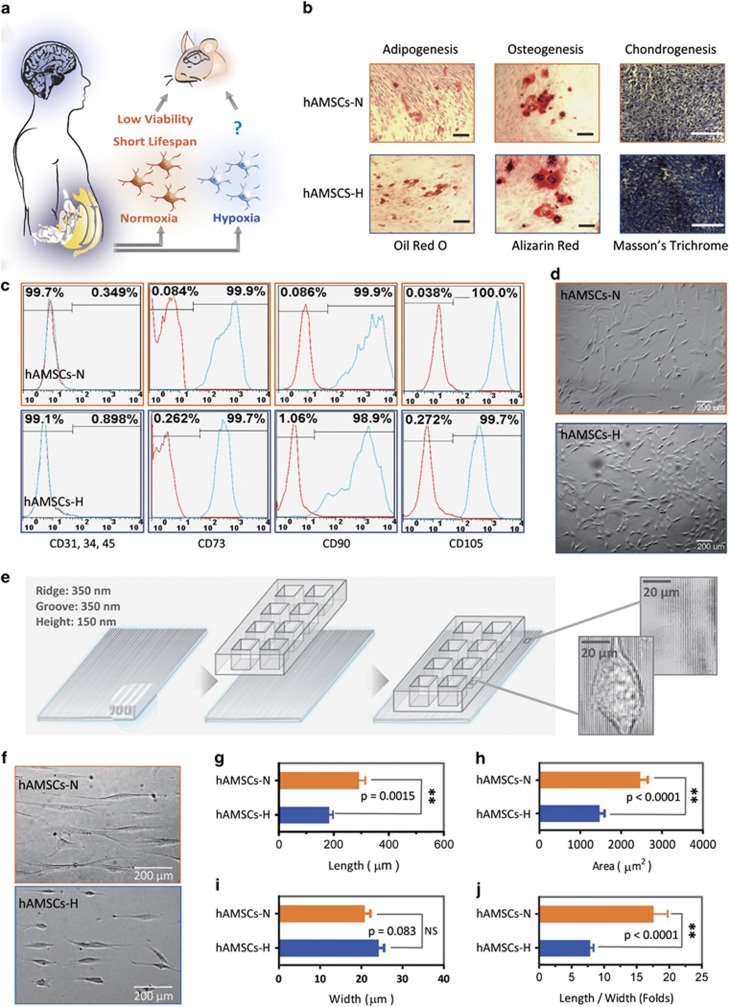
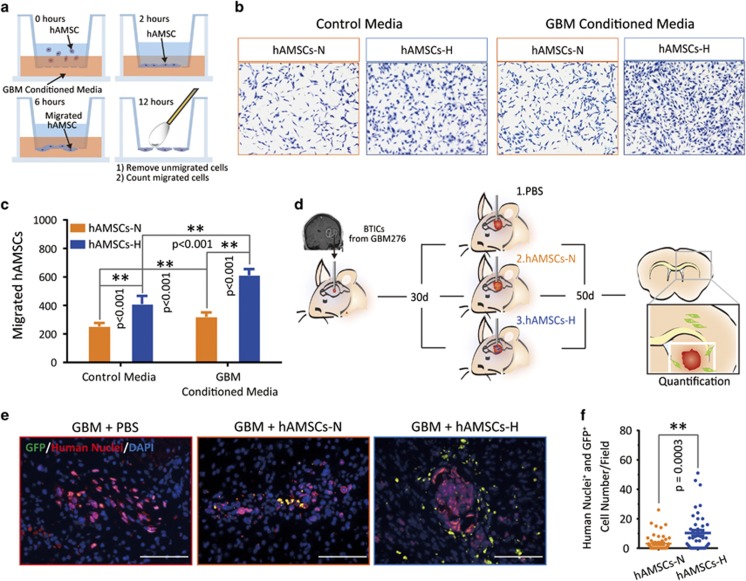
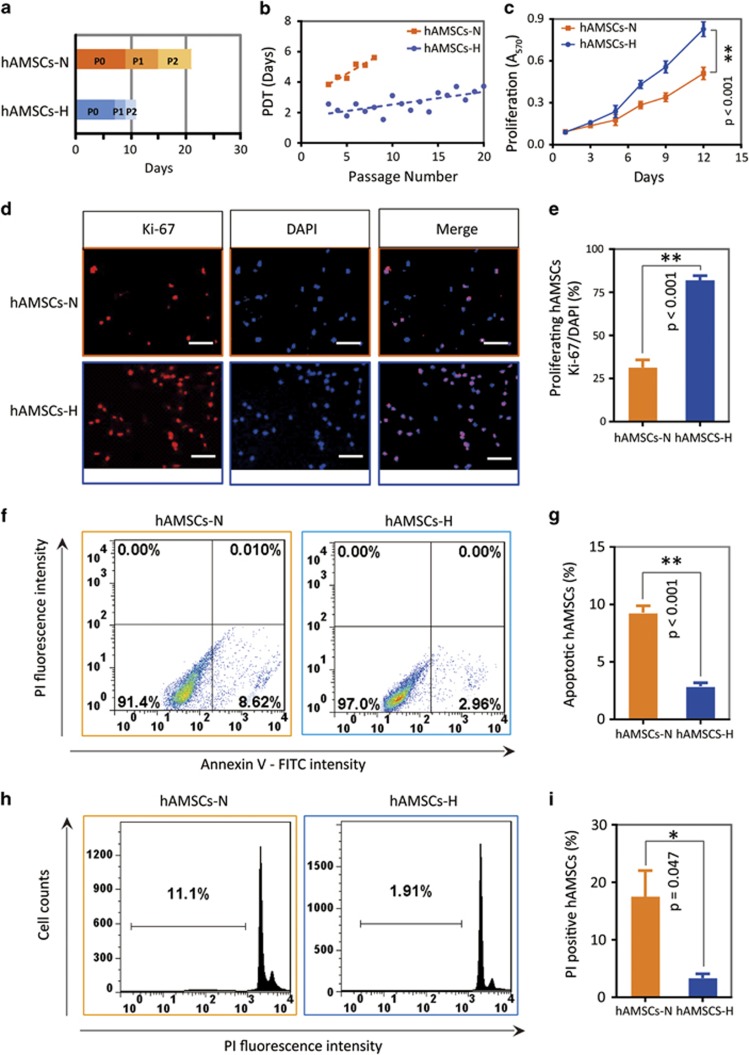
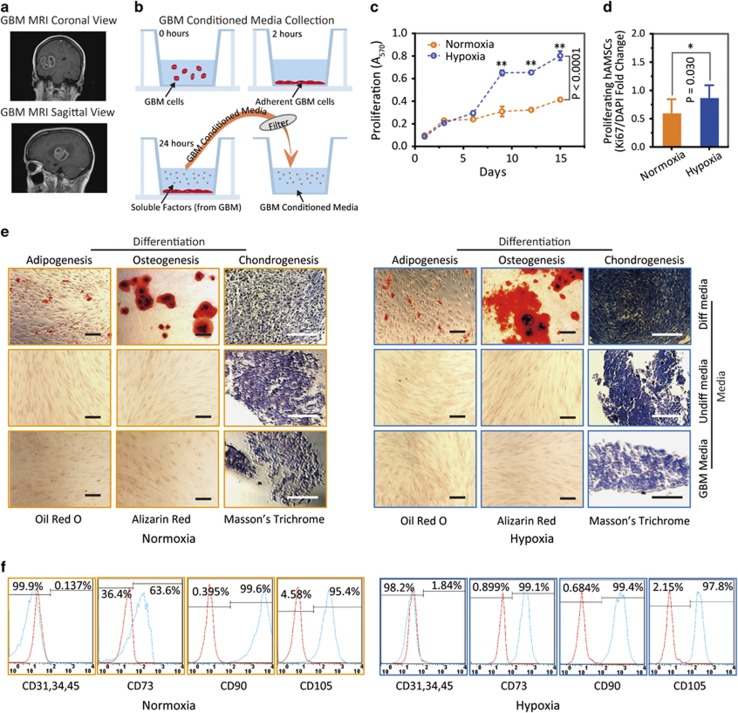
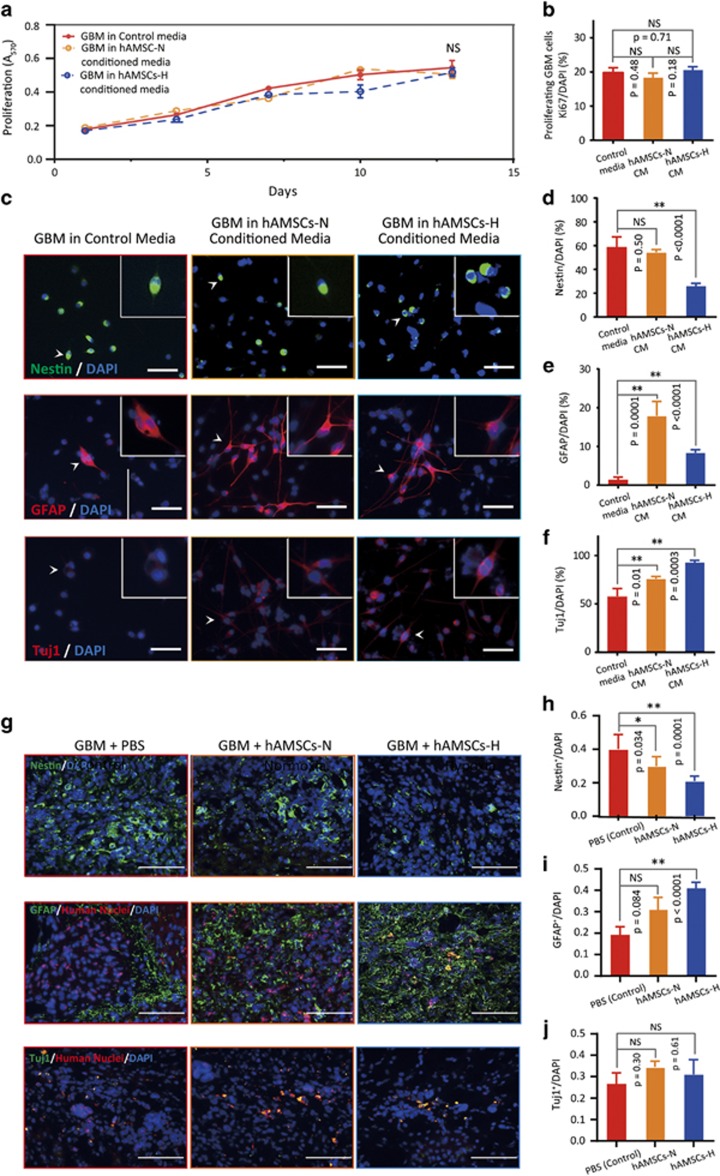
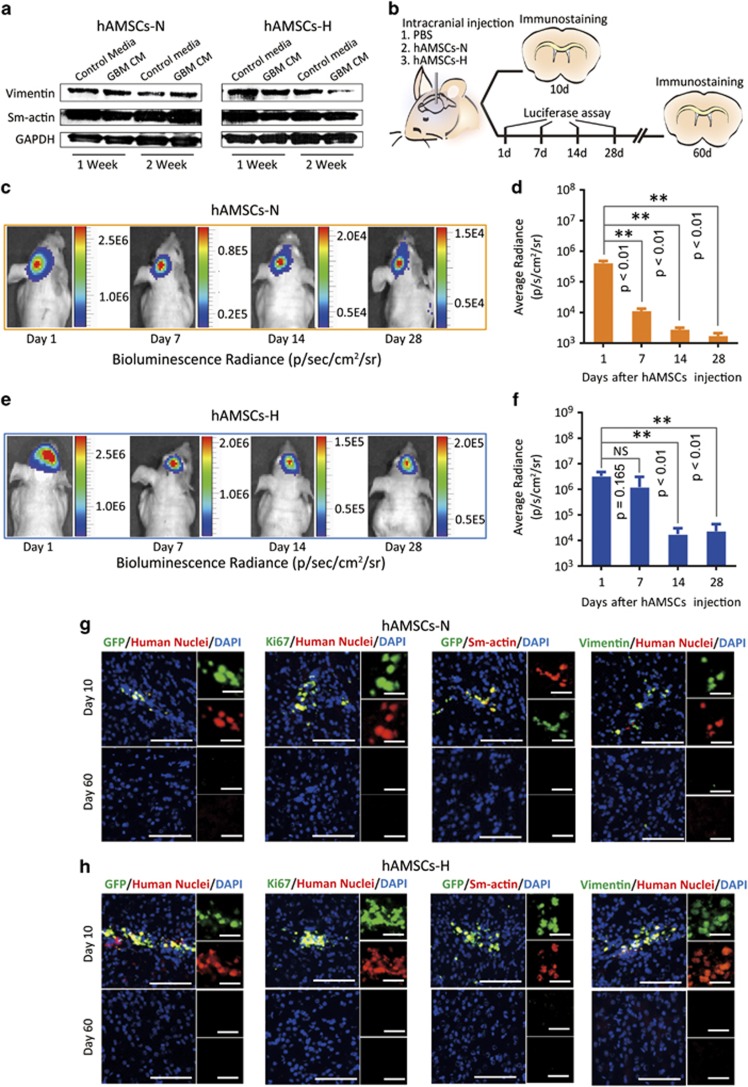
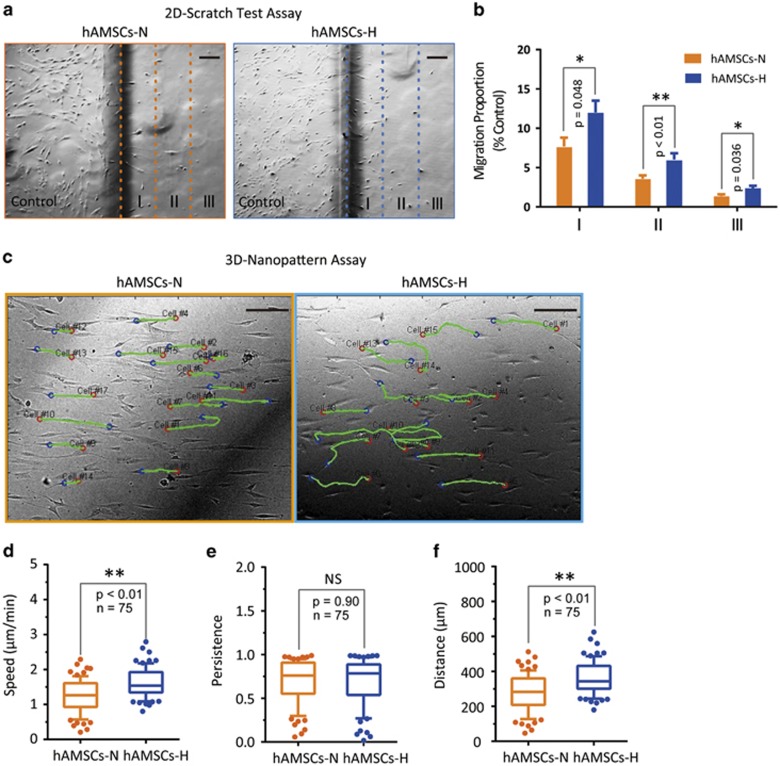
Adult human adipose-derived mesenchymal stem cells (hAMSCs) are multipotent cells, which are abundant, easily collected, and bypass the ethical concerns that plague embryonic stem cells. Their utility and accessibility have led to the rapid development of clinical investigations to explore their autologous and allogeneic cellular-based regenerative potential, tissue preservation capabilities, anti-inflammatory properties, and anticancer properties, among others. hAMSCs are typically cultured under ambient conditions with 21% oxygen. However, physiologically, hAMSCs exist in an environment of much lower oxygen tension. Furthermore, hAMSCs cultured in standard conditions have shown limited proliferative and migratory capabilities, as well as limited viability. This study investigated the effects hypoxic culture conditions have on primary intraoperatively derived hAMSCs. hAMSCs cultured under hypoxia (hAMSCs-H) remained multipotent, capable of differentiation into osteogenic, chondrogenic, and adipogenic lineages. In addition, hAMSCs-H grew faster and exhibited less cell death. Furthermore, hAMSCs-H had greater motility than normoxia-cultured hAMSCs and exhibited greater homing ability to glioblastoma (GBM) derived from brain tumor-initiating cells from our patients in vitro and in vivo. Importantly, hAMSCs-H did not transform into tumor-associated fibroblasts in vitro and were not tumorigenic in vivo. Rather, hAMSCs-H promoted the differentiation of brain cancer cells in vitro and in vivo. These findings suggest an alternative culturing technique that can enhance the function of hAMSCs, which may be necessary for their use in the treatment of various pathologies including stroke, myocardial infarction, amyotrophic lateral sclerosis, and GBM.
成人脂肪间充质干细胞(hAMSCs)是多能细胞,其数量丰富、易于采集,且不存在胚胎干细胞面临的伦理问题。这些特性使得它们在临床研究中的应用得到了迅速发展,旨在探索其自体和异体细胞的再生潜能、组织保存能力、抗炎特性和抗癌特性等。hAMSCs 通常在 21%氧气的环境下进行培养。然而,从生理上讲,hAMSCs 所处的环境氧张力要低得多。此外,在标准条件下培养的 hAMSCs 表现出有限的增殖和迁移能力以及有限的存活率。本研究探讨了低氧培养条件对原代术中分离的 hAMSCs 的影响。在低氧条件下培养的 hAMSCs(hAMSCs-H)仍然具有多能性,能够分化为成骨细胞、软骨细胞和脂肪细胞谱系。此外,hAMSCs-H 生长更快,细胞死亡更少。此外,hAMSCs-H 的迁移能力强于在常氧条件下培养的 hAMSCs,并且在体外和体内对源自我们患者的脑肿瘤起始细胞的神经胶质瘤(GBM)具有更强的归巢能力。重要的是,hAMSCs-H 在体外不会转化为肿瘤相关成纤维细胞,也不会在体内致瘤。相反,hAMSCs-H 促进了体外和体内脑癌细胞的分化。这些发现表明了一种替代的培养技术,可以增强 hAMSCs 的功能,这对于它们在各种病理疾病(包括中风、心肌梗死、肌萎缩侧索硬化症和 GBM)的治疗中应用是必要的。