The Johns Hopkins Medical Institutes, Departments of Neurosurgery and Oncology, Baltimore, Maryland, USA.
PLoS One. 2013;8(3):e58198. doi: 10.1371/journal.pone.0058198. Epub 2013 Mar 12.
Glioblastoma is the most common primary malignant brain tumor, and is refractory to surgical resection, radiation, and chemotherapy. Human mesenchymal stem cells (hMSC) may be harvested from bone marrow (BMSC) and adipose (AMSC) tissue. These cells are a promising avenue of investigation for the delivery of adjuvant therapies. Despite extensive research into putative mechanisms for the tumor tropism of MSCs, there remains no direct comparison of the efficacy and specificity of AMSC and BMSC tropism towards glioma.
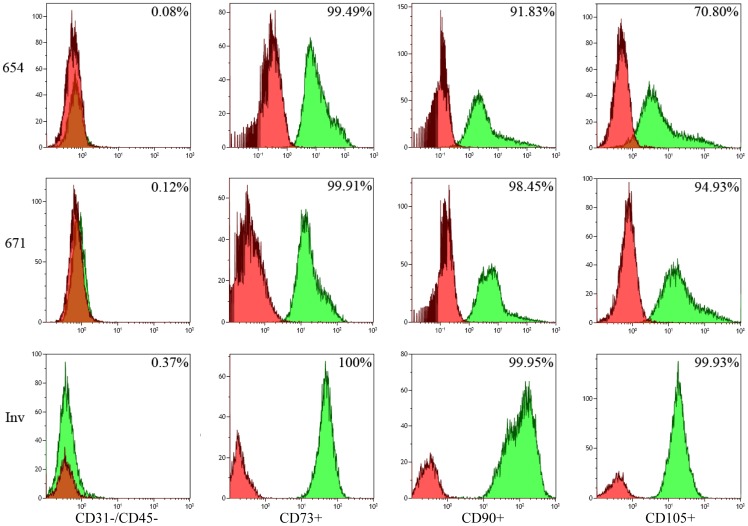
Under an IRB-approved protocol, intraoperative human Adipose MSCs (hAMSCs) were established and characterized for cell surface markers of mesenchymal stem cell origin in conjunction with the potential for tri-lineage differentiation (adipogenic, chondrogenic, and osteogenic). Validated experimental hAMSCs were compared to commercially derived hBMSCs (Lonza) and hAMSCs (Invitrogen) for growth responsiveness and glioma tropism in response to glioma conditioned media obtained from primary glioma neurosphere cultures.
Commercial and primary culture AMSCs and commercial BMSCs demonstrated no statistically significant difference in their migration towards glioma conditioned media in vitro. There was statistically significant difference in the proliferation rate of both commercial AMSCs and BMSCs as compared to primary culture AMSCs, suggesting primary cultures have a slower growth rate than commercially available cell lines.
Adipose- and bone marrow-derived mesenchymal stem cells have similar in vitro glioma tropism. Given the well-documented ability to harvest larger numbers of AMSCs under local anesthesia, adipose tissue may provide a more efficient source of MSCs for research and clinical applications, while minimizing patient morbidity during cell harvesting.
胶质母细胞瘤是最常见的原发性恶性脑肿瘤,对手术切除、放疗和化疗具有抗药性。人骨髓间充质干细胞(BMSC)和脂肪间充质干细胞(AMSC)可从骨髓和脂肪组织中分离出来。这些细胞是辅助治疗的有前途的研究途径。尽管对间充质干细胞(MSCs)向肿瘤归巢的潜在机制进行了广泛的研究,但仍没有对 AMSC 和 BMSC 向神经胶质瘤的归巢效率和特异性进行直接比较。
在 IRB 批准的方案下,术中建立并鉴定了人脂肪间充质干细胞(hAMSCs),其特征为间充质干细胞起源的细胞表面标志物,并具有三系分化(成脂、成软骨和成骨)的潜能。对经过验证的实验性 hAMSCs 与商业衍生的 hBMSCs(Lonza)和 hAMSCs(Invitrogen)进行了比较,以评估它们对原发性神经球培养物获得的胶质瘤条件培养基的生长反应性和胶质瘤归巢性。
商业和原代培养的 AMSCs 和商业 BMSCs 在体外向胶质瘤条件培养基中的迁移方面没有统计学上的显著差异。与原代培养的 AMSCs 相比,商业 AMSCs 和 BMSCs 的增殖率有统计学上的显著差异,这表明原代培养的细胞增殖速度比商业上可获得的细胞系慢。
脂肪源性和骨髓源性间充质干细胞具有相似的体外胶质瘤归巢性。鉴于在局部麻醉下可以更有效地采集大量的 AMSCs,脂肪组织可能为研究和临床应用提供更有效的 MSCs 来源,同时在细胞采集过程中最大程度地减少患者的发病率。