Department of Neurology, University of Massachusetts Medical School, Albert Sherman Center, Worcester, MA, USA.
Laboratory for Drug Discovery in Neurodegeneration, Harvard NeuroDiscovery Center, Brigham and Women's Hospital, Harvard Medical School, Cambridge, MA, USA.
Cell Death Dis. 2014 Dec 11;5(12):e1572. doi: 10.1038/cddis.2014.508.
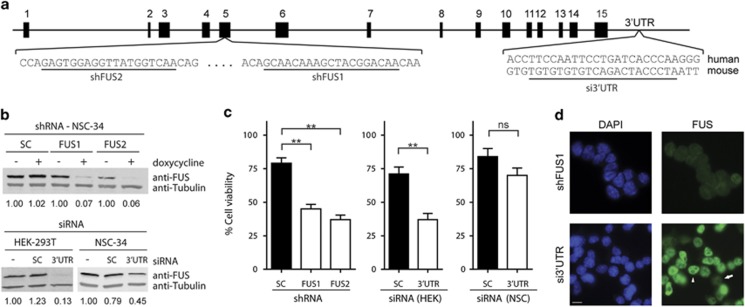
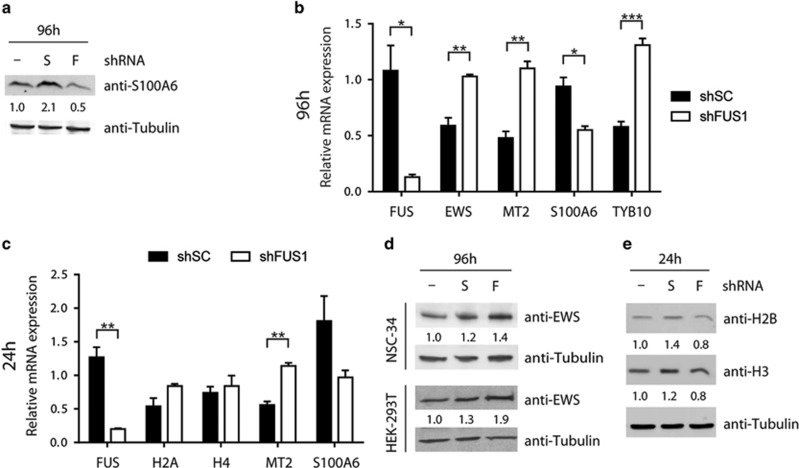
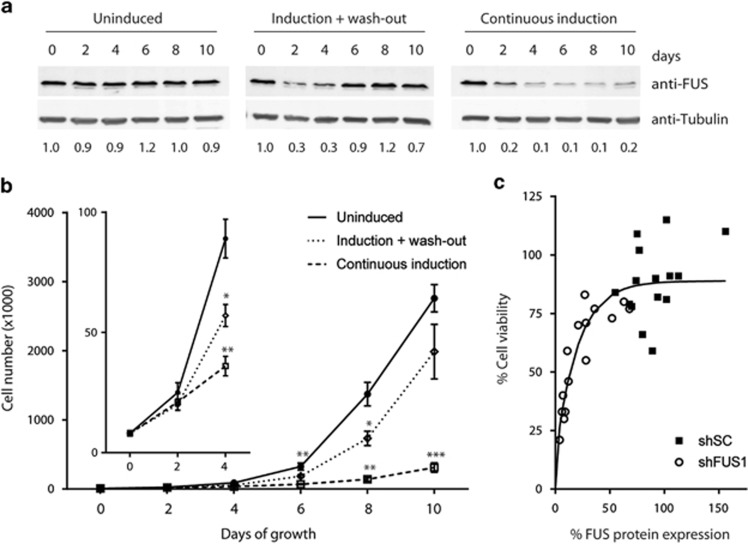
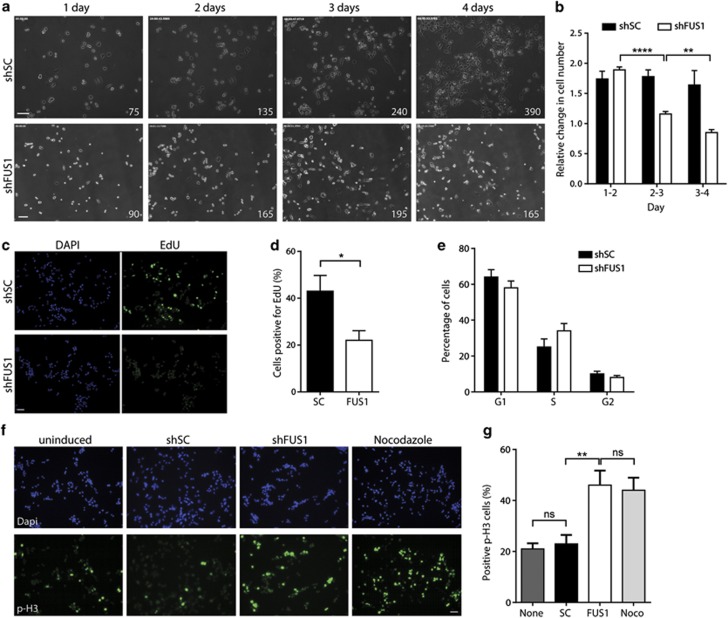
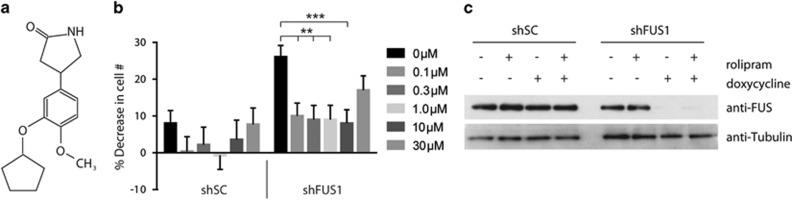
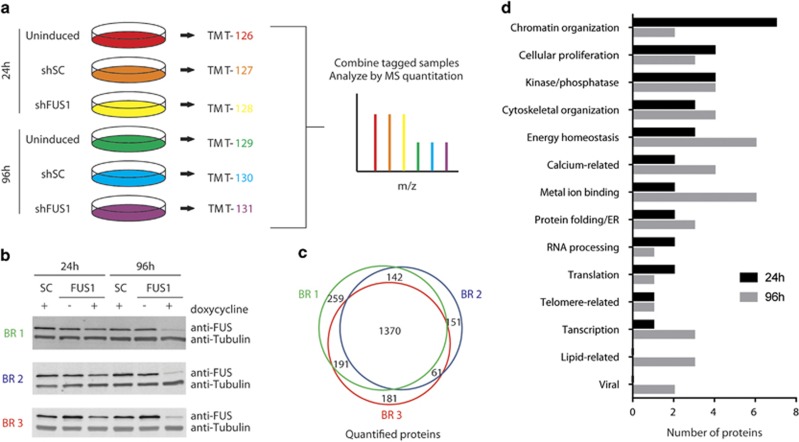
Fused in sarcoma/translocated in liposarcoma (FUS/TLS or FUS) is a multifunctional RNA/DNA-binding protein that is pathologically associated with cancer and neurodegeneration. To gain insight into the vital functions of FUS and how a loss of FUS function impacts cellular homeostasis, FUS expression was reduced in different cellular models through RNA interference. Our results show that a loss of FUS expression severely impairs cellular proliferation and leads to an increase in phosphorylated histone H3, a marker of mitotic arrest. A quantitative proteomics analysis performed on cells undergoing various degrees of FUS knockdown revealed protein expression changes for known RNA targets of FUS, consistent with a loss of FUS function with respect to RNA processing. Proteins that changed in expression as a function of FUS knockdown were associated with multiple processes, some of which influence cell proliferation including cell cycle regulation, cytoskeletal organization, oxidative stress and energy homeostasis. FUS knockdown also correlated with increased expression of the closely related protein EWS (Ewing's sarcoma). We demonstrate that the maladaptive phenotype resulting from FUS knockdown is reversible and can be rescued by re-expression of FUS or partially rescued by the small-molecule rolipram. These results provide insight into the pathways and processes that are regulated by FUS, as well as the cellular consequences for a loss of FUS function.
融合肉瘤/易位性脂肪肉瘤(FUS/TLS 或 FUS)是一种多功能的 RNA/DNA 结合蛋白,在病理学上与癌症和神经退行性疾病有关。为了深入了解 FUS 的重要功能以及 FUS 功能丧失如何影响细胞内稳态,我们通过 RNA 干扰降低了不同细胞模型中的 FUS 表达。我们的研究结果表明,FUS 表达的丧失严重损害了细胞的增殖能力,并导致磷酸化组蛋白 H3 的增加,这是有丝分裂停滞的标志。对经历不同程度 FUS 敲低的细胞进行的定量蛋白质组学分析揭示了 FUS 的已知 RNA 靶标的蛋白表达变化,这与 RNA 处理过程中 FUS 功能的丧失一致。作为 FUS 敲低功能丧失的结果而改变表达的蛋白质与多个过程有关,其中一些影响细胞增殖,包括细胞周期调节、细胞骨架组织、氧化应激和能量稳态。FUS 敲低也与密切相关的 EWS(尤因肉瘤)蛋白的表达增加相关。我们证明,FUS 敲低导致的适应性不良表型是可逆的,可以通过重新表达 FUS 来挽救,或者通过小分子 rolipram 部分挽救。这些结果为 FUS 调节的途径和过程以及 FUS 功能丧失的细胞后果提供了深入的了解。