Bergseng Elin, Dørum Siri, Arntzen Magnus Ø, Nielsen Morten, Nygård Ståle, Buus Søren, de Souza Gustavo A, Sollid Ludvig M
Centre for Immune Regulation, Department of Immunology, University of Oslo and Oslo University Hospital-Rikshospitalet, Oslo, Norway.
Immunogenetics. 2015 Feb;67(2):73-84. doi: 10.1007/s00251-014-0819-9. Epub 2014 Dec 12.
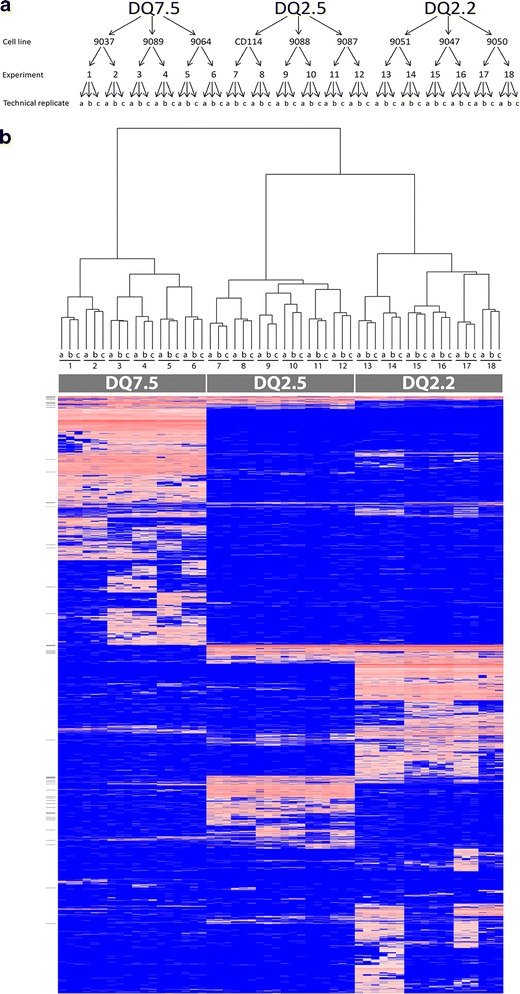
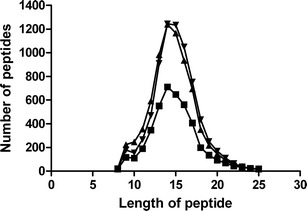
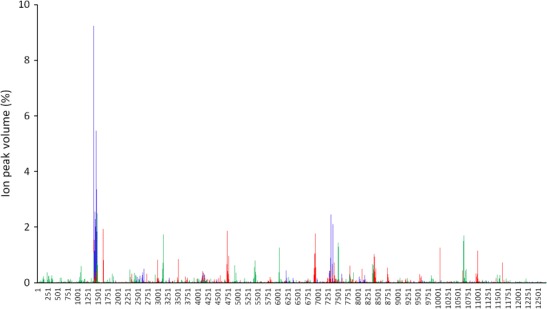
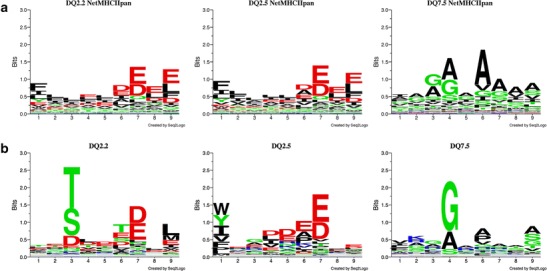
Celiac disease is caused by intolerance to cereal gluten proteins, and HLA-DQ molecules are involved in the disease pathogenesis by presentation of gluten peptides to CD4(+) T cells. The α- or β-chain sharing HLA molecules DQ2.5, DQ2.2, and DQ7.5 display different risks for the disease. It was recently demonstrated that T cells of DQ2.5 and DQ2.2 patients recognize distinct sets of gluten epitopes, suggesting that these two DQ2 variants select different peptides for display. To explore whether this is the case, we performed a comprehensive comparison of the endogenous self-peptides bound to HLA-DQ molecules of B-lymphoblastoid cell lines. Peptides were eluted from affinity-purified HLA molecules of nine cell lines and subjected to quadrupole orbitrap mass spectrometry and MaxQuant software analysis. Altogether, 12,712 endogenous peptides were identified at very different relative abundances. Hierarchical clustering of normalized quantitative data demonstrated significant differences in repertoires of peptides between the three DQ variant molecules. The neural network-based method, NNAlign, was used to identify peptide-binding motifs. The binding motifs of DQ2.5 and DQ7.5 concurred with previously established binding motifs. The binding motif of DQ2.2 was strikingly different from that of DQ2.5 with position P3 being a major anchor having a preference for threonine and serine. This is notable as three recently identified epitopes of gluten recognized by T cells of DQ2.2 celiac patients harbor serine at position P3. This study demonstrates that relative quantitative comparison of endogenous peptides sampled from our protein metabolism by HLA molecules provides clues to understand HLA association with disease.
乳糜泻由对谷物麸质蛋白不耐受引起,HLA - DQ分子通过将麸质肽呈递给CD4(+) T细胞参与疾病发病机制。共享HLA分子DQ2.5、DQ2.2和DQ7.5的α链或β链显示出不同的疾病风险。最近有研究表明,DQ2.5和DQ2.2患者的T细胞识别不同的麸质表位集,这表明这两种DQ2变体选择不同的肽进行呈递。为探究是否如此,我们对B淋巴母细胞系HLA - DQ分子结合的内源性自身肽进行了全面比较。从九个细胞系的亲和纯化HLA分子中洗脱肽,并进行四极杆轨道阱质谱分析和MaxQuant软件分析。总共鉴定出12712种内源性肽,其相对丰度差异很大。标准化定量数据的层次聚类表明,三种DQ变体分子之间的肽库存在显著差异。基于神经网络的方法NNAlign用于识别肽结合基序。DQ2.5和DQ7.5的结合基序与先前确定的结合基序一致。DQ2.2的结合基序与DQ2.5明显不同,P3位是主要锚定位,偏好苏氨酸和丝氨酸。这一点值得注意,因为最近鉴定出的DQ2.2乳糜泻患者T细胞识别的三种麸质表位在P3位含有丝氨酸。本研究表明,通过HLA分子对我们蛋白质代谢中采样的内源性肽进行相对定量比较,为理解HLA与疾病的关联提供了线索。