Arshad Sanya, Cameron Benjamin, Joglekar Alok V
Department of Immunology, University of Pittsburgh, Pittsburgh, PA, USA.
Center for Systems Immunology, University of Pittsburgh, Pittsburgh, PA, USA.
NPJ Syst Biol Appl. 2025 Jan 17;11(1):10. doi: 10.1038/s41540-024-00482-x.
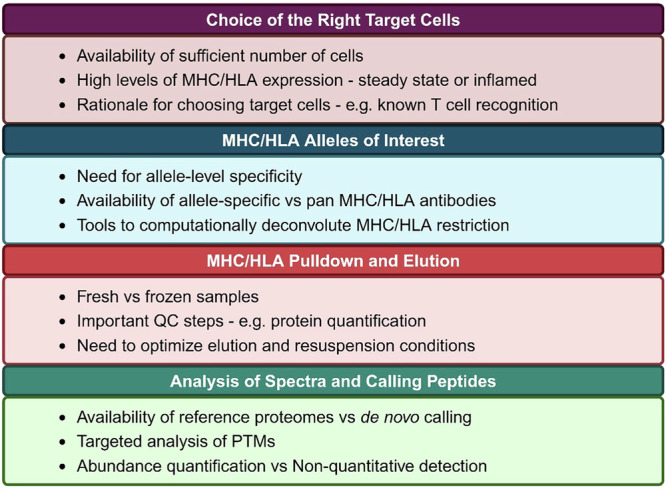
T cells mediate pathogenesis of several autoimmune disorders by recognizing self-epitopes presented on Major Histocompatibility Complex (MHC) or Human Leukocyte Antigen (HLA) complex. The majority of autoantigens presented to T cells in various autoimmune disorders are not known, which has impeded autoantigen identification. Recent advances in immunopeptidomics have started to unravel the repertoire of antigenic epitopes presented on MHC. In several autoimmune diseases, immunopeptidomics has led to the identification of novel autoantigens and has enhanced our understanding of the mechanisms behind autoimmunity. Especially, immunopeptidomics has provided key evidence to explain the genetic risk posed by HLA alleles. In this review, we shed light on how immunopeptidomics can be leveraged to discover potential autoantigens. We highlight the application of immunopeptidomics in Type 1 Diabetes (T1D), Systemic Lupus Erythematosus (SLE), and Rheumatoid Arthritis (RA). Finally, we highlight the practical considerations of implementing immunopeptidomics successfully and the technical challenges that need to be addressed. Overall, this review will provide an important context for using immunopeptidomics for understanding autoimmunity.
T细胞通过识别主要组织相容性复合体(MHC)或人类白细胞抗原(HLA)复合体上呈现的自身表位,介导多种自身免疫性疾病的发病机制。在各种自身免疫性疾病中,呈现给T细胞的大多数自身抗原尚不清楚,这阻碍了自身抗原的鉴定。免疫肽组学的最新进展已开始揭示MHC上呈现的抗原表位库。在几种自身免疫性疾病中,免疫肽组学已导致鉴定出新的自身抗原,并增强了我们对自身免疫背后机制的理解。特别是,免疫肽组学为解释HLA等位基因带来的遗传风险提供了关键证据。在这篇综述中,我们阐述了如何利用免疫肽组学来发现潜在的自身抗原。我们重点介绍了免疫肽组学在1型糖尿病(T1D)、系统性红斑狼疮(SLE)和类风湿性关节炎(RA)中的应用。最后,我们强调了成功实施免疫肽组学的实际考虑因素以及需要解决的技术挑战。总体而言,这篇综述将为利用免疫肽组学理解自身免疫性疾病提供重要背景。