Pottie Kevin, Medu Olanrewaju, Welch Vivian, Dahal Govinda P, Tyndall Mark, Rader Tamara, Wells George
Department of Family Medicine, University of Ottawa, Ottawa, Ontario, Canada Centre for Global Health, Institute of Population Health, University of Ottawa, Ottawa, Ontario, Canada Department of Epidemiology and Community Medicine, University of Ottawa, Ottawa, Ontario, Canada Bruyere Research Institute, Bruyere Continuing Care Ottawa Hospital Research Institute, The Ottawa Hospital.
Department of Epidemiology and Community Medicine, University of Ottawa, Ottawa, Ontario, Canada.
BMJ Open. 2014 Dec 15;4(12):e006859. doi: 10.1136/bmjopen-2014-006859.
To assess the effects of rapid voluntary counselling and testing (VCT) for HIV on HIV incidence and uptake of HIV/AIDS services in people at high risk for HIV exposure.
Cochrane systematic review and meta-analysis.
We searched PubMed, EMBASE, AIDSearch, LILACS, Global Health, Medline Africa, PsychInfo, CINAHL, Cochrane CENTRAL, Cochrane HIV/AIDS Group Specialized Register and grey literature from 1 January 2001 to 5 June 2014 without language restriction.
We included controlled studies that compared rapid VCT with conventional testing among people at risk for HIV exposure.
Two reviewers extracted data. We used Cochrane risk of bias tool and GRADE criteria: risk of bias, inconsistency, indirectness, imprecision and publication bias. For observational studies we used the Newcastle-Ottawa Scale. We used the PRISMA-Equity reporting guideline.
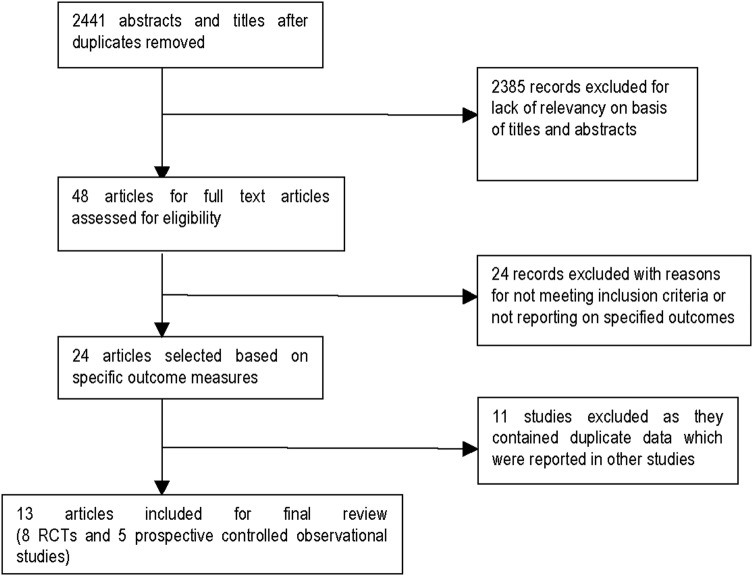
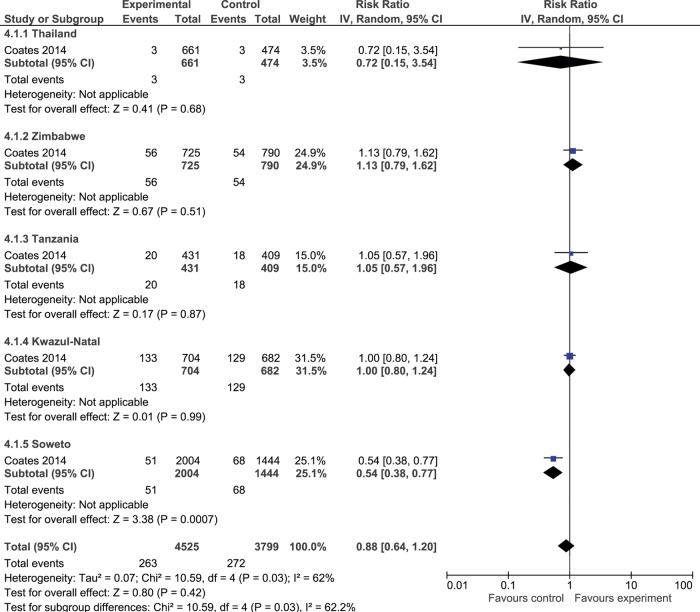
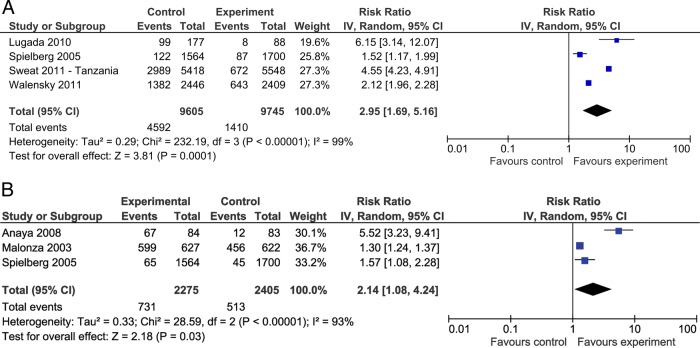
From 2441 articles, we included 8 randomised controlled trials and 5 observational studies. Rapid VCT was associated with a threefold increase in HIV-testing uptake (relative risk (RR)=2.95 95% CI 1.69 to 5.16) and a twofold increase in the receipt of test results (RR=2.14, 95% CI 1.08 to 4.24). Women accepted testing more often than men in rapid VCT arm, but no differences in effect for age or socioeconomic status. Observational studies also showed rapid VCT led to higher rates of uptake of testing. Heterogeneity was high. A cluster-randomised trial reported an 11% reduction in HIV incidence in intervention communities (RR=0.89, 95% CI=0.63 to 1.24) over 3 years trial.
Rapid VCT in health facilities and communities was associated with a large increase in HIV-testing uptake and receipt of results. This has implications for WHO guidelines. The routine use of rapid VCT may also help avoid human rights violations among marginalised populations where testing may occur without informed consent and where existing stigma may create barriers to testing.
评估快速自愿咨询检测(VCT)对HIV感染率以及HIV暴露高危人群接受HIV/AIDS服务情况的影响。
Cochrane系统评价和荟萃分析。
检索了PubMed、EMBASE、AIDSearch、LILACS、Global Health、Medline Africa、PsychInfo、CINAHL、Cochrane CENTRAL、Cochrane HIV/AIDS小组专业注册库以及灰色文献,检索时间为2001年1月1日至2014年6月5日,无语言限制。
纳入在HIV暴露高危人群中比较快速VCT与传统检测的对照研究。
两名评价员提取数据。我们使用Cochrane偏倚风险工具和GRADE标准:偏倚风险、不一致性、间接性、不精确性和发表偏倚。对于观察性研究,我们使用纽卡斯尔-渥太华量表。我们使用PRISMA-Equity报告指南。
从2441篇文章中,我们纳入了8项随机对照试验和5项观察性研究。快速VCT与HIV检测接受率增加三倍相关(相对风险(RR)=2.95,95%CI 1.69至5.16),以及检测结果接收率增加两倍相关(RR=2.14,95%CI 1.08至4.24)。在快速VCT组中,女性比男性更常接受检测,但年龄或社会经济地位的影响无差异。观察性研究也表明快速VCT导致更高的检测接受率。异质性较高。一项整群随机试验报告在3年试验期间干预社区的HIV感染率降低了11%(RR=0.89,95%CI=0.63至1.24)。
医疗机构和社区中的快速VCT与HIV检测接受率和结果接收率的大幅增加相关。这对世界卫生组织的指南有影响。快速VCT的常规使用也可能有助于避免在边缘化人群中发生侵犯人权的行为,在这些人群中检测可能在未经知情同意的情况下进行,并且现有的耻辱感可能对检测造成障碍。