Xing Libo, Zhang Dong, Li Youmei, Zhao Caiping, Zhang Songwen, Shen Yawen, An Na, Han Mingyu
College of Horticulture, Northwest A&F University, Yangling, Shaanxi, 712100, China.
BMC Genomics. 2014 Dec 17;15(1):1125. doi: 10.1186/1471-2164-15-1125.
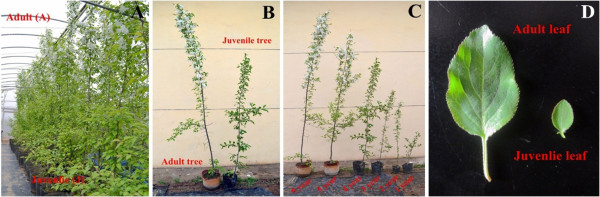
A long juvenile period between germination and flowering is a common characteristic among fruit trees, including Malus hupehensis (Pamp.) Rehd., which is an apple rootstock widely used in China. microRNAs (miRNAs) play an important role in the regulation of phase transition and reproductive growth processes.
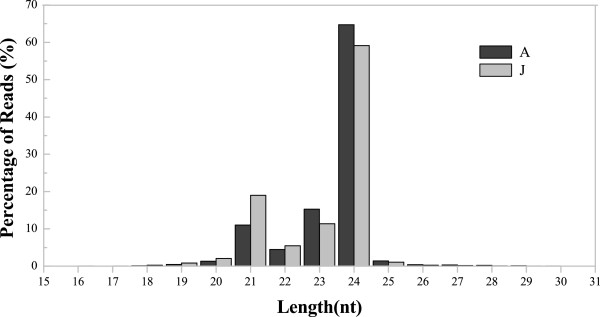
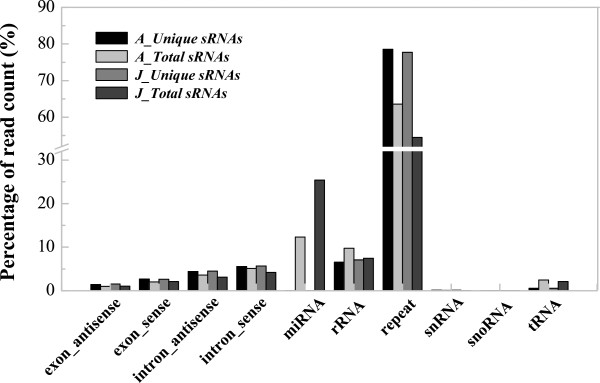
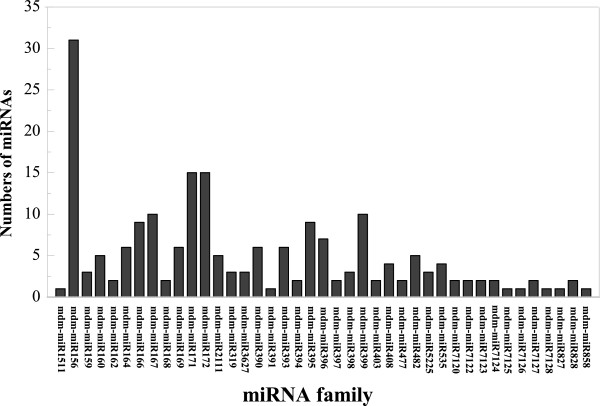
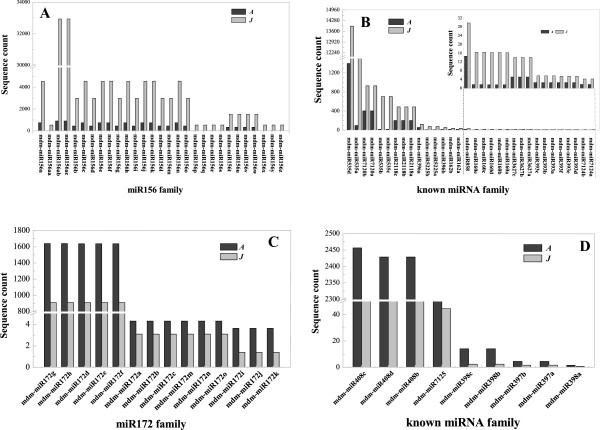
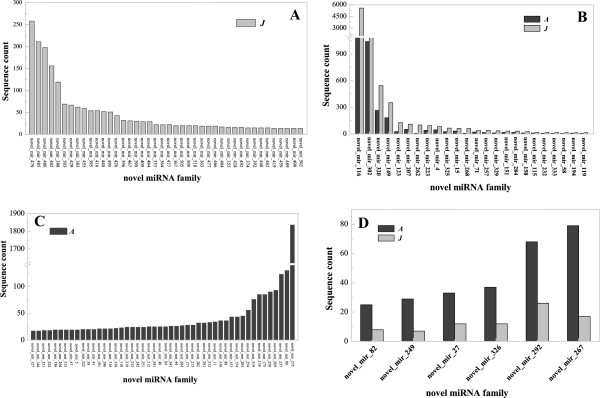
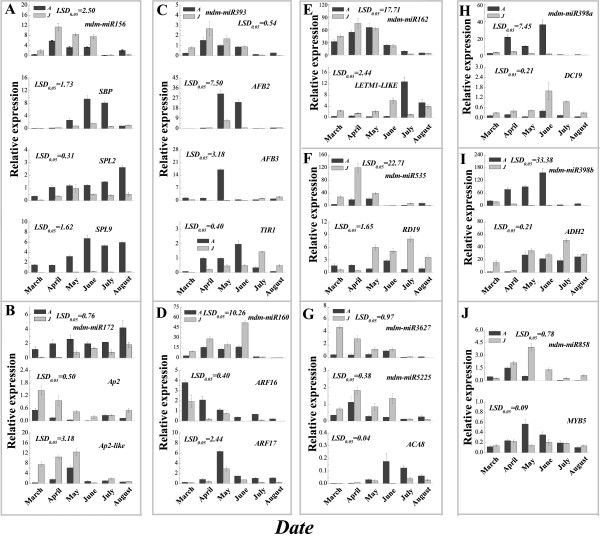
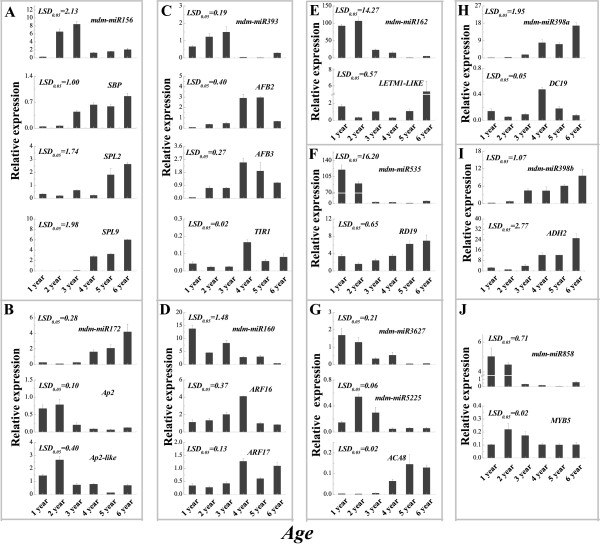
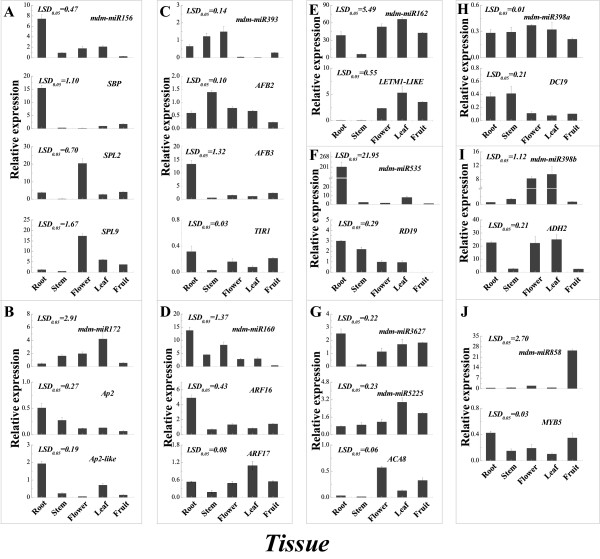
M. hupehensis RNA libraries, one adult and one juvenile phase, were constructed using tree leaves and underwent high-throughput sequencing. We identified 42 known miRNA families and 172 novel miRNAs. We also identified 127 targets for 25 known miRNA families and 168 targets for 35 unique novel miRNAs using degradome sequencing. The identified miRNA targets were categorized into 58 biological processes, and the 123 targets of known miRNAs were associated with phase transition processes. The KEGG analysis revealed that these targets were involved in starch and sucrose metabolism, and plant hormone signal transduction. Expression profiling of miRNAs and their targets indicated multiple regulatory functions in the phase transition. The higher expression level of mdm-miR156 and lower expression level of mdm-miR172 in the juvenile phase leaves implied that these two small miRNAs regulated the phase transition. mdm-miR160 and miRNA393, which regulate genes involved in auxin signal transduction, could also be involved in controlling this process. The identification of known and novel miRNAs and their targets provides new information on this regulatory process in M. hupehensis, which will contribute to the understanding of miRNA functions during growth, phase transition and reproduction in woody fruit trees.
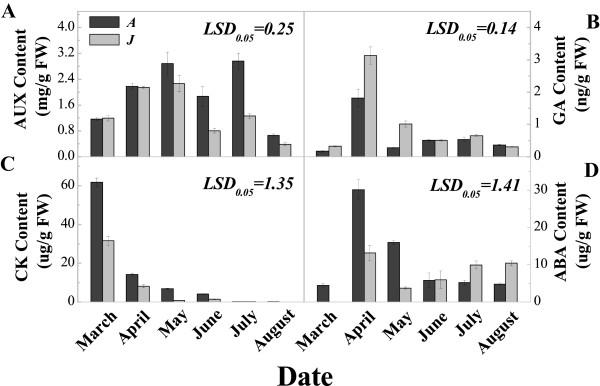
The combination of sRNA and degradome sequencing can be used to better illustrate the profiling of hormone-regulated miRNAs and miRNA targets involving complex regulatory networks, which will contribute to the understanding of miRNA functions during growth, phase transition and reproductive growth in perennial woody fruit trees.
从发芽到开花的漫长幼年期是包括湖北海棠(Malus hupehensis (Pamp.) Rehd.)在内的果树的共同特征,湖北海棠是中国广泛使用的苹果砧木。微小RNA(miRNA)在调控阶段转变和生殖生长过程中发挥着重要作用。
利用成年期和幼年期的树叶构建了湖北海棠RNA文库,并进行了高通量测序。我们鉴定出42个已知的miRNA家族和172个新的miRNA。我们还利用降解组测序鉴定出25个已知miRNA家族的127个靶标以及35个独特新miRNA的168个靶标。鉴定出的miRNA靶标被归类为58个生物学过程,已知miRNA的123个靶标与阶段转变过程相关。KEGG分析表明这些靶标参与淀粉和蔗糖代谢以及植物激素信号转导。miRNA及其靶标的表达谱分析表明在阶段转变中具有多种调控功能。幼年期叶片中mdm-miR156的较高表达水平和mdm-miR172的较低表达水平表明这两种小miRNA调控阶段转变。调控生长素信号转导相关基因的mdm-miR160和miRNA393也可能参与调控这一过程。已知和新miRNA及其靶标的鉴定为湖北海棠这一调控过程提供了新信息,这将有助于理解木本果树生长、阶段转变和繁殖过程中miRNA的功能。
小RNA和降解组测序相结合可用于更好地阐明涉及复杂调控网络的激素调控miRNA和miRNA靶标的图谱,这将有助于理解多年生木本果树生长、阶段转变和生殖生长过程中miRNA的功能。