Wu Shengzheng, Li Lu, Wang Gong, Shen Weiwei, Xu Yali, Liu Zheng, Zhuo Zhongxiong, Xia Hongmei, Gao Yunhua, Tan Kaibin
Department of Ultrasound, Third Military Medical University, Chongqing, People's Republic of China.
Department of Orthopedics, Xinqiao Hospital, Third Military Medical University, Chongqing, People's Republic of China.
Int J Nanomedicine. 2014 Dec 3;9:5639-51. doi: 10.2147/IJN.S73950. eCollection 2014.
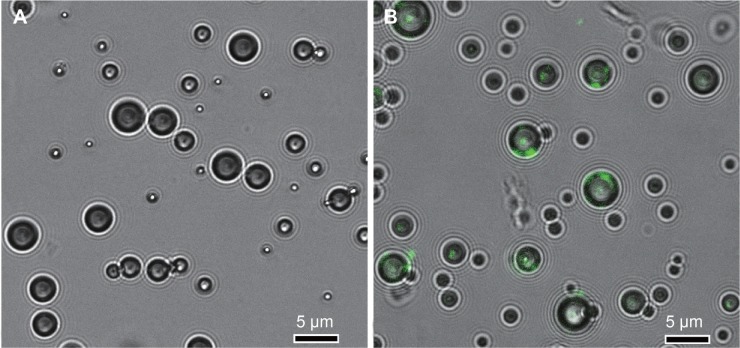
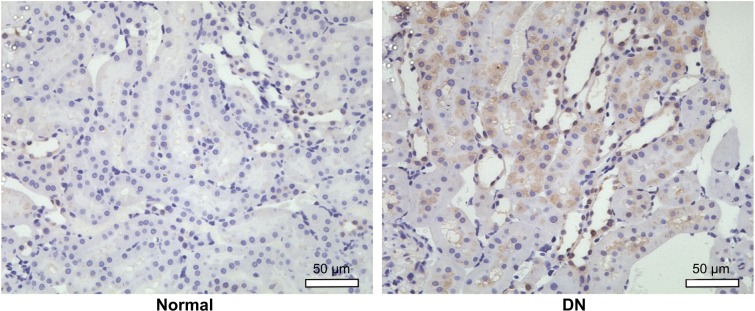
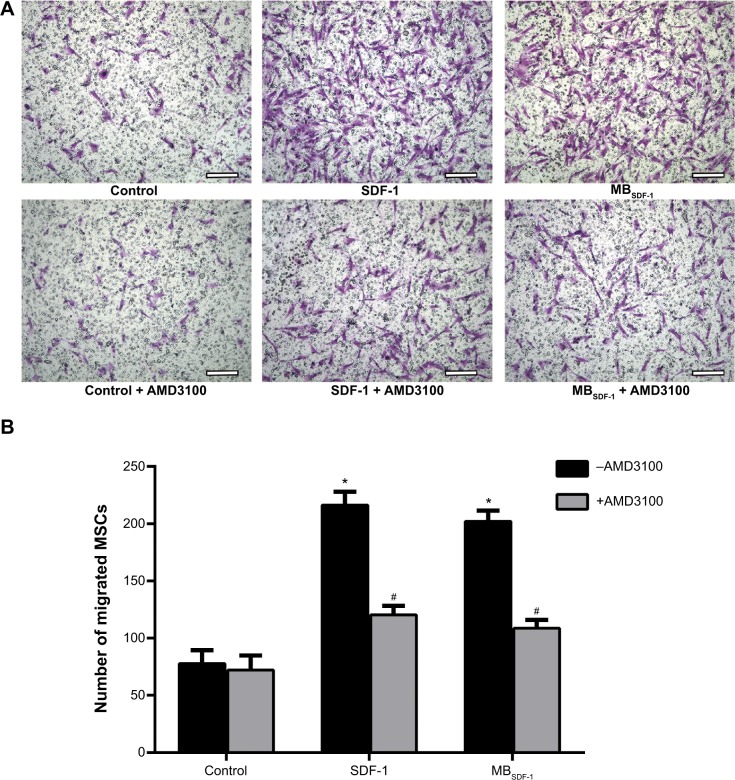
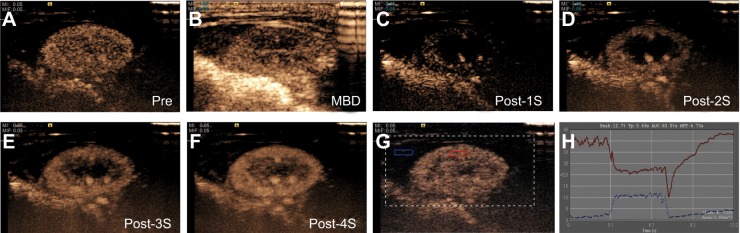
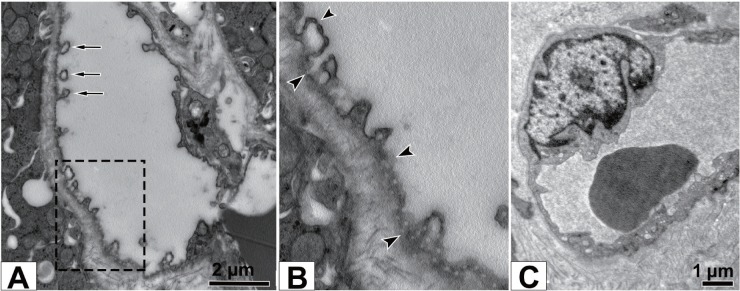
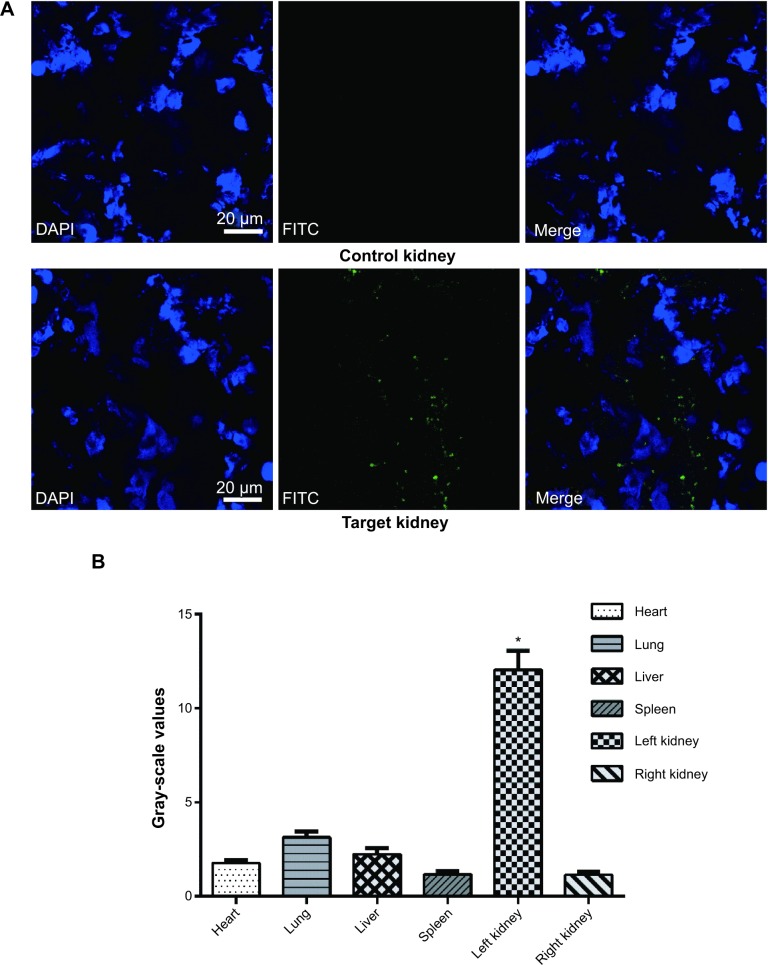
Mesenchymal stem cell (MSC) therapy has been considered a promising strategy to cure diabetic nephropathy (DN). However, insufficient MSCs can settle in injured kidneys, which constitute one of the major barriers to the effective implementation of MSC therapy. Stromal cell-derived factor-1 (SDF-1) plays a vital role in MSC migration and involves activation, mobilization, homing, and retention, which are presumably related to the poor homing in DN therapy. Ultrasound-targeted microbubble destruction has become one of the most promising strategies for the targeted delivery of drugs and genes. To improve MSC homing to DN kidneys, we present a strategy to increase SDF-1 via ultrasound-targeted microbubble destruction. In this study, we developed SDF-1-loaded microbubbles (MB(SDF-1)) via covalent conjugation. The characterization and bioactivity of MB(SDF-1) were assessed in vitro. Target release in the targeted kidneys was triggered with diagnostic ultrasound in combination with MB(SDF-1). The related bioeffects were also elucidated. Early DN was induced in rats with streptozotocin. Green fluorescent protein-labeled MSCs were transplanted intravenously following the target release of SDF-1 in the kidneys of normal and DN rats. The homing efficacy was assessed by detecting the implanted exogenous MSCs at 24 hours. The in vitro results showed an impressive SDF-1 loading efficacy of 79% and a loading content of 15.8 μg/mL. MB(SDF-1) remained bioactive as a chemoattractant. In the in vivo study, SDF-1 was successfully released in the targeted kidneys. The homing efficacy of MSCs to DN kidneys after the target release of SDF-1 was remarkably ameliorated at 24 hours compared with control treatments in normal rats and DN rats. In conclusion, ultrasound-targeted MB(SDF-1) destruction could promote the homing of MSCs to early DN kidneys and provide a novel potential therapeutic approach for DN kidney repair.
间充质干细胞(MSC)疗法被认为是治疗糖尿病肾病(DN)的一种有前景的策略。然而,到达受损肾脏的间充质干细胞数量不足,这是间充质干细胞疗法有效实施的主要障碍之一。基质细胞衍生因子-1(SDF-1)在间充质干细胞迁移中起关键作用,涉及激活、动员、归巢和滞留,这可能与糖尿病肾病治疗中间充质干细胞归巢不佳有关。超声靶向微泡破坏已成为最有前景的药物和基因靶向递送策略之一。为了改善间充质干细胞向糖尿病肾病肾脏的归巢,我们提出了一种通过超声靶向微泡破坏增加SDF-1的策略。在本研究中,我们通过共价结合开发了负载SDF-1的微泡(MB(SDF-1))。在体外评估了MB(SDF-1)的特性和生物活性。联合MB(SDF-1),用诊断超声触发靶向肾脏中的靶向释放。还阐明了相关的生物效应。用链脲佐菌素诱导大鼠早期糖尿病肾病。在正常大鼠和糖尿病肾病大鼠肾脏中靶向释放SDF-1后,静脉注射绿色荧光蛋白标记的间充质干细胞。通过在24小时检测植入的外源性间充质干细胞来评估归巢效率。体外结果显示,SDF-1的负载效率高达79%,负载量为15.8μg/mL。MB(SDF-1)作为一种趋化因子仍具有生物活性。在体内研究中,SDF-1在靶向肾脏中成功释放。与正常大鼠和糖尿病肾病大鼠的对照治疗相比,在24小时时,SDF-1靶向释放后间充质干细胞向糖尿病肾病肾脏的归巢效率显著改善。总之,超声靶向MB(SDF-1)破坏可促进间充质干细胞向早期糖尿病肾病肾脏的归巢,并为糖尿病肾病肾脏修复提供一种新的潜在治疗方法。