Yan Zhen, Bai Xiaochen, Yan Chuangye, Wu Jianping, Li Zhangqiang, Xie Tian, Peng Wei, Yin Changcheng, Li Xueming, Scheres Sjors H W, Shi Yigong, Yan Nieng
State Key Laboratory of Bio-membrane and Membrane Biotechnology, Tsinghua-Peking Joint Center for Life Sciences, School of Life Sciences and School of Medicine, Tsinghua University, Beijing 100084, China.
Ministry of Education Key Laboratory of Protein Science, Tsinghua-Peking Joint Center for Life Sciences, School of Life Sciences and School of Medicine, Tsinghua University, Beijing 100084, China.
Nature. 2015 Jan 1;517(7532):50-55. doi: 10.1038/nature14063. Epub 2014 Dec 15.
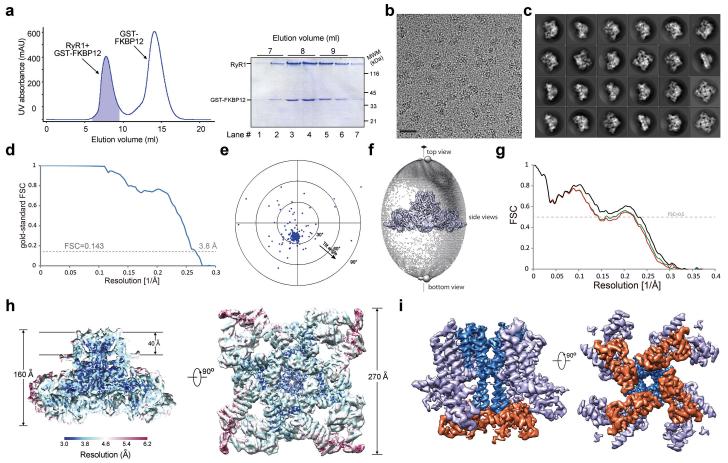
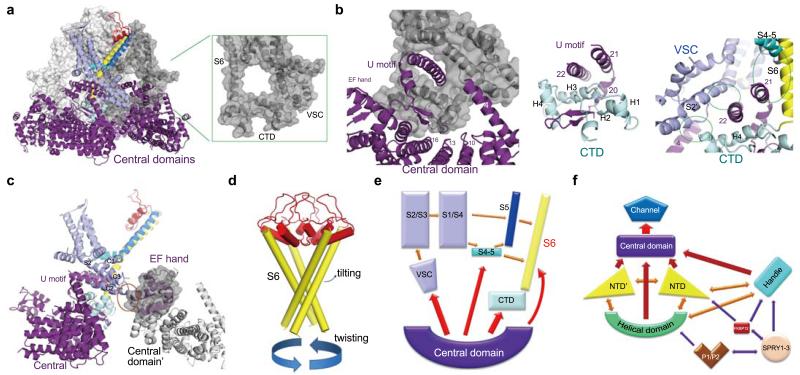
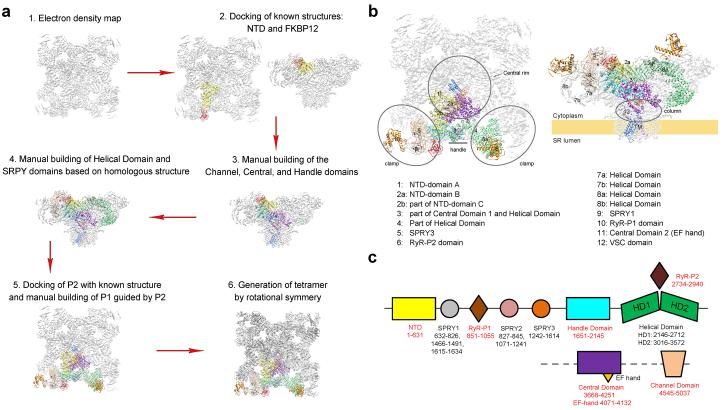
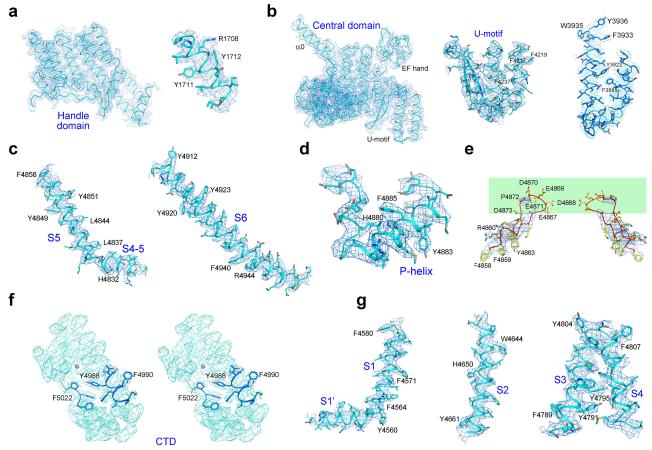
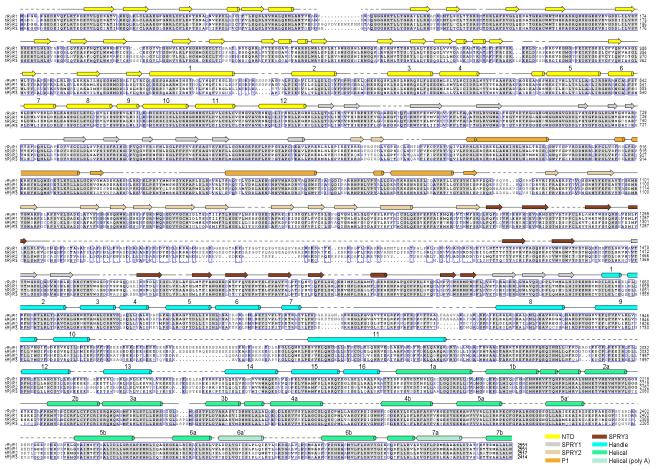
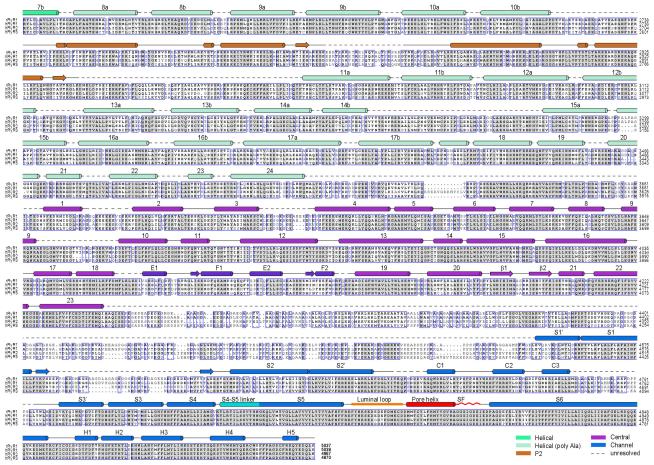
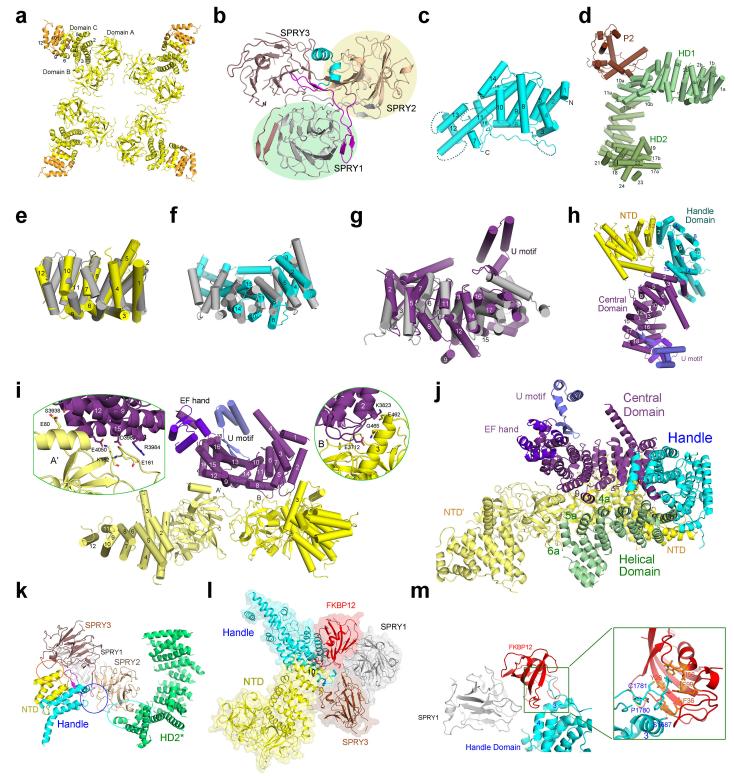
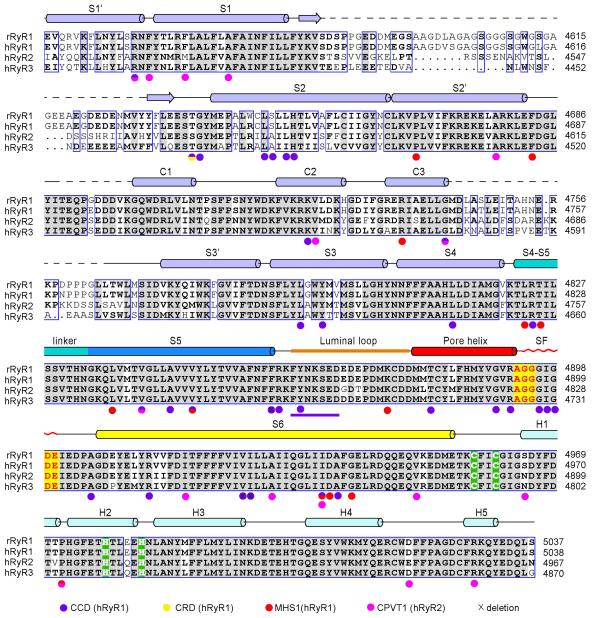
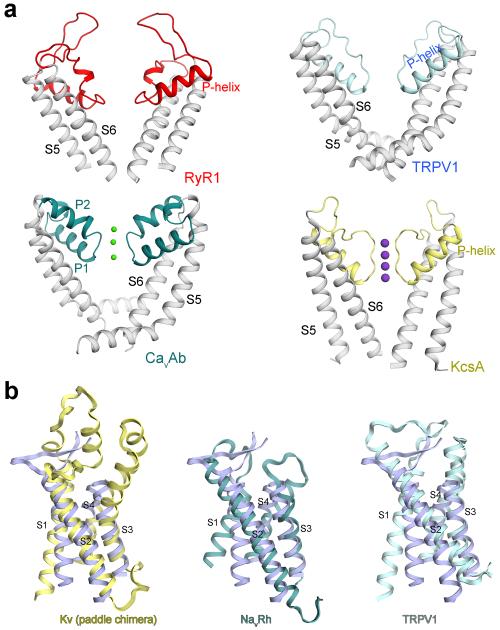
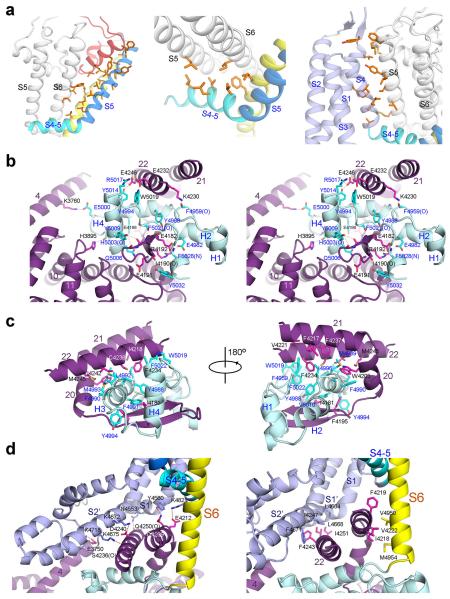
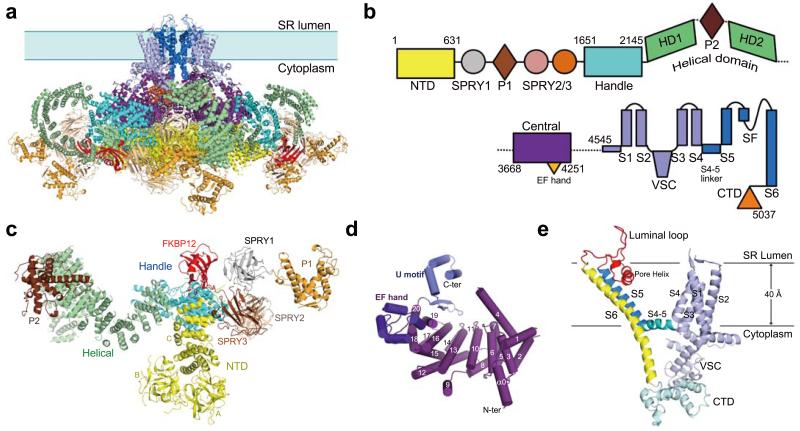
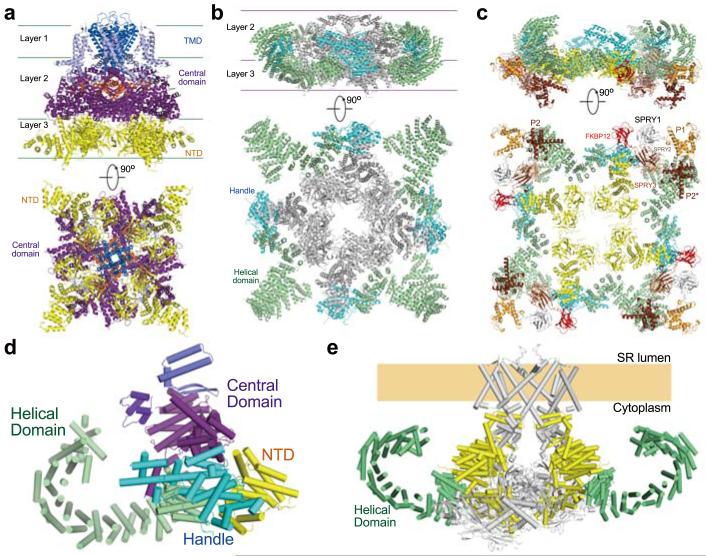
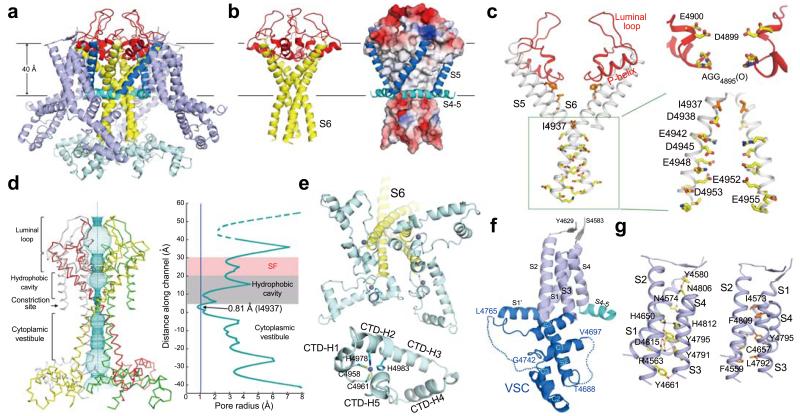
The ryanodine receptors (RyRs) are high-conductance intracellular Ca(2+) channels that play a pivotal role in the excitation-contraction coupling of skeletal and cardiac muscles. RyRs are the largest known ion channels, with a homotetrameric organization and approximately 5,000 residues in each protomer. Here we report the structure of the rabbit RyR1 in complex with its modulator FKBP12 at an overall resolution of 3.8 Å, determined by single-particle electron cryomicroscopy. Three previously uncharacterized domains, named central, handle and helical domains, display the armadillo repeat fold. These domains, together with the amino-terminal domain, constitute a network of superhelical scaffold for binding and propagation of conformational changes. The channel domain exhibits the voltage-gated ion channel superfamily fold with distinct features. A negative-charge-enriched hairpin loop connecting S5 and the pore helix is positioned above the entrance to the selectivity-filter vestibule. The four elongated S6 segments form a right-handed helical bundle that closes the pore at the cytoplasmic border of the membrane. Allosteric regulation of the pore by the cytoplasmic domains is mediated through extensive interactions between the central domains and the channel domain. These structural features explain high ion conductance by RyRs and the long-range allosteric regulation of channel activities.
兰尼碱受体(RyRs)是高电导的细胞内Ca(2+)通道,在骨骼肌和心肌的兴奋-收缩偶联中起关键作用。RyRs是已知最大的离子通道,具有同四聚体结构,每个原体约有5000个残基。本文我们报道了兔RyR1与其调节剂FKBP12复合物的结构,整体分辨率为3.8 Å,通过单颗粒冷冻电子显微镜确定。三个以前未被表征的结构域,称为中央结构域、柄状结构域和螺旋结构域,呈现出犰狳重复折叠。这些结构域与氨基末端结构域一起,构成了一个用于结合和传播构象变化的超螺旋支架网络。通道结构域呈现出具有独特特征的电压门控离子通道超家族折叠。连接S5和孔螺旋的富含负电荷的发夹环位于选择性过滤器前庭入口上方。四个细长的S6片段形成一个右手螺旋束,在膜的细胞质边界处关闭孔。细胞质结构域对孔的变构调节是通过中央结构域和通道结构域之间的广泛相互作用介导的。这些结构特征解释了RyRs的高离子电导以及通道活性的远程变构调节。