Loizides-Mangold Ursula, Clément Sophie, Alfonso-Garcia Alba, Branche Emilie, Conzelmann Stéphanie, Parisot Clotilde, Potma Eric O, Riezman Howard, Negro Francesco
Department of Biochemistry, NCCR Chemical Biology, University of Geneva, Geneva, Switzerland.
Division of Clinical Pathology, University Hospital, University of Geneva School of Medicine, Geneva, Switzerland.
PLoS One. 2014 Dec 18;9(12):e115309. doi: 10.1371/journal.pone.0115309. eCollection 2014.
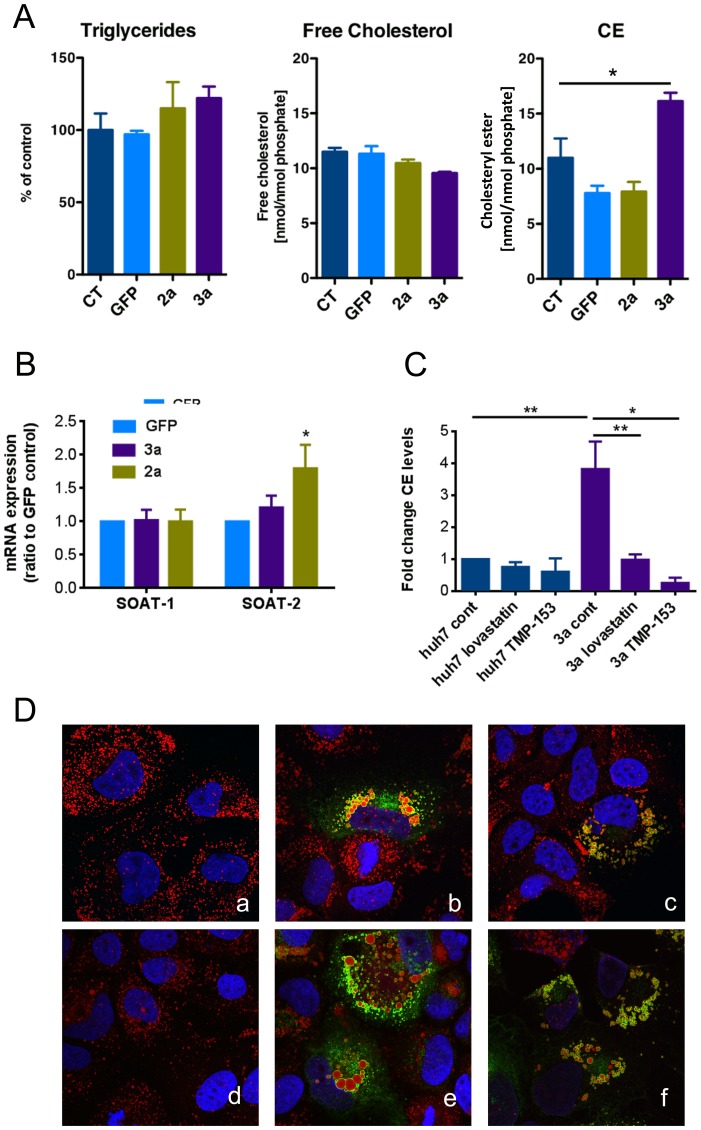
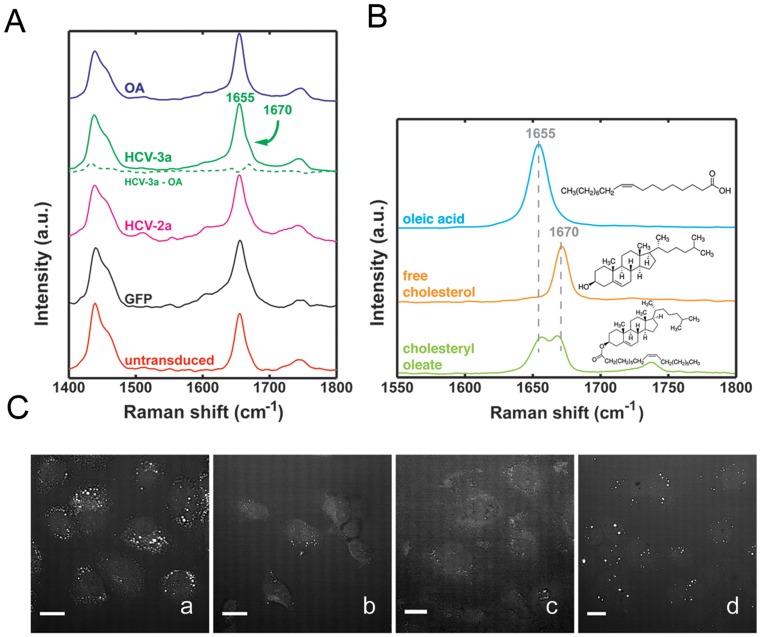
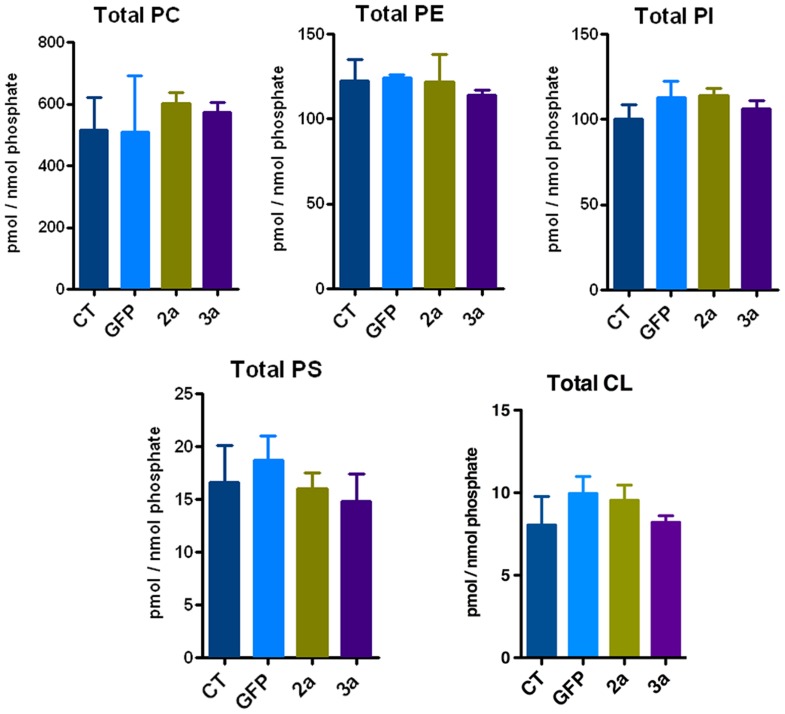
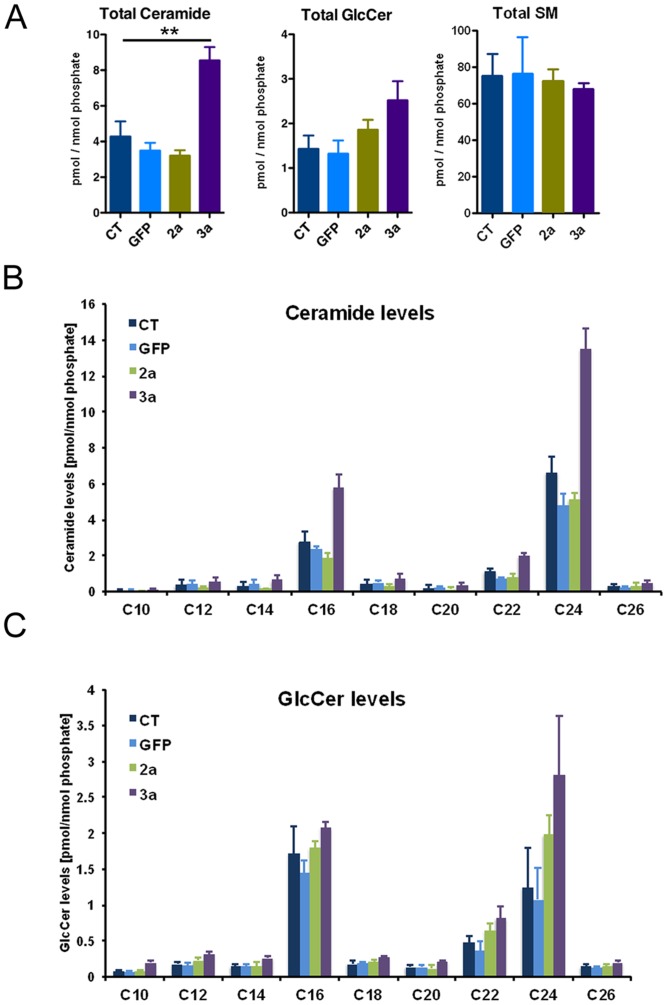
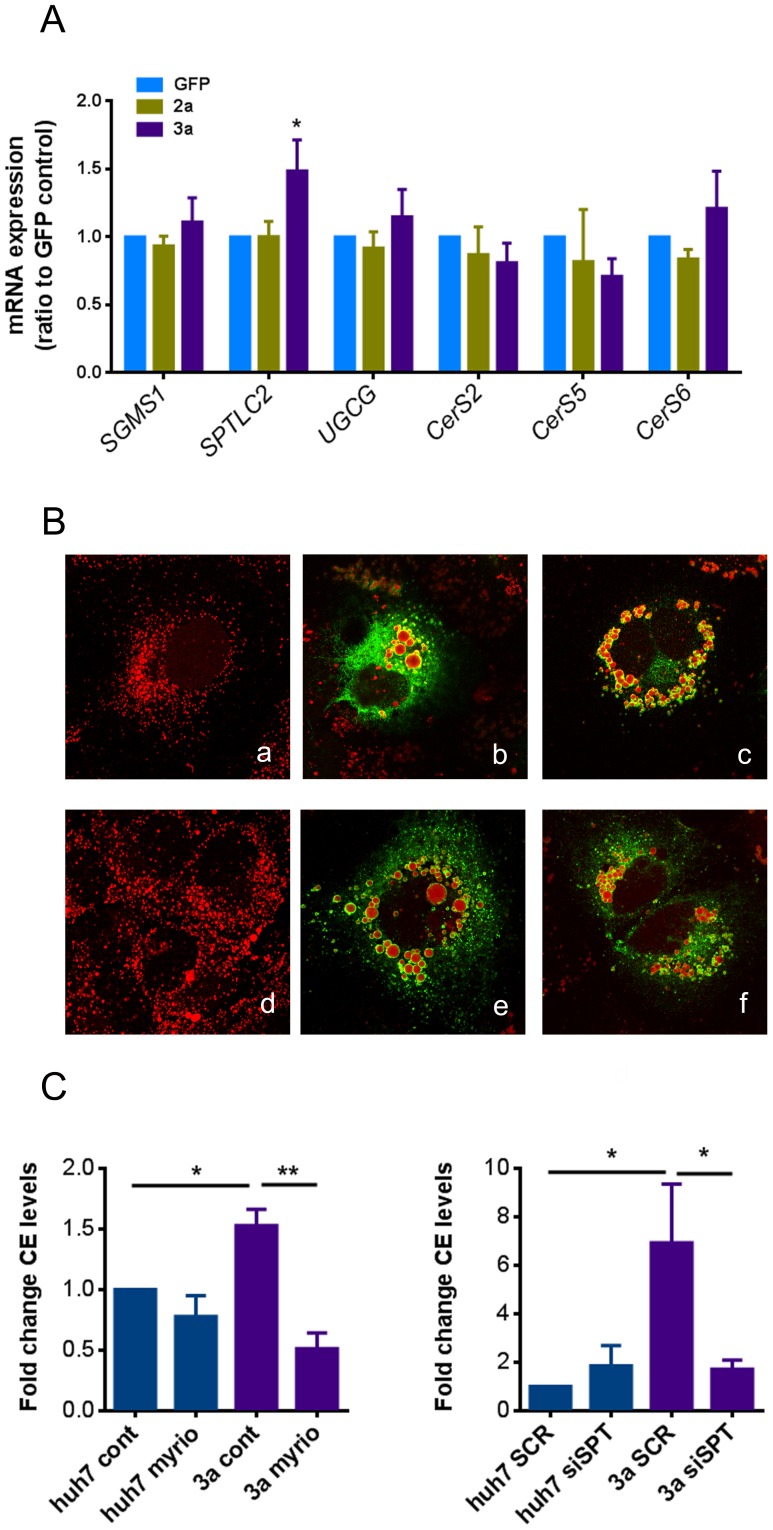
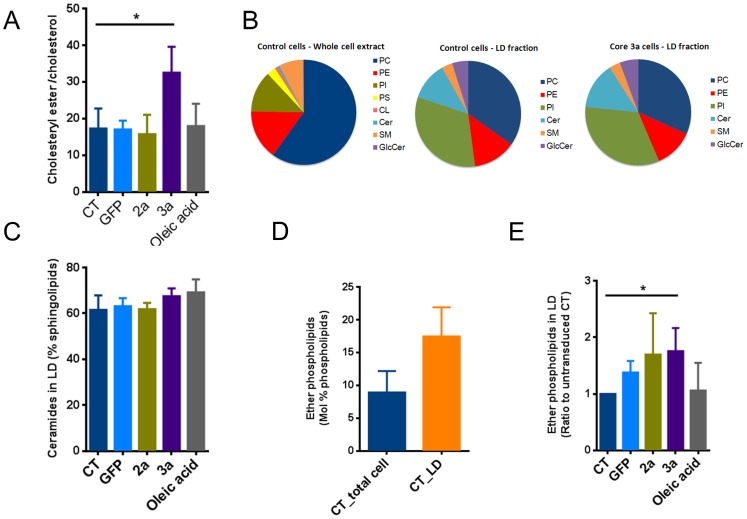
Hepatitis C virus (HCV) infected patients often develop steatosis and the HCV core protein alone can induce this phenomenon. To gain new insights into the pathways leading to steatosis, we performed lipidomic profiling of HCV core protein expressing-Huh-7 cells and also assessed the lipid profile of purified lipid droplets isolated from HCV 3a core expressing cells. Cholesteryl esters, ceramides and glycosylceramides, but not triglycerides, increased specifically in cells expressing the steatogenic HCV 3a core protein. Accordingly, inhibitors of cholesteryl ester biosynthesis such as statins and acyl-CoA cholesterol acyl transferase inhibitors prevented the increase of cholesteryl ester production and the formation of large lipid droplets in HCV core 3a-expressing cells. Furthermore, inhibition of de novo sphingolipid biosynthesis by myriocin - but not of glycosphingolipid biosynthesis by miglustat - affected both lipid droplet size and cholesteryl ester level. The lipid profile of purified lipid droplets, isolated from HCV 3a core-expressing cells, confirmed the particular increase of cholesteryl ester. Thus, both sphingolipid and cholesteryl ester biosynthesis are affected by the steatogenic core protein of HCV genotype 3a. These results may explain the peculiar lipid profile of HCV-infected patients with steatosis.
丙型肝炎病毒(HCV)感染患者常出现脂肪变性,仅HCV核心蛋白就能诱发这种现象。为了深入了解导致脂肪变性的途径,我们对表达HCV核心蛋白的Huh-7细胞进行了脂质组分析,并评估了从表达HCV 3a核心蛋白的细胞中分离出的纯化脂滴的脂质谱。胆固醇酯、神经酰胺和糖基神经酰胺,而非甘油三酯,在表达致脂肪变性的HCV 3a核心蛋白的细胞中特异性增加。相应地,他汀类等胆固醇酯生物合成抑制剂和酰基辅酶A胆固醇酰基转移酶抑制剂可阻止表达HCV核心3a的细胞中胆固醇酯生成的增加和大脂滴的形成。此外,麦角硫因抑制从头鞘脂生物合成——而米格列醇不抑制糖鞘脂生物合成——会影响脂滴大小和胆固醇酯水平。从表达HCV 3a核心蛋白的细胞中分离出的纯化脂滴的脂质谱证实了胆固醇酯的特异性增加。因此,鞘脂和胆固醇酯生物合成均受HCV 3a基因型致脂肪变性核心蛋白的影响。这些结果可能解释了伴有脂肪变性的HCV感染患者独特的脂质谱。