Mukhopadhya I, Hansen R, Meharg C, Thomson J M, Russell R K, Berry S H, El-Omar E M, Hold G L
Gastrointestinal Research Group, Division of Applied Medicine, University of Aberdeen, Foresterhill, Aberdeen AB25 2ZD, United Kingdom.
Gastrointestinal Research Group, Division of Applied Medicine, University of Aberdeen, Foresterhill, Aberdeen AB25 2ZD, United Kingdom; Department of Paediatric Gastroenterology, The Royal Hospital for Sick Children, Glasgow G3 8SJ, United Kingdom.
Microbes Infect. 2015 Apr;17(4):304-10. doi: 10.1016/j.micinf.2014.12.001. Epub 2014 Dec 15.
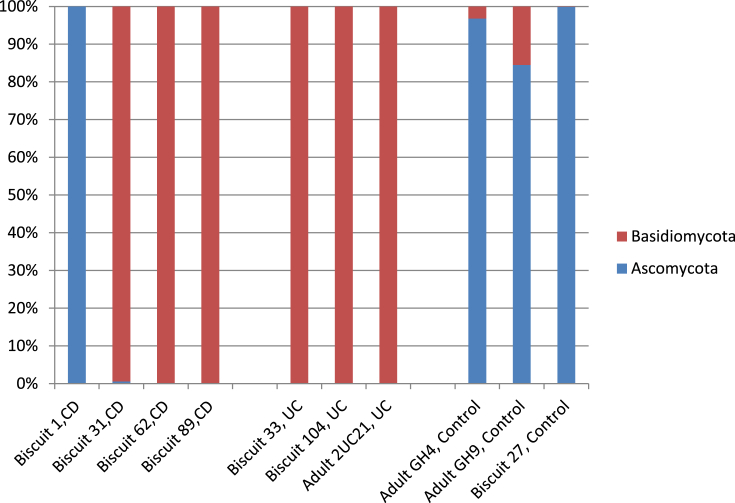
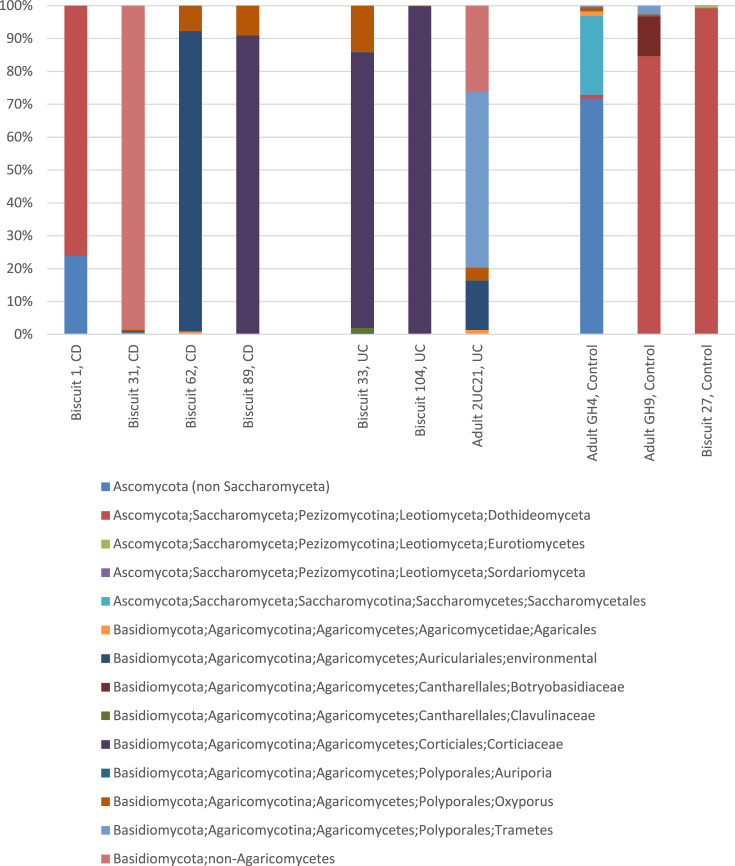
Inflammatory bowel disease (IBD) is characterised by an inappropriate chronic immune response against resident gut microbes. This may be on account of distinct changes in the gut microbiota termed as dysbiosis. The role of fungi in this altered luminal environment has been scarcely reported. We studied the fungal microbiome in de-novo paediatric IBD patients utilising next generation sequencing and compared with adult disease and normal controls. We report a distinct difference in fungal species with Ascomycota predominating in control subjects compared to Basidiomycota dominance in children with IBD, which could be as a result of altered tolerance in these patients.
炎症性肠病(IBD)的特征是对肠道常驻微生物产生不适当的慢性免疫反应。这可能是由于肠道微生物群发生了明显变化,即生态失调。关于真菌在这种改变的管腔环境中的作用鲜有报道。我们利用下一代测序技术研究了初发儿科IBD患者的真菌微生物组,并与成人患者及正常对照进行了比较。我们报告称,真菌种类存在明显差异,对照组中以子囊菌门为主,而IBD患儿中则以担子菌门为主,这可能是这些患者耐受性改变的结果。