Agrawal Hitesh, Shang Hulan, Sattah Anna Parker, Yang Ning, Peirce Shayn M, Katz Adam J
Stem Cell Res Ther. 2014 Dec 18;5(6):142. doi: 10.1186/scrt532.
Mesenchymal cells are emerging as a promising cell platform for regenerative therapies. However, the fate of cells after transplantation in many different disease settings and tissue beds remains unclear.
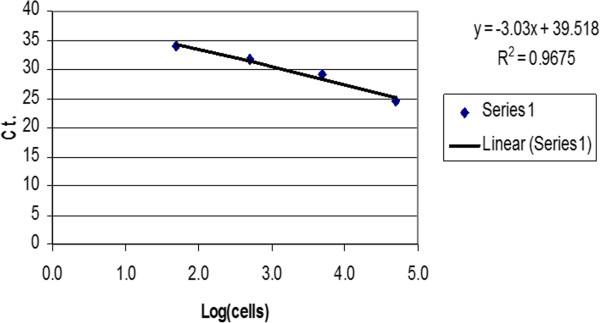
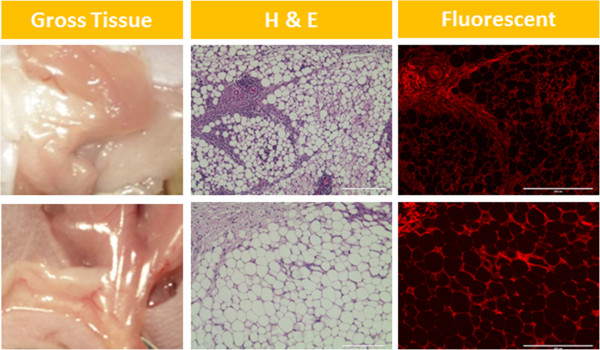
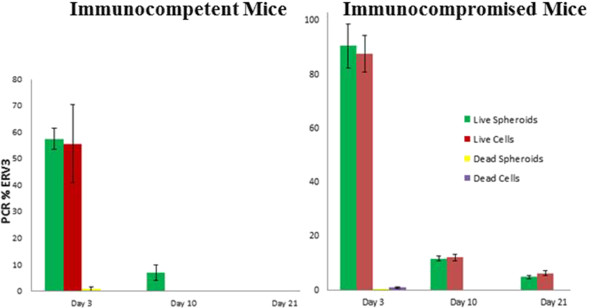
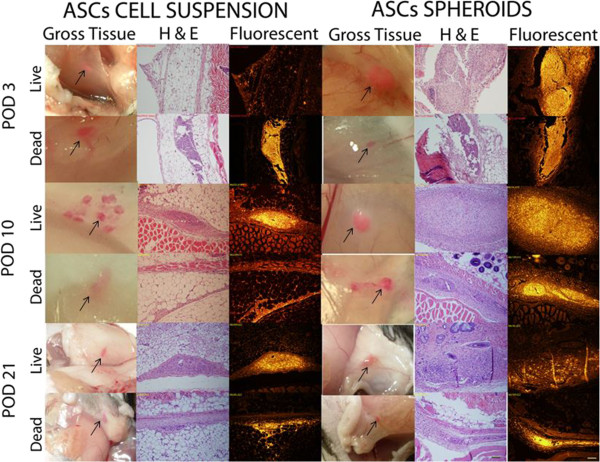
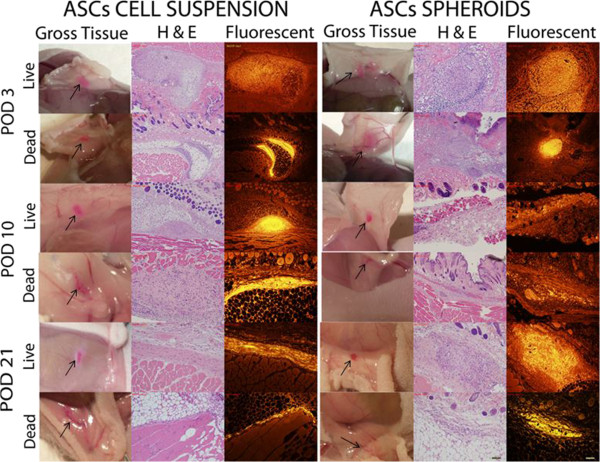
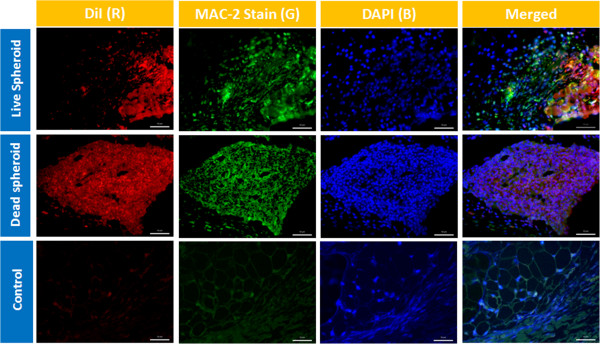
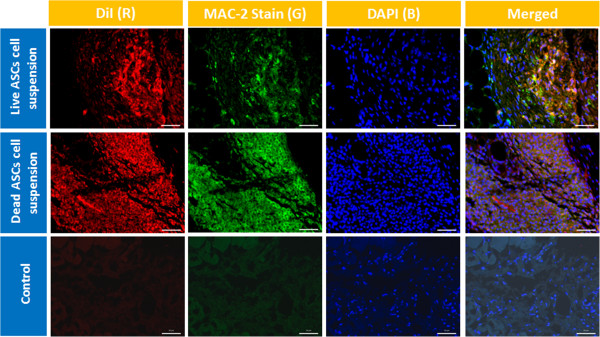
In this study, human adipose-derived stromal/stem (ASCs) cells were fluorescently labeled with a membrane dye and injected into both immunocompetent and immunocompromised mouse strains. Cells were injected either as single cell suspensions, or as self-assembling spheroids. In parallel, cells were purposefully devitalized prior to injection and then implanted in the opposite side in a randomized fashion. These 'control' groups were included to determine whether the fluorescent membrane dye would remain localized at the injection site despite the use of nonviable cells. Cell implants and the surrounding tissues were harvested on days 3, 10 and 21 after in vivo delivery and evaluated in a blinded manner. Injection sites were analyzed by fluorescent microscopy, and human cell numbers were quantified using PCR detection of a human-specific endogenous retrovirus (ERV-3). Host response was evaluated by immunofluorescent staining of macrophages.
ERV-3 quantification showed that 95% of the human cells that were viable when they were injected were undetectable at the three-week time-point. Although fluorescent signal persisted for the entire study period, further analysis revealed that much of this signal was located within host macrophages.
These results suggest that human ASCs survive for less than three weeks after injection into even immunocompromised mice, and call into question the notion that human ASCs are immuno-privileged and capable of surviving for extended periods in xenogeneic and/or allogeneic models.
间充质细胞正成为再生疗法中一个有前景的细胞平台。然而,在许多不同疾病环境和组织床中移植后细胞的命运仍不清楚。
在本研究中,人脂肪来源的基质/干细胞(ASCs)用膜染料进行荧光标记,并注射到免疫健全和免疫受损的小鼠品系中。细胞以单细胞悬液或自组装球体的形式注射。同时,在注射前有意使细胞失活,然后以随机方式植入另一侧。纳入这些“对照组”是为了确定尽管使用了无活力的细胞,荧光膜染料是否仍会保留在注射部位。在体内注射后第3、10和21天收获细胞植入物和周围组织,并以盲法进行评估。通过荧光显微镜分析注射部位,并使用人特异性内源性逆转录病毒(ERV-3)的PCR检测对人细胞数量进行定量。通过巨噬细胞的免疫荧光染色评估宿主反应。
ERV-3定量显示,注射时存活的人细胞在三周时间点有95%无法检测到。尽管荧光信号在整个研究期间持续存在,但进一步分析表明,大部分信号位于宿主巨噬细胞内。
这些结果表明,人ASCs注射到即使是免疫受损的小鼠体内后存活时间不到三周,并对人ASCs具有免疫特权且能够在异种和/或同种异体模型中长时间存活的观点提出了质疑。