Kim Dong-Hwan, Termsarasab Ubonvan, Cho Hyun-Jong, Yoon In-Soo, Lee Jae-Young, Moon Hyun Tae, Kim Dae-Duk
College of Pharmacy and Research Institute of Pharmaceutical Sciences, Seoul National University, Seoul, Republic of Korea.
College of Pharmacy, Kangwon National University, Chuncheon, Republic of Korea.
Int J Nanomedicine. 2014 Dec 8;9:5711-27. doi: 10.2147/IJN.S74353. eCollection 2014.
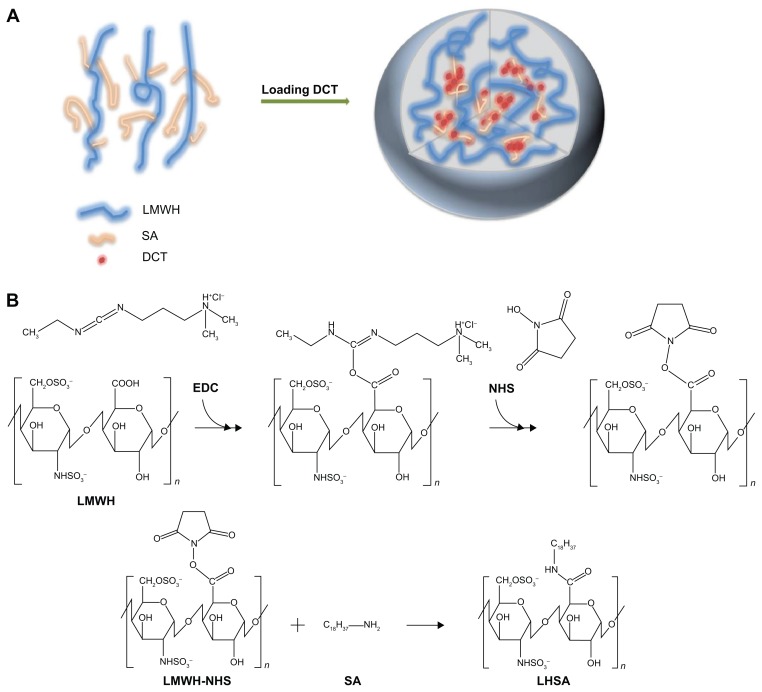
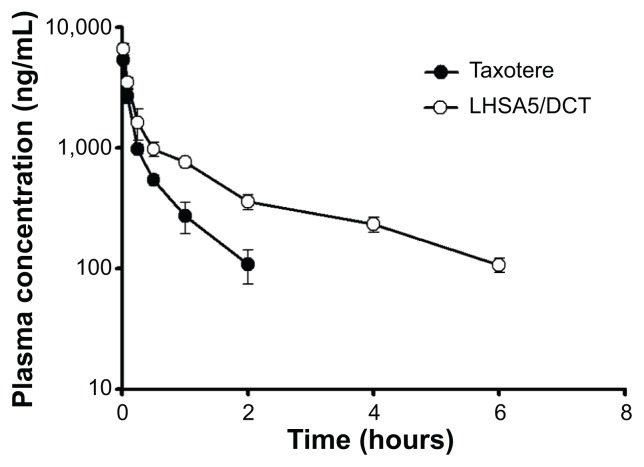
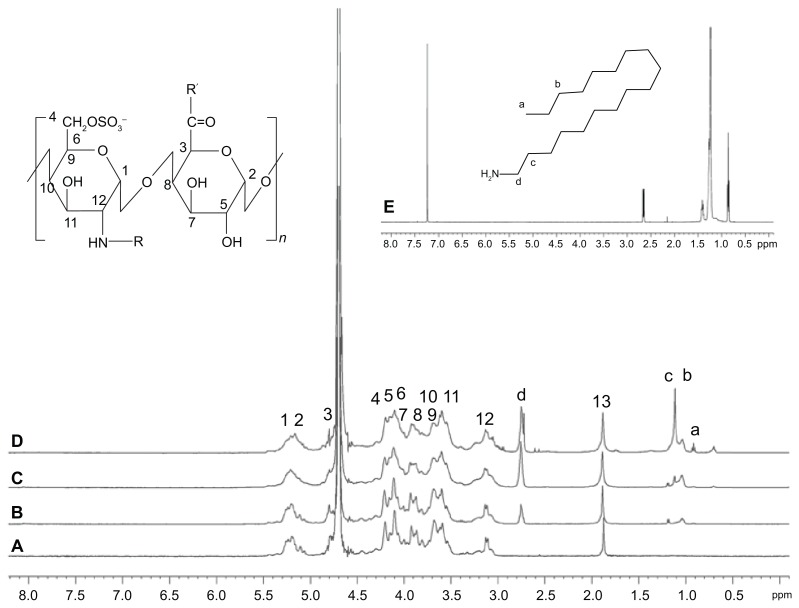
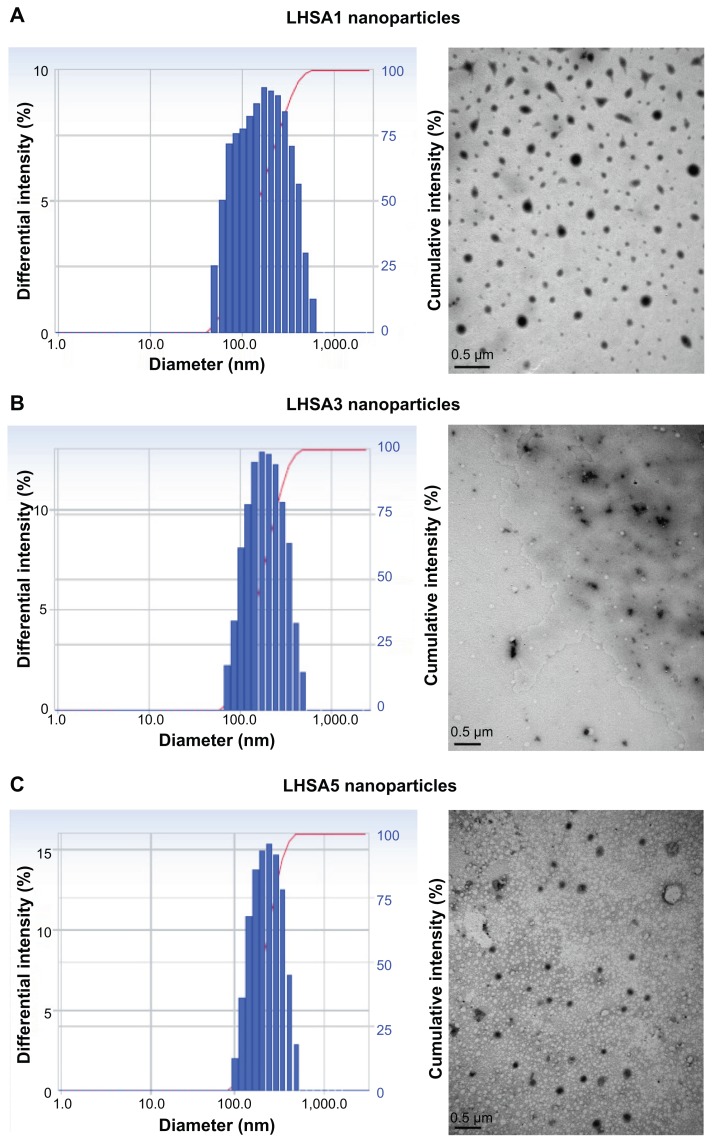
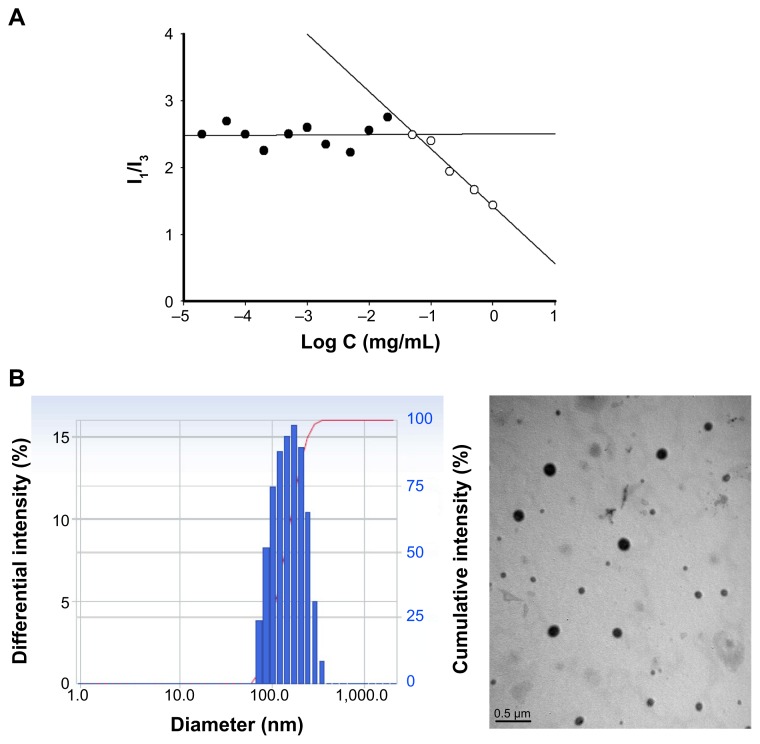
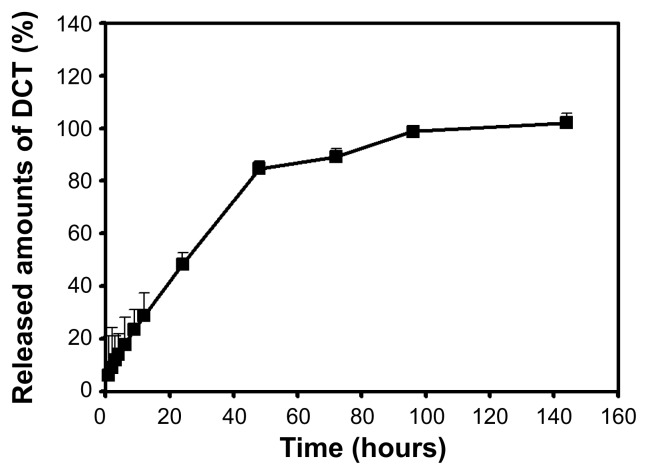
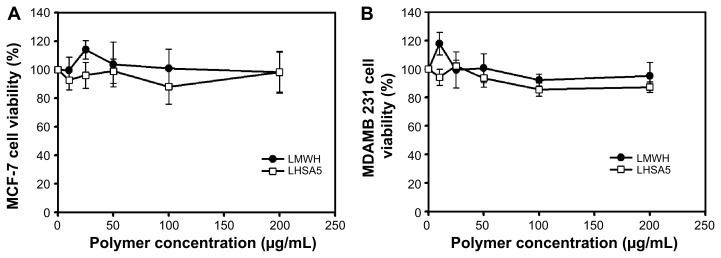
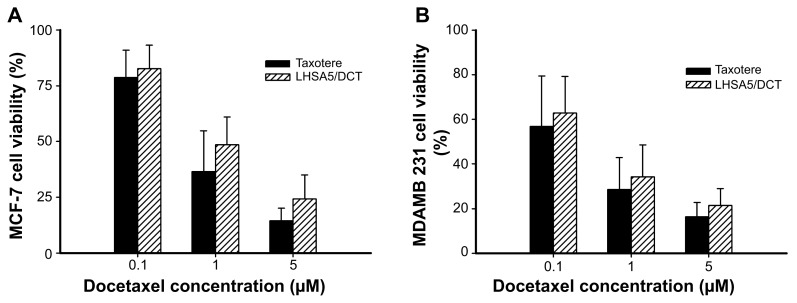
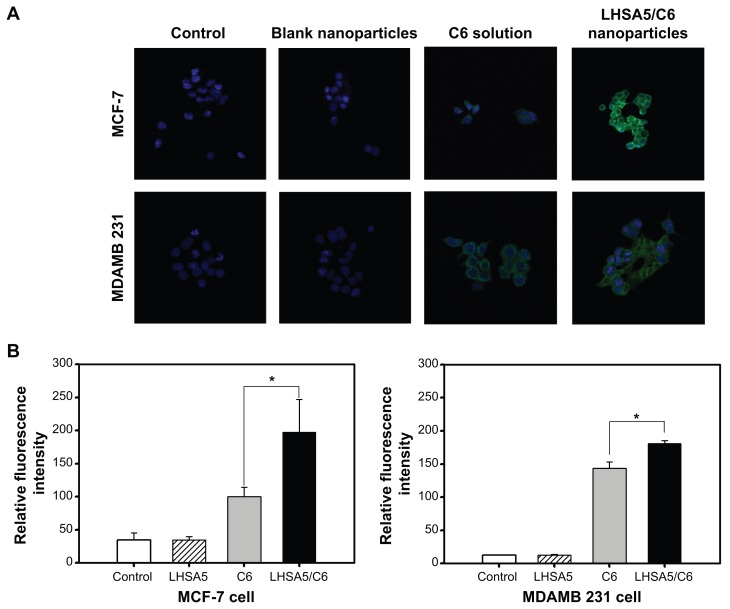
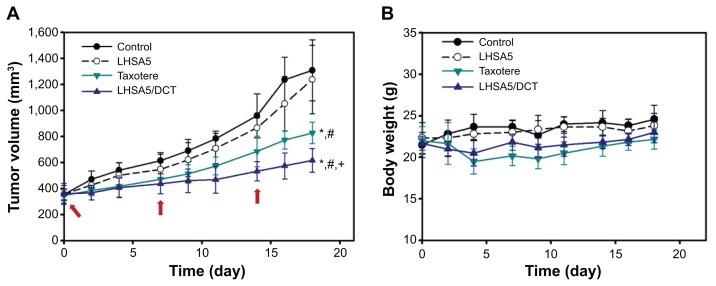
Low-molecular-weight heparin (LMWH)-stearylamine (SA) conjugates (LHSA)-based self-assembled nanoparticles were prepared for intravenous delivery of docetaxel (DCT). 1-Ethyl-3-(3-dimethylaminopropyl) carbodiimide and N-hydroxysuccinimide were used as coupling agents for synthesis of LHSA conjugates. The physicochemical properties, in vitro antitumor efficacy, in vitro cellular uptake efficiency, in vivo antitumor efficacy, and in vivo pharmacokinetics of LHSA nanoparticles were investigated. The LHSA nanoparticles exhibited a spherical shape with a mean diameter of 140-180 nm and a negative surface charge. According to in vitro release and in vivo pharmacokinetic test results, the docetaxel-loaded LHSA5 (LMWH:SA =1:5) nanoparticles exhibited sustained drug release profiles. The blank LHSA nanoparticles demonstrated only an insignificant cytotoxicity in MCF-7 and MDAMB 231 human breast cancer cells; additionally, higher cellular uptake of coumarin 6 (C6) in MCF-7 and MDAMB 231 cells was observed in the LHSA5 nanoparticles group than that in the C6 solution group. The in vivo tumor growth inhibition efficacy of docetaxel-loaded LHSA5 nanoparticles was also significantly higher than the Taxotere-treated group in the MDAMB 231 tumor-xenografted mouse model. These results indicated that the LHSA5-based nanoparticles could be a promising anticancer drug delivery system.
制备了基于低分子量肝素(LMWH)-硬脂胺(SA)共轭物(LHSA)的自组装纳米颗粒,用于多西他赛(DCT)的静脉给药。使用1-乙基-3-(3-二甲基氨基丙基)碳二亚胺和N-羟基琥珀酰亚胺作为偶联剂来合成LHSA共轭物。研究了LHSA纳米颗粒的物理化学性质、体外抗肿瘤功效、体外细胞摄取效率、体内抗肿瘤功效和体内药代动力学。LHSA纳米颗粒呈球形,平均直径为140-180nm,表面带负电荷。根据体外释放和体内药代动力学测试结果,载有多西他赛的LHSA5(LMWH:SA =1:5)纳米颗粒呈现出持续的药物释放曲线。空白LHSA纳米颗粒在MCF-7和MDAMB 231人乳腺癌细胞中仅表现出微不足道的细胞毒性;此外,在LHSA5纳米颗粒组中观察到MCF-7和MDAMB 231细胞对香豆素6(C6)的细胞摄取高于C6溶液组。在MDAMB 231肿瘤异种移植小鼠模型中,载有多西他赛的LHSA5纳米颗粒的体内肿瘤生长抑制功效也显著高于泰索帝治疗组。这些结果表明,基于LHSA5的纳米颗粒可能是一种有前途的抗癌药物递送系统。