Heenan Megan, Scheidt Robert A, Woo Douglas, Beardsley Scott A
Department of Biomedical Engineering, Marquette University, Milwaukee, WI, USA.
J Neuroeng Rehabil. 2014 Dec 19;11:170. doi: 10.1186/1743-0003-11-170.
Intention tremor and dysmetria are leading causes of upper extremity disability in Multiple Sclerosis (MS). The development of effective therapies to reduce tremor and dysmetria is hampered by insufficient understanding of how the distributed, multi-focal lesions associated with MS impact sensorimotor control in the brain. Here we describe a systems-level approach to characterizing sensorimotor control and use this approach to examine how sensory and motor processes are differentially impacted by MS.
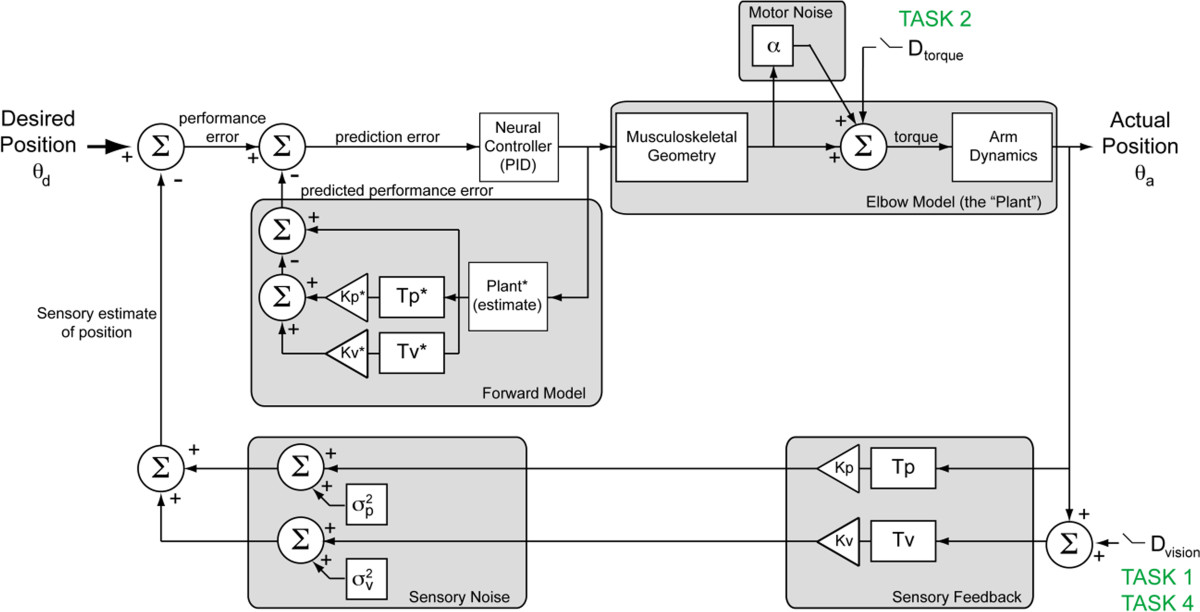
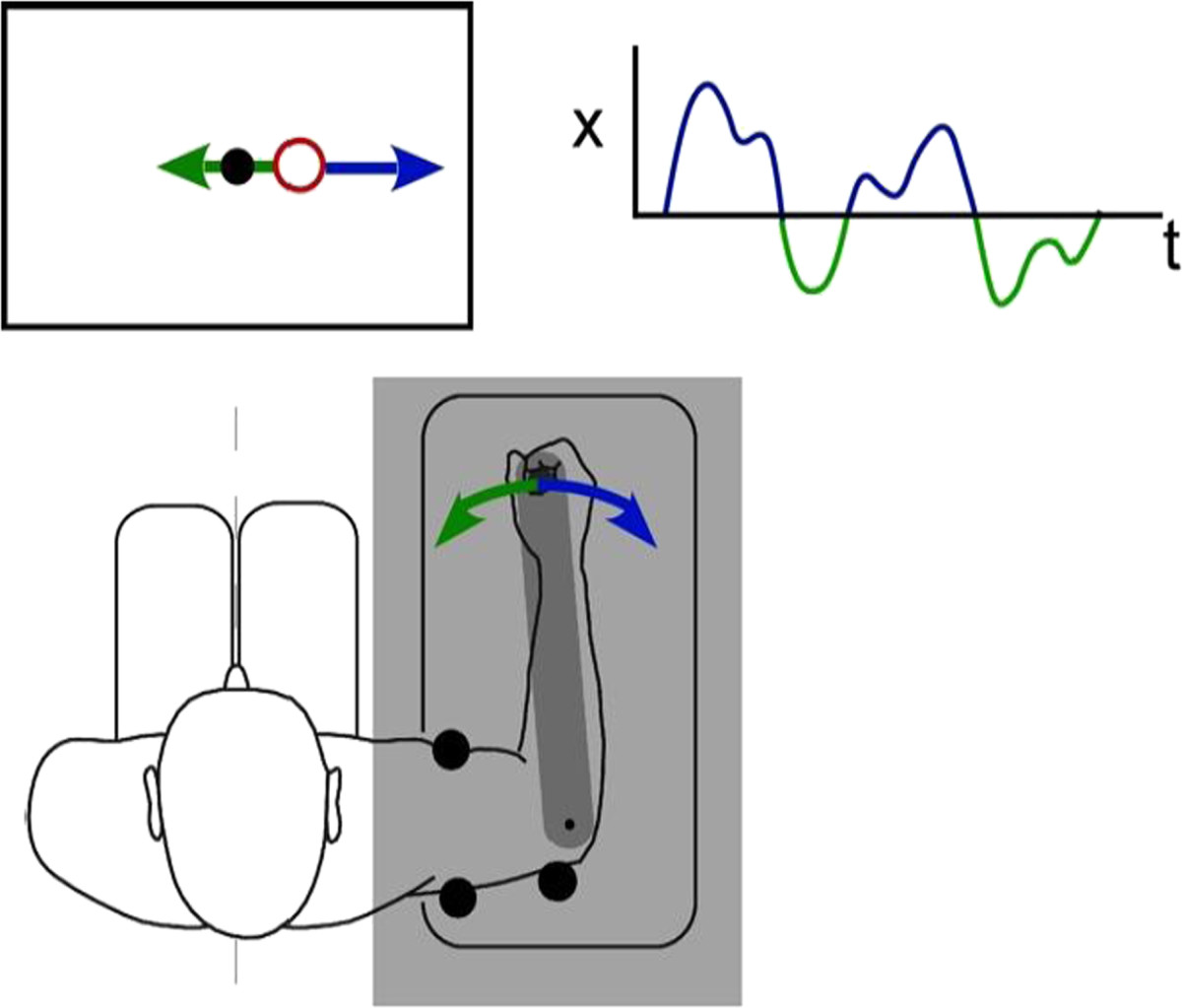
Eight subjects with MS and eight age- and gender-matched healthy control subjects performed visually-guided flexion/extension tasks about the elbow to characterize a sensory feedback control model that includes three sensory feedback pathways (one for vision, another for proprioception and a third providing an internal prediction of the sensory consequences of action). The model allows us to characterize impairments in sensory feedback control that contributed to each MS subject's tremor.
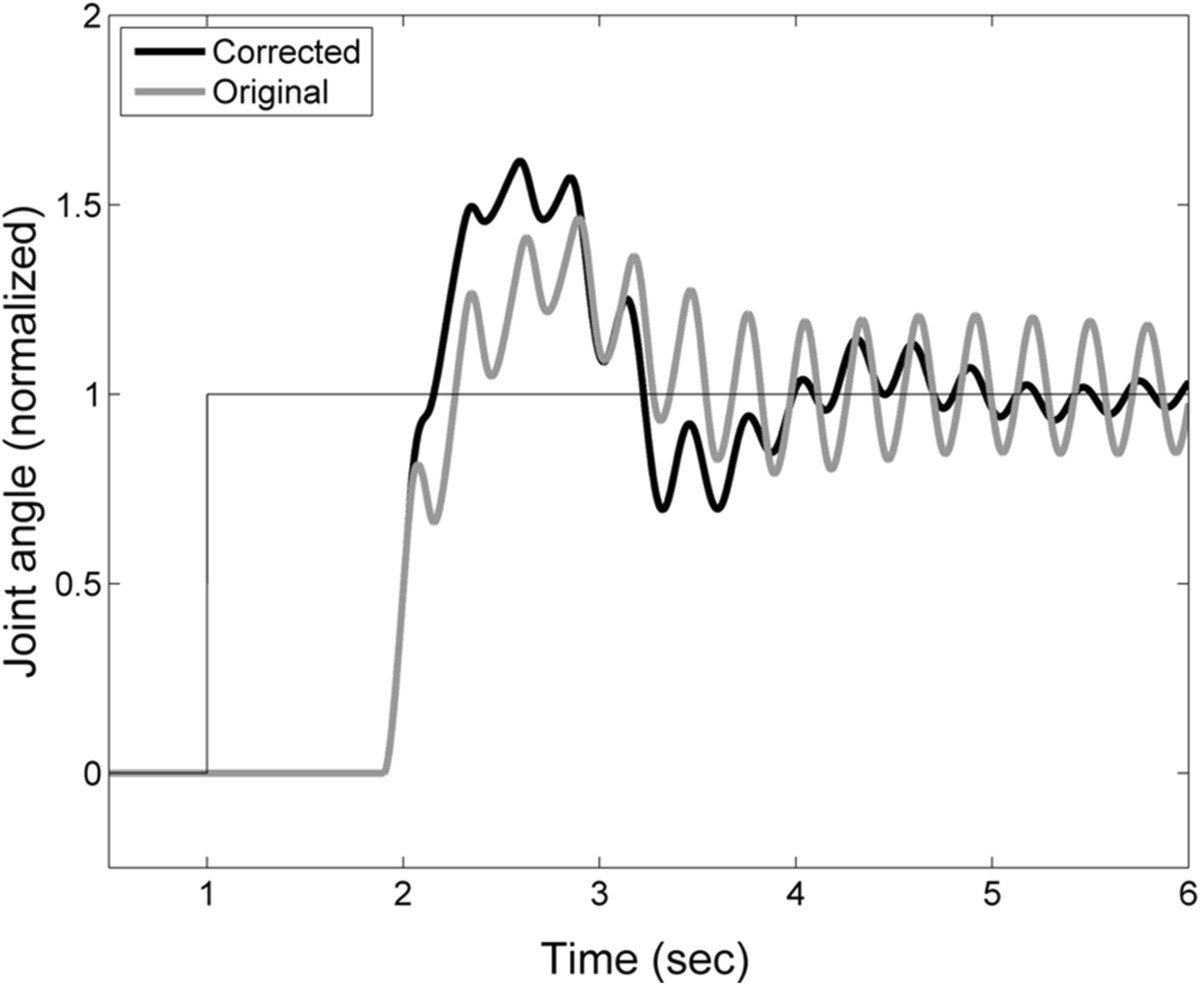
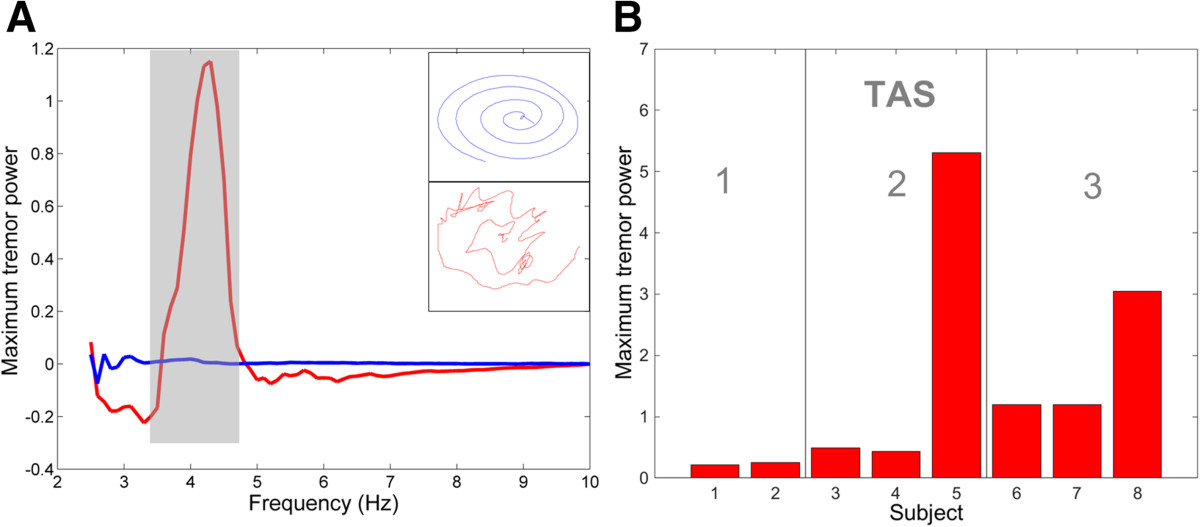
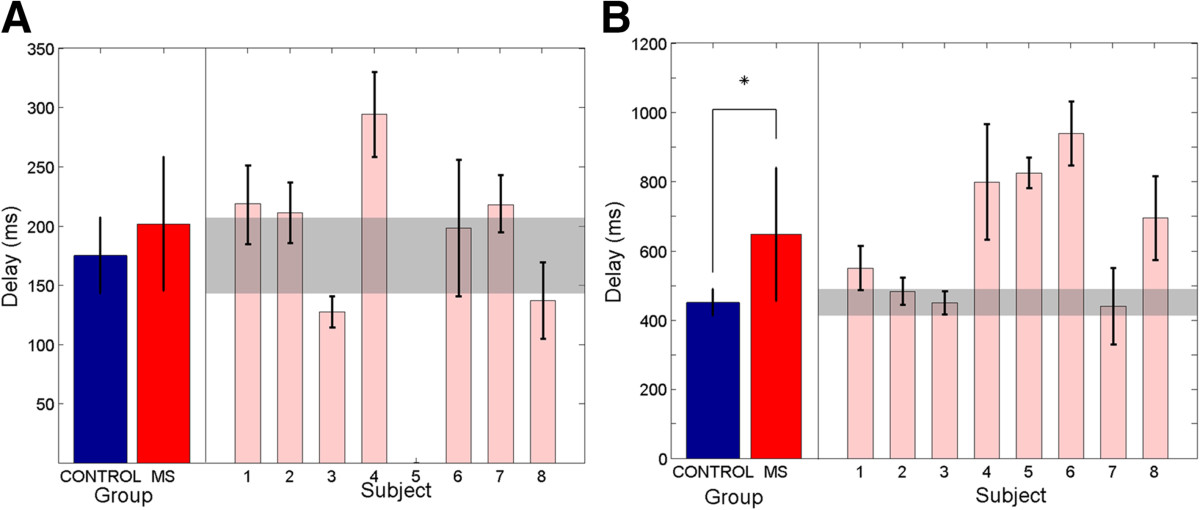
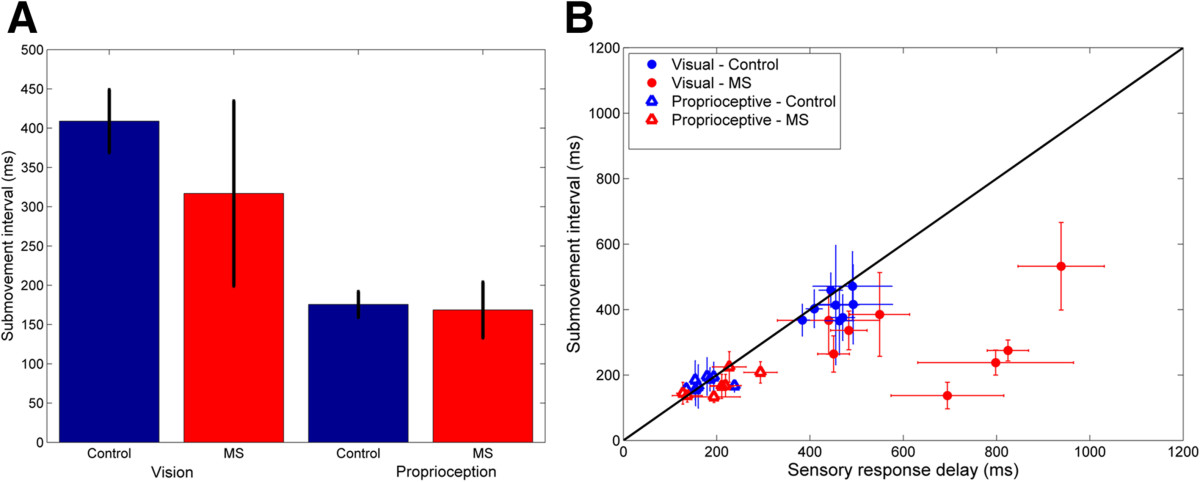
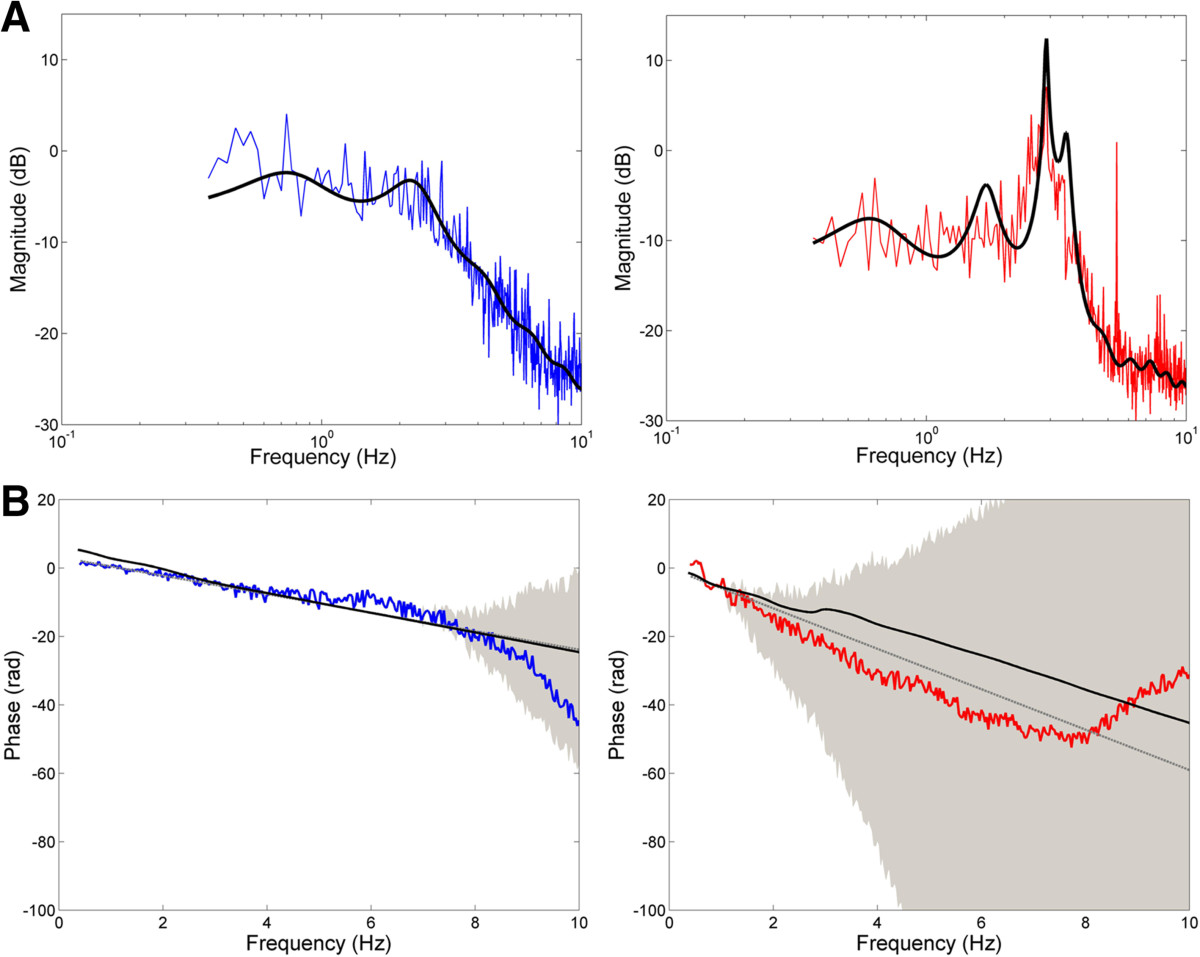
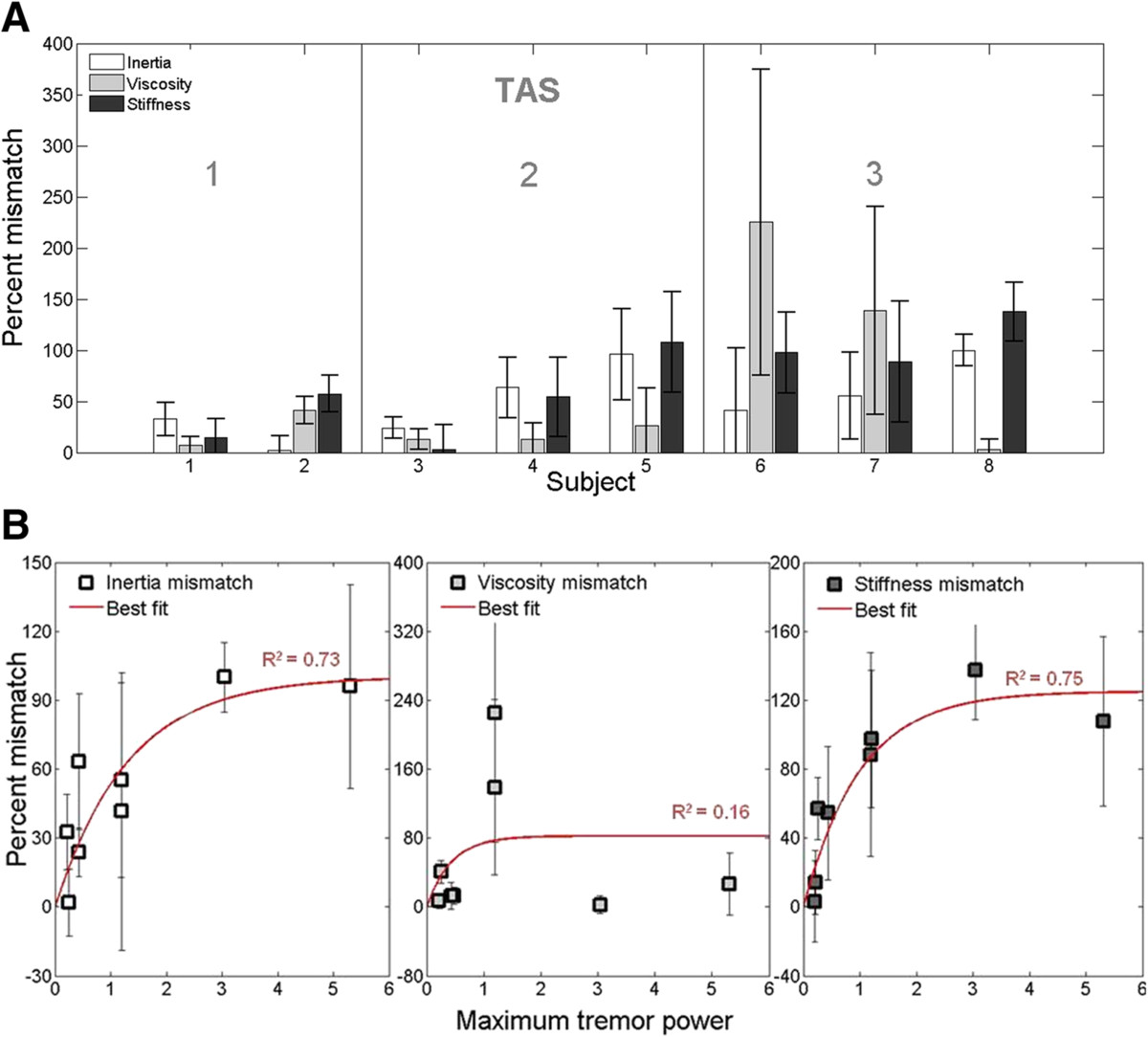
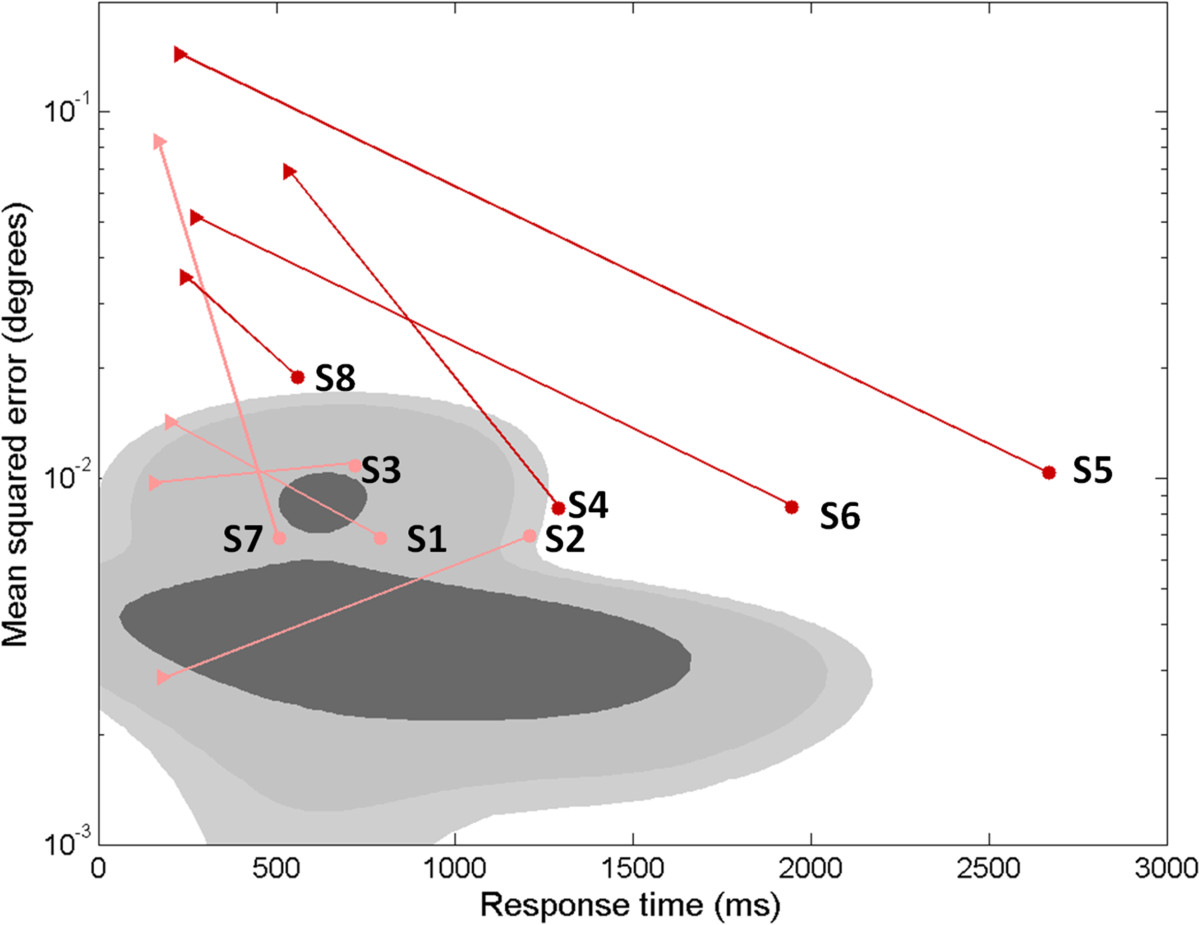
Models derived from MS subject performance differed from those obtained for control subjects in two ways. First, subjects with MS exhibited markedly increased visual feedback delays, which were uncompensated by internal adaptive mechanisms; stabilization performance in individuals with the longest delays differed most from control subject performance. Second, subjects with MS exhibited misestimates of arm dynamics in a way that was correlated with tremor power. Subject-specific models accurately predicted kinematic performance in a reach and hold task for neurologically-intact control subjects while simulated performance of MS patients had shorter movement intervals and larger endpoint errors than actual subject responses. This difference between simulated and actual performance is consistent with a strategic compensatory trade-off of movement speed for endpoint accuracy.
Our results suggest that tremor and dysmetria may be caused by limitations in the brain's ability to adapt sensory feedback mechanisms to compensate for increases in visual information processing time, as well as by errors in compensatory adaptations of internal estimates of arm dynamics.
意向性震颤和辨距不良是多发性硬化症(MS)导致上肢残疾的主要原因。由于对与MS相关的分布式多灶性病变如何影响大脑中的感觉运动控制了解不足,开发有效减少震颤和辨距不良的疗法受到阻碍。在此,我们描述一种用于表征感觉运动控制的系统级方法,并使用该方法研究MS如何对感觉和运动过程产生不同影响。
八名MS患者和八名年龄及性别匹配的健康对照者进行了关于肘部的视觉引导屈伸任务,以表征一个感觉反馈控制模型,该模型包括三条感觉反馈通路(一条用于视觉,另一条用于本体感觉,第三条提供对动作感觉后果的内部预测)。该模型使我们能够表征导致每位MS患者震颤的感觉反馈控制损伤。
从MS患者表现得出的模型在两个方面与对照者的模型不同。首先,MS患者的视觉反馈延迟显著增加,且未被内部适应机制补偿;延迟最长的个体的稳定性能与对照者的性能差异最大。其次,MS患者对手臂动力学存在错误估计,且与震颤功率相关。特定受试者模型准确预测了神经功能正常的对照者在伸手并保持任务中的运动学表现,而MS患者的模拟表现与实际受试者反应相比,运动间隔更短,终点误差更大。模拟表现与实际表现之间的这种差异与为了终点准确性而在运动速度上进行的策略性补偿权衡一致。
我们的结果表明,震颤和辨距不良可能是由于大脑适应感觉反馈机制以补偿视觉信息处理时间增加的能力受限,以及手臂动力学内部估计的补偿性适应错误所致。