Thiel Andra, Weeda Anne C
Population & Evolutionary Ecology Group, Institute of Ecology, University of Bremen, FB 2, Leobener Str. NW2, 28359 Bremen, Germany
Population & Evolutionary Ecology Group, Institute of Ecology, University of Bremen, FB 2, Leobener Str. NW2, 28359 Bremen, Germany.
J Insect Sci. 2014 Jan 1;14. doi: 10.1093/jisesa/ieu153. Print 2014.
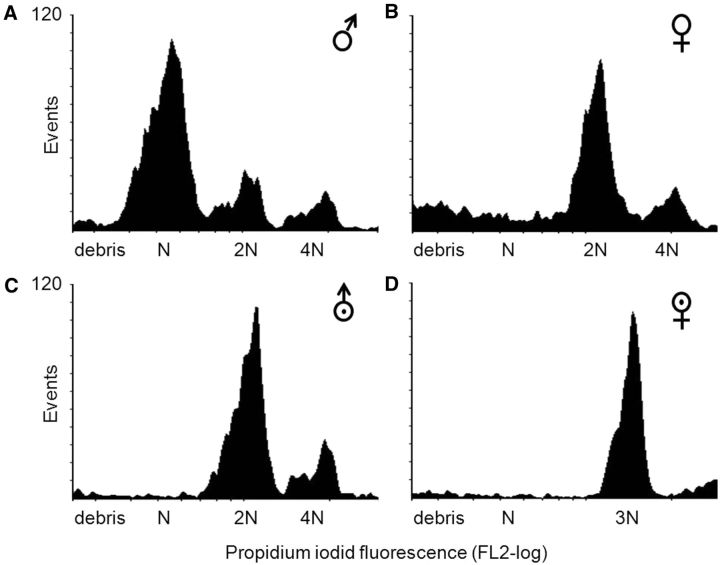
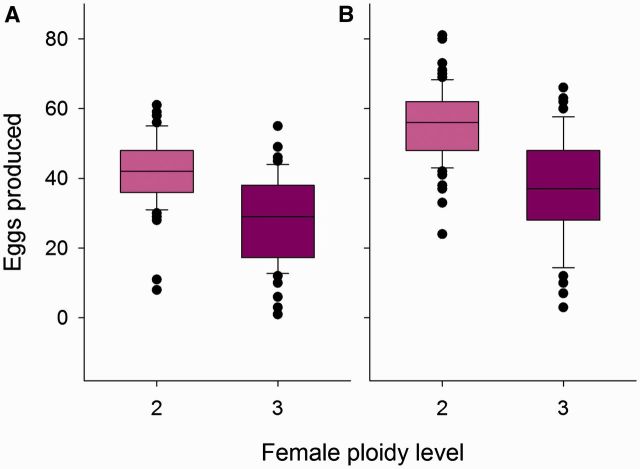
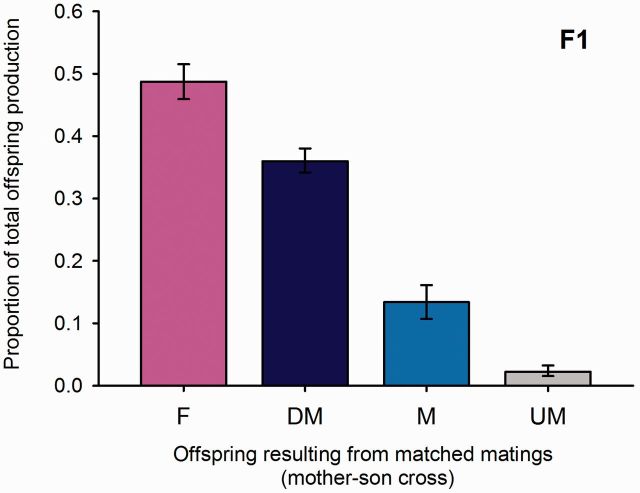
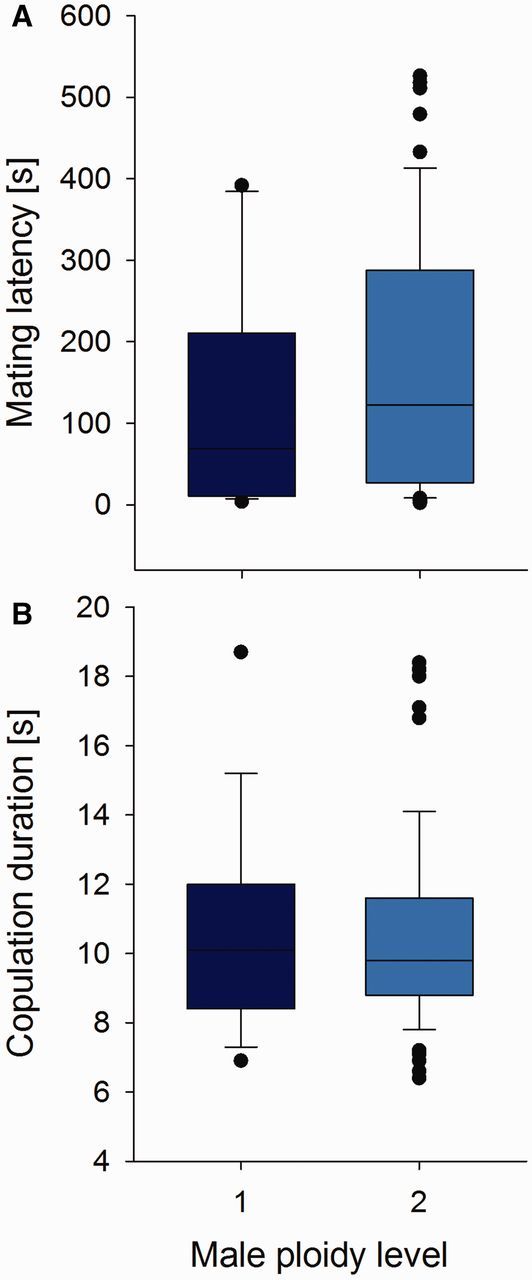
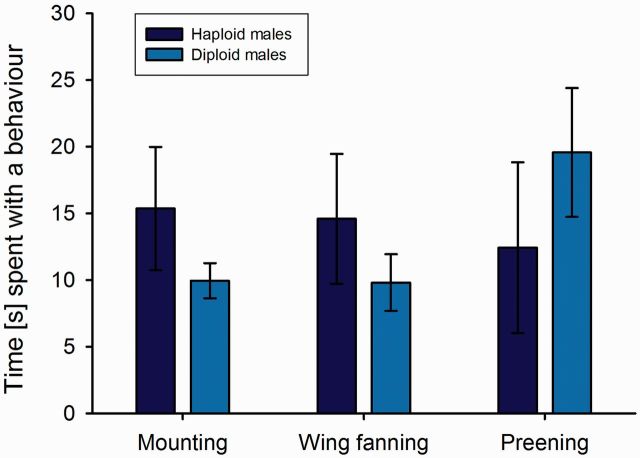
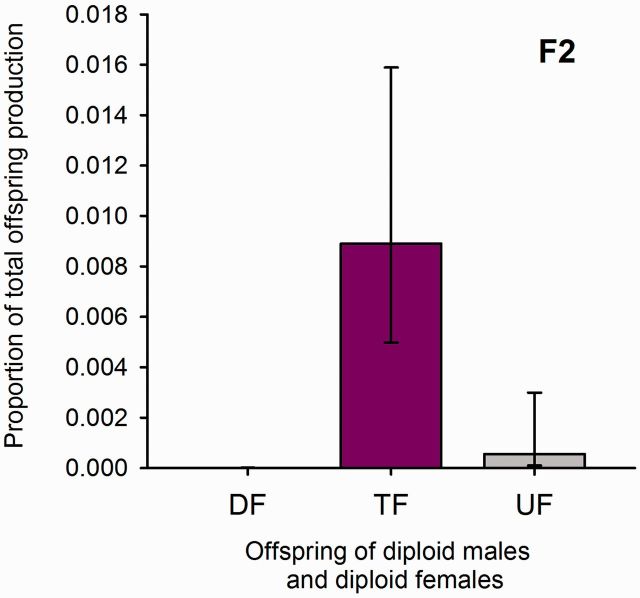
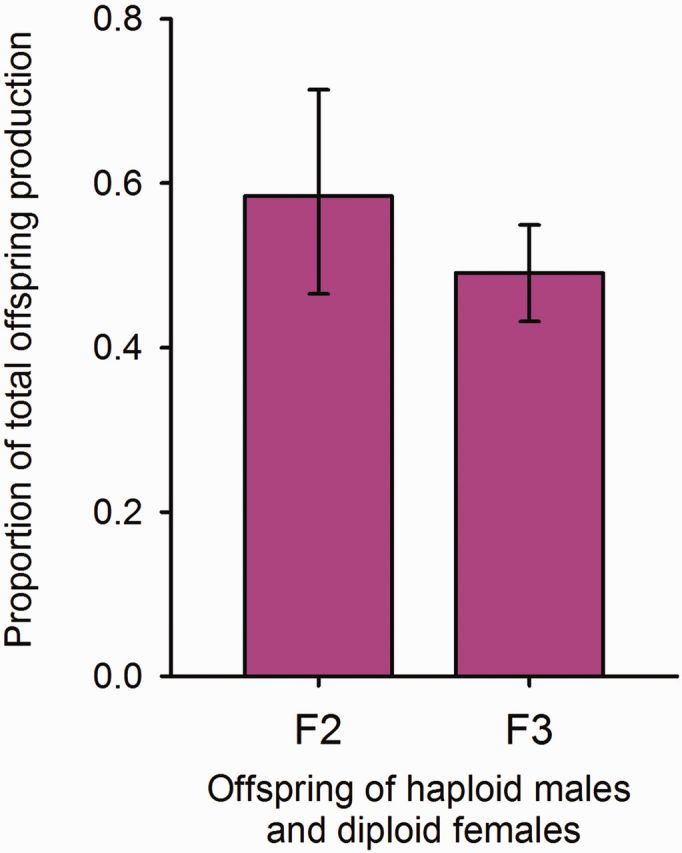
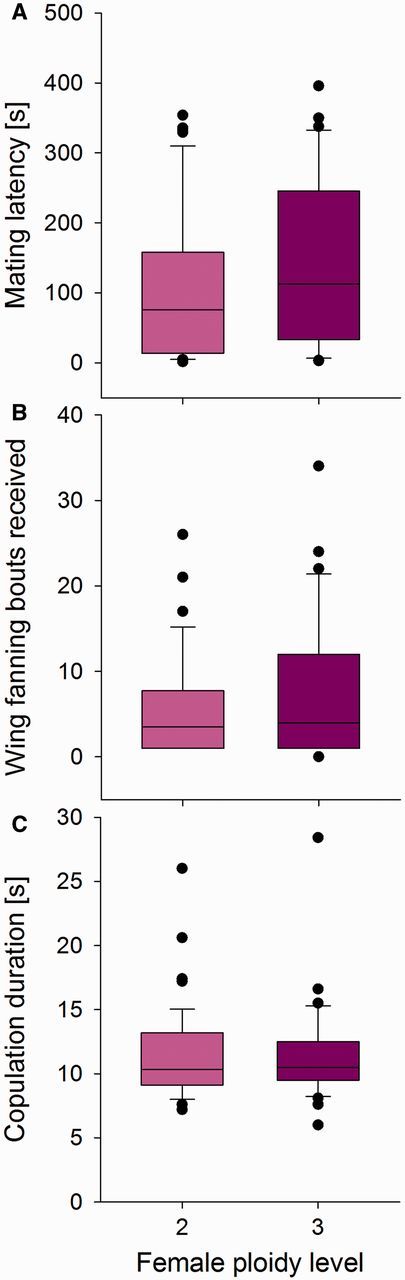
Because the quality of mating partners varies, females of several taxa have evolved the ability to discriminate against low-quality mates. Although males in the Hymenoptera are usually haploid, diploid males may occur in species with complementary sex determination. Diploid males are almost always sterile in most of the species studied so far. They are thus of very low quality as mating partners, especially when females mate only once in life. We hypothesize that hymenopteran females might have evolved the ability to discriminate against infertile diploid males and avoid mating with them. To test this hypothesis, we studied diploid male fitness in the parasitoid wasp Bracon brevicornis Wesmael (Hymenoptera: Braconidae) by measuring survival rate and fertility and then estimated their chances of actually mating with a female. Flow cytometry was used to determine the ploidy level of wasps. The fitness costs of mating a diploid male are indeed high in this species: only 15% were able to sire daughters, of which 97% were triploid and hardly able to produce viable offspring. In contrast to the hypothesis of unsuitable mate discrimination though, no evidence was found for increased rejection of diploid males by females. Male discrimination against an unsuitable partner did also not occur: triploid females elicited the same intensity of courtship behavior in males than did diploid ones.
由于交配对象的质量存在差异,几个分类群的雌性已经进化出区分低质量配偶的能力。虽然膜翅目的雄性通常是单倍体,但在具有互补性别的物种中可能会出现二倍体雄性。在迄今为止研究的大多数物种中,二倍体雄性几乎总是不育的。因此,它们作为交配对象的质量非常低,尤其是当雌性一生只交配一次时。我们假设膜翅目的雌性可能已经进化出区分不育二倍体雄性的能力,并避免与它们交配。为了验证这一假设,我们通过测量存活率和繁殖力来研究寄生蜂短角潜蝇(膜翅目:潜蝇科)中二倍体雄性的适合度,然后估计它们与雌性交配的实际机会。使用流式细胞术来确定黄蜂的倍性水平。在这个物种中,与二倍体雄性交配的适合度成本确实很高:只有15%的二倍体雄性能够产生雌性后代,其中97%是三倍体,几乎无法产生可存活的后代。然而,与不适合配偶识别的假设相反,没有发现雌性增加对二倍体雄性拒绝的证据。雄性也没有对不适合的配偶进行识别:三倍体雌性在雄性中引发的求偶行为强度与二倍体雌性相同。