Prabawanti Ciptasari, Dijkstra Arie, Riono Pandu, Hartana Tb Gagan
Social Psychology Department, Faculty of Behavioral and Social Sciences, University of Groningen, Groningen, The Netherlands;
Social Psychology Department, Faculty of Behavioral and Social Sciences, University of Groningen, Groningen, The Netherlands.
J Int AIDS Soc. 2014 Dec 19;17(1):19343. doi: 10.7448/IAS.17.1.19343. eCollection 2014.
The male-to-female transgender (waria) is part of a key population at higher risk for HIV. This study aims to test whether psychosocial determinants as defined by the theory of planned behaviour (TPB) can explain behaviours related to condom use among waria. Three preparatory behaviours (getting, carrying, and offering a condom) and two condom use behaviours (during receptive and insertive anal sex) were assessed.
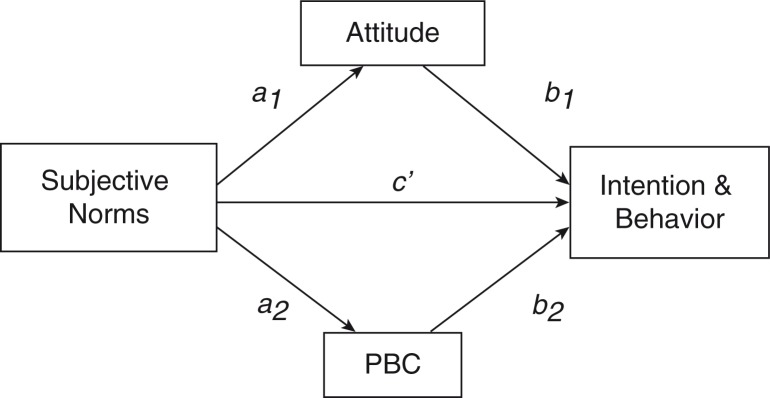
The study involved 209 waria, recruited from five districts in Jakarta and interviewed by using structured questionnaires. Specific measures were developed to study attitudes, subjective norms and perceived behavioural control (PBC) in order to predict intentions and behaviours.
The explained variance between intentions with regard to three preparatory behaviours and two condom uses ranged between 30 and 57%, and the variance between the actual preparatory behaviours of three preparatory and two condom uses ranged between 21 and 42%. In our study, as with several previous studies of the TPB on HIV protection behaviours, the TPB variables differed in their predictive power. With regard to intention, attitude and PBC were consistently significant predictors; attitude was the strongest predictor of intention for all three preparatory behaviours, and PBC was the strongest predictor of intention for condom use, both during receptive and insertive anal sex. TPB variables were also significantly related to the second parameter of future behaviour: actual (past) behaviour. TPB variables were differentially related to the five behaviours. Attitude was predictive in three behaviours, PBC in three behaviours and subjective norms in two behaviours.
Our results have implications for the development of interventions to target preparatory behaviours and condom use behaviours. Five behaviours and three psychological factors as defined in the TPB are to be targeted.
男变女跨性别者(瓦里亚人)是感染艾滋病毒风险较高的关键人群之一。本研究旨在检验计划行为理论(TPB)所定义的社会心理决定因素是否能解释瓦里亚人当中与使用避孕套相关的行为。评估了三种准备行为(获取、携带和提供避孕套)以及两种避孕套使用行为(在接受性和插入式肛交期间)。
该研究纳入了209名瓦里亚人,他们来自雅加达的五个区,并通过结构化问卷进行访谈。为研究态度、主观规范和感知行为控制(PBC)制定了具体测量方法,以预测意图和行为。
三种准备行为和两种避孕套使用意图之间的解释方差在30%至57%之间,三种准备行为和两种避孕套使用的实际准备行为之间的方差在21%至42%之间。在我们的研究中,与之前几项关于TPB对艾滋病毒保护行为的研究一样,TPB变量的预测能力有所不同。关于意图,态度和PBC一直是显著的预测因素;态度是所有三种准备行为意图的最强预测因素,而PBC是接受性和插入式肛交期间避孕套使用意图的最强预测因素。TPB变量也与未来行为的第二个参数显著相关:实际(过去)行为。TPB变量与这五种行为的相关性各不相同。态度在三种行为中具有预测性,PBC在三种行为中具有预测性,主观规范在两种行为中具有预测性。
我们的研究结果对针对准备行为和避孕套使用行为的干预措施的制定具有启示意义。TPB中定义的五种行为和三个心理因素应作为目标。