Intensive Care Unit of Geriatrics, Beijing Shijitan Hospital Affiliated to Capital Medicine University, No.10 Tieyi Road, Beijing, 100038 Haidian District People's Republic of China.
Department of Pulmonary and Critical Care Medicine, Beijing Shijitan Hospital Affiliated to Capital Medicine University, No.10 Tieyi Road, Beijing, 100038 Haidian District People's Republic of China.
J Inflamm (Lond). 2014 Dec 5;11(1):40. doi: 10.1186/s12950-014-0040-5. eCollection 2014.
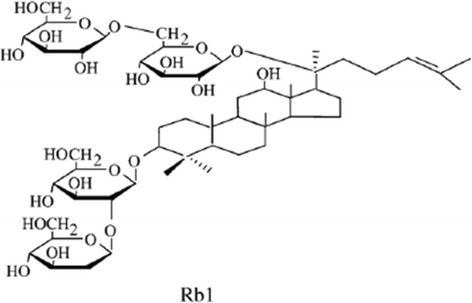
Sepsis causes neutrophil sequestration in the lung which leads to acute lung injury (ALI). Radix Ginseng (RG), a traditional herb used as herbal remedy in eastern Asia for thousands of years, which has been traditionally used in China to improve blood circulation and ameliorate pathological hemostasis. This study investigated whether Ginsenoside Rb1, the main components of RG, can attenuate ALI induced by LPS.
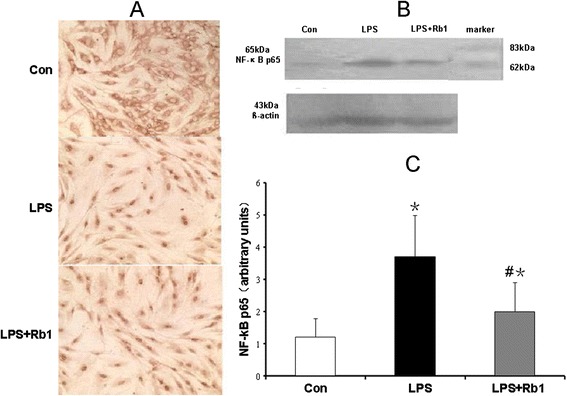
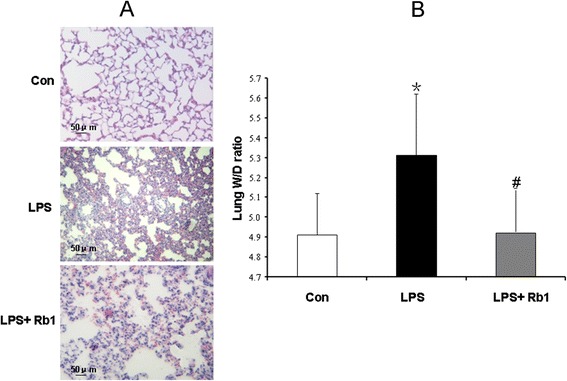
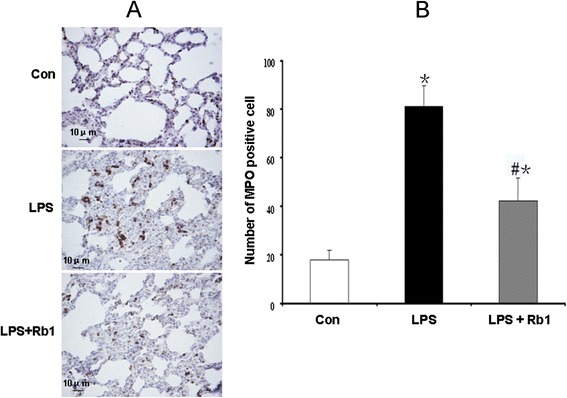
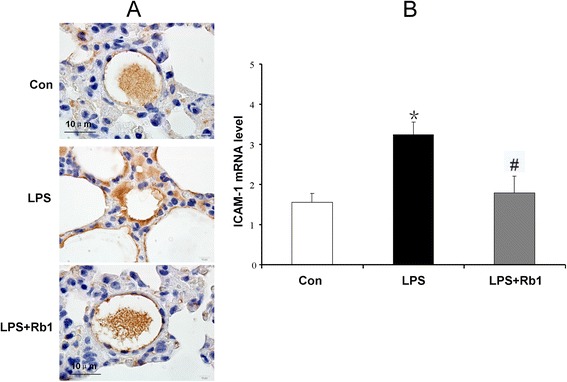
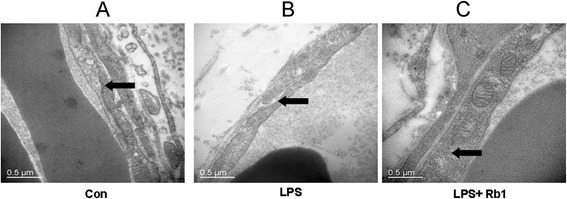
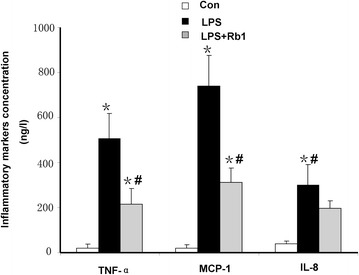
In vivo, 30 male Wistar rats were divided into three groups (n = 10 each groups) on the basis of the reagent used, which were subjected to LPS injection with or without Ginsenoside Rb1 (5 mg/kg) treatments to induce ALI model. Lung injury was assessed by pulmonary histology, lung wet-weight to dry-weight (W/D) ratio, the number of myeloperoxidase (MPO) positive cells, immunohistochemical analysis of intercellular adhesion molecule-1 (ICAM-1), gene expression of ICAM-1, ultrastructure changes of pulmonary microvasculature, concentration of inflammatory markers and in plasma. In vitro, pulmonary microvascular endothelial cells (PMVECs) were stimulated with LPS in the presence and absence of Ginsenoside Rb1 (50 mM), nuclear factor-κB (NF-κB) p65 was measured by immunocytochemistry staining and western blotting.
Infusion of LPS induced lung injury, in vivo, as demonstrated by pulmonary edema with infiltration of neutrophils and hemorrhage, the increase in lung W/D ratio, the number of MPO positive cells, the level of inflammatory markers such as TNF-α, MCP-1 and IL-8, enhanced expression of ICAM-1 and ICAM-1 gene. Moreover, resulted in the changes of intercellular junctions in the endothelial cells of pulmonary microvasculature. In vitro, the significant increased release of NF-κB p65 and its subsequent translocation into the nucleus in PMVECs were observed. In contrast, Ginsenoside Rb1 treatment significantly ameliorated the LPS-induced lung injury, as judged by the marked improvement in all these indices.
These results indicate that Ginsenoside Rb1 attenuated LPS-induced lung injury through an inhibition of the inflammatory signaling pathway, besides the direct inhibitory effect on proinflammatory molecules.
脓毒症会导致中性粒细胞在肺部蓄积,从而导致急性肺损伤(ALI)。人参是一种传统的草药,在东亚被用作草药已有数千年的历史,在中国传统上被用于改善血液循环和改善病理性止血。本研究旨在探讨人参皂苷 Rb1(人参的主要成分)是否可以减轻 LPS 诱导的 ALI。
在体内,30 只雄性 Wistar 大鼠根据使用的试剂分为三组(每组 10 只),分别用 LPS 注射加或不加人参皂苷 Rb1(5mg/kg)处理,以诱导 ALI 模型。通过肺组织学、肺湿重/干重(W/D)比、髓过氧化物酶(MPO)阳性细胞数、细胞间黏附分子-1(ICAM-1)免疫组织化学分析、ICAM-1 基因表达、肺微血管超微结构变化、炎症标志物在血浆中的浓度来评估肺损伤。在体外,用 LPS 刺激肺微血管内皮细胞(PMVECs),并在存在和不存在人参皂苷 Rb1(50mM)的情况下测量核因子-κB(NF-κB)p65 的免疫细胞化学染色和 Western blot。
LPS 输注诱导肺损伤,表现为肺水肿伴中性粒细胞浸润和出血,肺 W/D 比增加,MPO 阳性细胞数增加,TNF-α、MCP-1 和 IL-8 等炎症标志物水平升高,ICAM-1 表达增强和 ICAM-1 基因表达增强。此外,还导致肺微血管内皮细胞细胞间连接发生变化。在体外,观察到 PMVECs 中 NF-κB p65 的显著释放及其随后向核内易位。相反,人参皂苷 Rb1 治疗显著改善了 LPS 诱导的肺损伤,所有这些指标均明显改善。
这些结果表明,人参皂苷 Rb1 通过抑制炎症信号通路减轻 LPS 诱导的肺损伤,除了对促炎分子的直接抑制作用。