Pratt Stephen J P, Lovering Richard M
Department of Orthopaedics, University of Maryland School of Medicine, Baltimore, MD.
J Biol Methods. 2014;1(2). doi: 10.14440/jbm.2014.34.
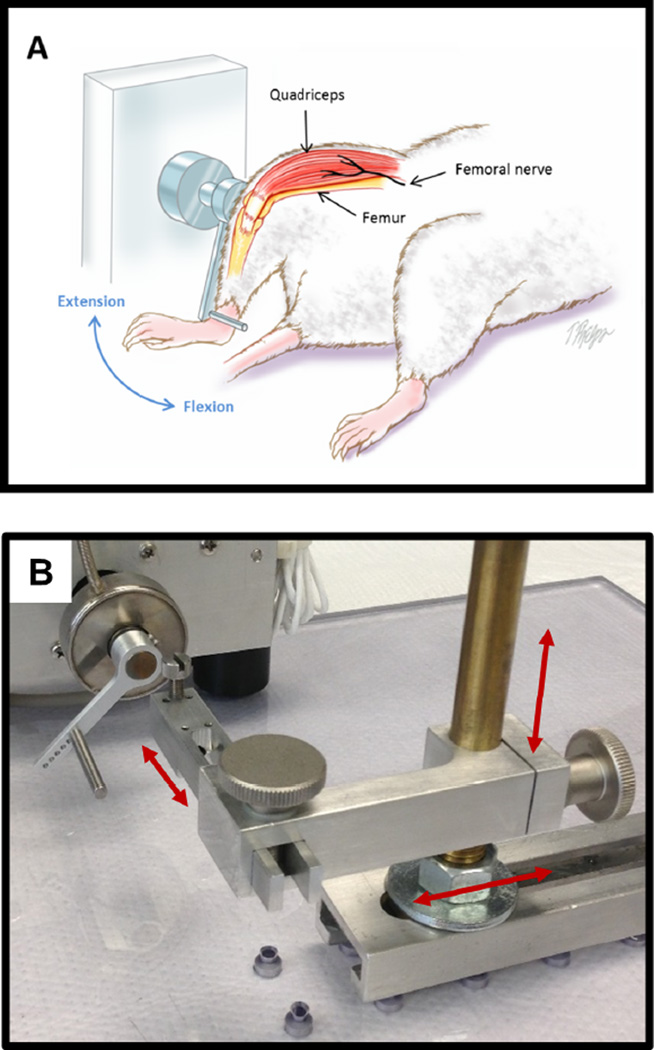
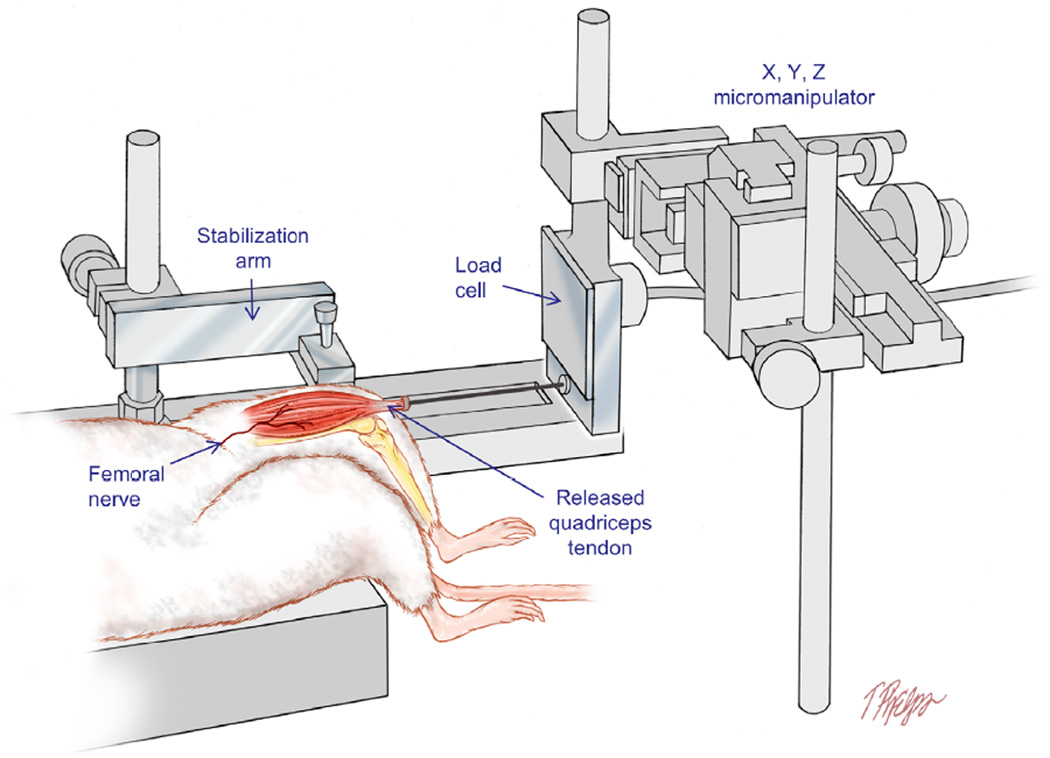
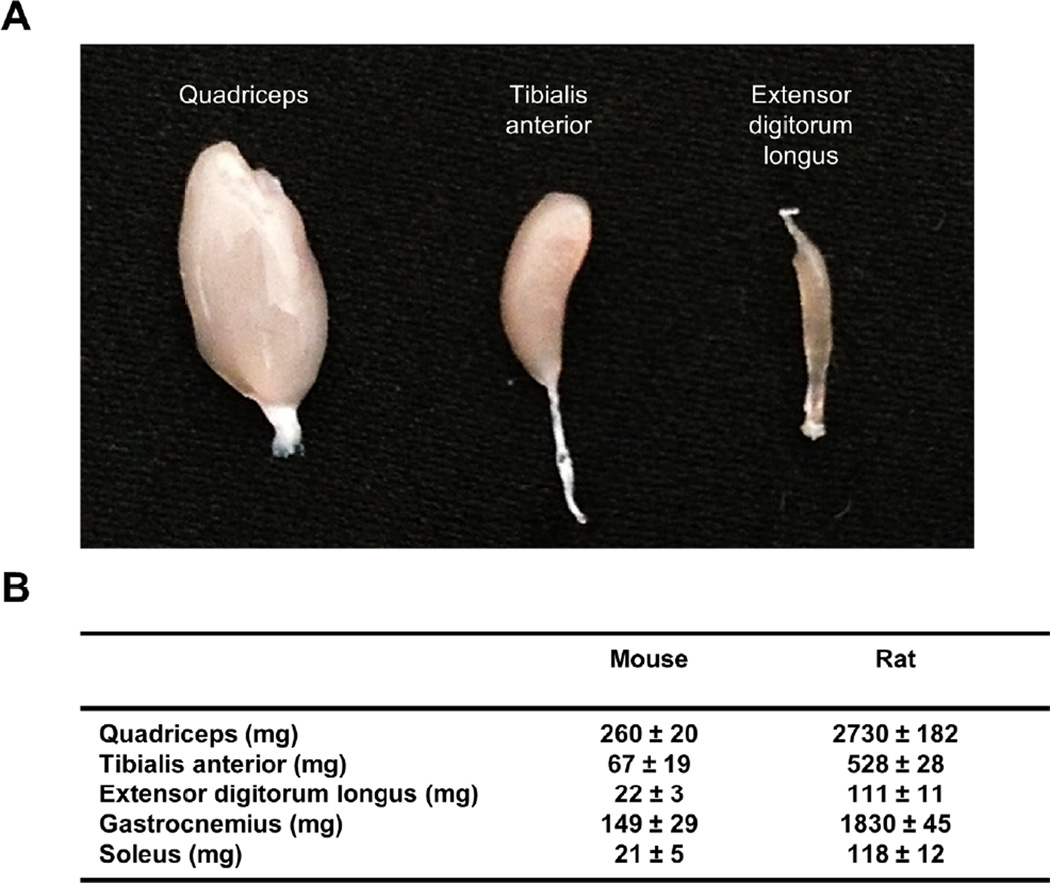
In patients with muscle injury or muscle disease, assessment of muscle damage is typically limited to clinical signs, such as tenderness, strength, range of motion, and more recently, imaging studies. Biological markers can also be used in measuring muscle injury, such as increased creatine kinase levels in the blood, but these are not always correlated with loss in muscle function (i.e. loss of force production). This is even true of histological findings from animals, which provide a "direct measure" of damage, but do not account for loss of function. The most comprehensive measure of the overall health of the muscle is contractile force. To date, animal models testing contractile force have been limited to the muscle groups moving the ankle. Here we describe an animal model for the quadriceps, with abilities to measure torque, produce a reliable muscle injury, and follow muscle recovery within the same animal over time. We also describe a second model used for direct measurement of force from an isolated quadriceps muscle .
在患有肌肉损伤或肌肉疾病的患者中,对肌肉损伤的评估通常局限于临床体征,如压痛、力量、活动范围,以及最近的影像学检查。生物标志物也可用于测量肌肉损伤,如血液中肌酸激酶水平升高,但这些并不总是与肌肉功能丧失(即力量产生的丧失)相关。动物的组织学发现也是如此,它提供了损伤的“直接测量”,但并未考虑功能丧失。对肌肉整体健康状况最全面的衡量指标是收缩力。迄今为止,测试收缩力的动物模型仅限于移动脚踝的肌肉群。在此,我们描述了一种用于股四头肌的动物模型,它能够测量扭矩、产生可靠的肌肉损伤,并随时间跟踪同一动物体内肌肉的恢复情况。我们还描述了第二种模型,用于直接测量分离的股四头肌的力量。