Crespo Carlos, Monleon Antonio, Díaz Walter, Ríos Martín
Statistical Department, Facultat de Biologia, University of Barcelona, Avda Diagonal 645, 08028 Barcelona, Spain.
BMC Med Res Methodol. 2014 Dec 22;14:139. doi: 10.1186/1471-2288-14-139.
The aim of this study was to create a new meta-analysis method for cost-effectiveness studies using comparative efficiency research (COMER).
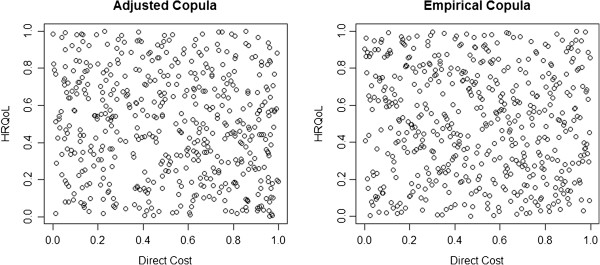
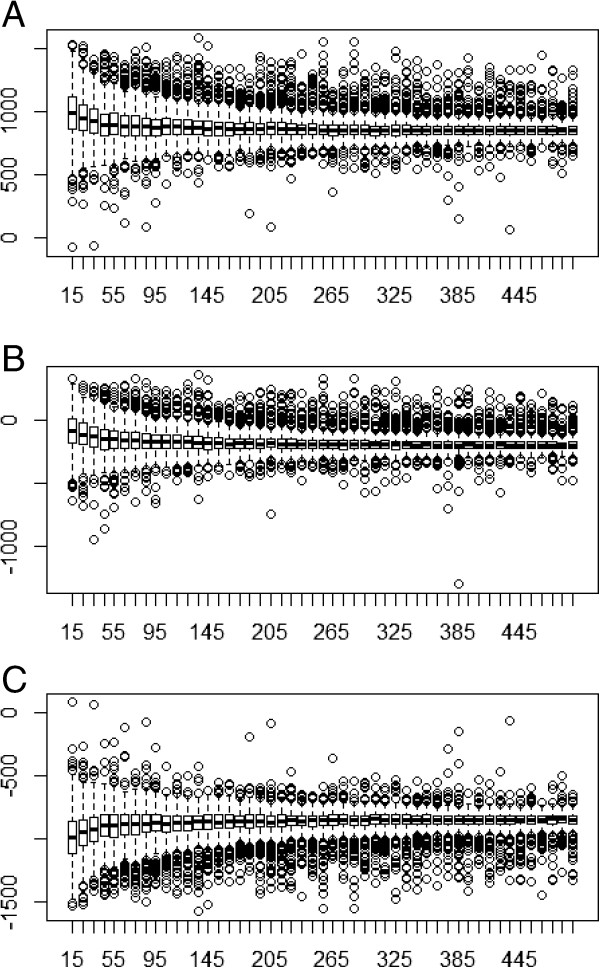
We built a new score named total incremental net benefit (TINB), with inverse variance weighting of incremental net benefits (INB). This permits determination of whether an alternative is cost-effective, given a specific threshold (TINB > 0 test). Before validation of the model, the structure of dependence between costs and quality-adjusted life years (QoL) was analysed using copula distributions. The goodness-of-fit of a Spanish prospective observational study (n = 498) was analysed using the Independent, Gaussian, T, Gumbel, Clayton, Frank and Placket copulas. Validation was carried out by simulating a copula distribution with log-normal distribution for costs and gamma distribution for disutilities. Hypothetical cohorts were created by varying the sample size (n: 15-500) and assuming three scenarios (1-cost-effective; 2-non-cost-effective; 3-dominant). The COMER result was compared to the theoretical result according to the incremental cost-effectiveness ratio (ICER) and the INB, assuming a margin of error of 2,000 and 500 monetary units, respectively.
The Frank copula with positive dependence (-0.4279) showed a goodness-of-fit sufficient to represent costs and QoL (p-values 0.524 and 0.808). The theoretical INB was within the 95% confidence interval of the TINB, based on 15 individuals with a probability > 80% for scenarios 1 and 2, and > 90% for scenario 3. The TINB > 0 test with 15 individuals showed p-values of 0.0105 (SD: 0.0411) for scenario 1, 0.613 (SD: 0.265) for scenario 2 and < 0.0001 for scenario 3.
COMER is a valid tool for combining cost-effectiveness studies and may be of use to health decision makers.
本研究的目的是创建一种使用比较效率研究(COMER)进行成本效益研究的新的荟萃分析方法。
我们构建了一个名为总增量净效益(TINB)的新分数,对增量净效益(INB)采用逆方差加权。这允许在给定特定阈值(TINB>0检验)的情况下确定一种替代方案是否具有成本效益。在模型验证之前,使用copula分布分析成本与质量调整生命年(QoL)之间的依赖结构。使用独立、高斯、T、耿贝尔、克莱顿、弗兰克和普拉科特copula分析了一项西班牙前瞻性观察性研究(n = 498)的拟合优度。通过模拟成本服从对数正态分布、负效用服从伽马分布的copula分布进行验证。通过改变样本量(n:15 - 500)并假设三种情景(1 - 具有成本效益;2 - 不具有成本效益;3 - 占优)创建假设队列。分别假设误差幅度为2000和500货币单位,根据增量成本效益比(ICER)和INB将COMER结果与理论结果进行比较。
具有正相关性(-0.4279)的弗兰克copula显示出足以代表成本和QoL的拟合优度(p值分别为0.524和0.808)。基于15名个体,理论INB在TINB的95%置信区间内,情景1和情景2的概率>80%,情景3的概率>90%。对于情景1,15名个体的TINB>0检验显示p值为0.0105(标准差:0.0411),情景2为0.613(标准差:0.265),情景3<0.0001。
COMER是一种用于综合成本效益研究的有效工具,可能对卫生决策者有用。