Duignan Pádraig J, Van Bressem Marie-Françoise, Baker Jason D, Barbieri Michelle, Colegrove Kathleen M, De Guise Sylvain, de Swart Rik L, Di Guardo Giovanni, Dobson Andrew, Duprex W Paul, Early Greg, Fauquier Deborah, Goldstein Tracey, Goodman Simon J, Grenfell Bryan, Groch Kátia R, Gulland Frances, Hall Ailsa, Jensen Brenda A, Lamy Karina, Matassa Keith, Mazzariol Sandro, Morris Sinead E, Nielsen Ole, Rotstein David, Rowles Teresa K, Saliki Jeremy T, Siebert Ursula, Waltzek Thomas, Wellehan James F X
Department of Ecosystem and Public Health, University of Calgary, Calgary, AB T2N 4Z6, Canada.
Cetacean Conservation Medicine Group (CMED), Peruvian Centre for Cetacean Research (CEPEC), Pucusana, Lima 20, Peru.
Viruses. 2014 Dec 22;6(12):5093-134. doi: 10.3390/v6125093.
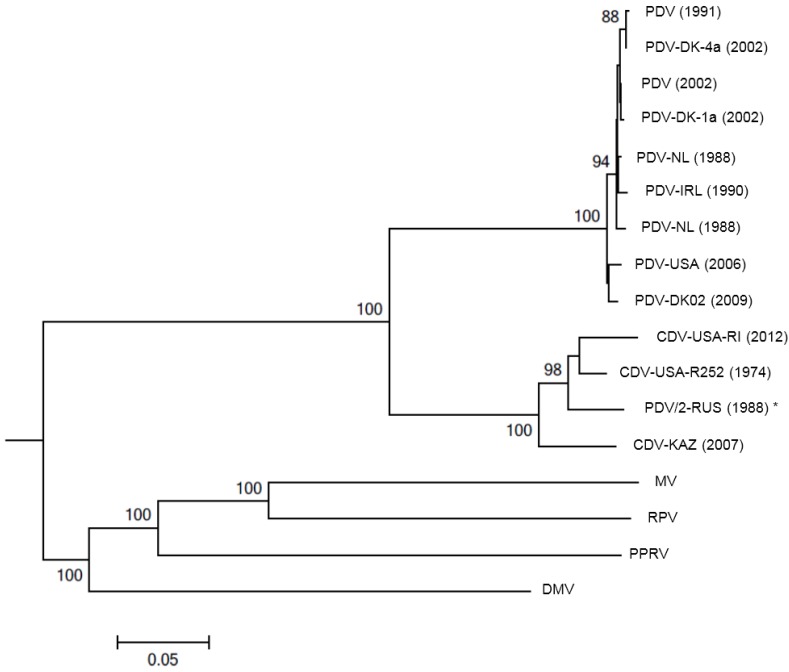
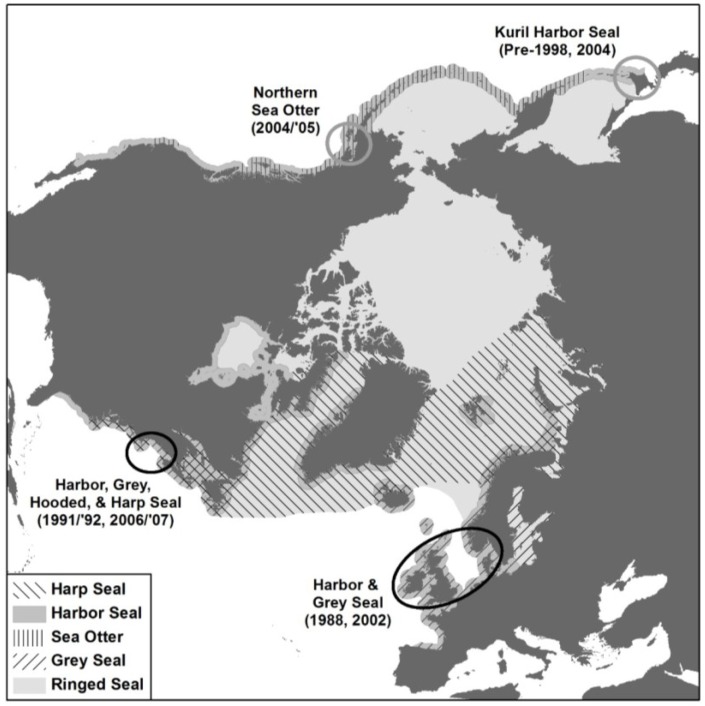
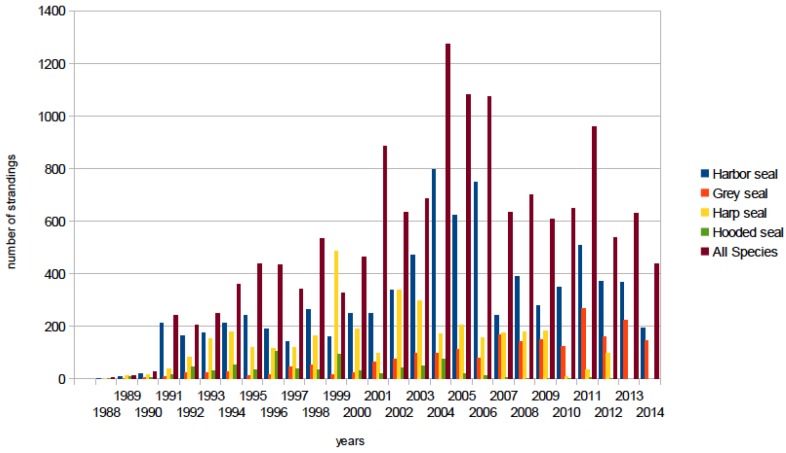
Phocine distemper virus (PDV) was first recognized in 1988 following a massive epidemic in harbor and grey seals in north-western Europe. Since then, the epidemiology of infection in North Atlantic and Arctic pinnipeds has been investigated. In the western North Atlantic endemic infection in harp and grey seals predates the European epidemic, with relatively small, localized mortality events occurring primarily in harbor seals. By contrast, PDV seems not to have become established in European harbor seals following the 1988 epidemic and a second event of similar magnitude and extent occurred in 2002. PDV is a distinct species within the Morbillivirus genus with minor sequence variation between outbreaks over time. There is now mounting evidence of PDV-like viruses in the North Pacific/Western Arctic with serological and molecular evidence of infection in pinnipeds and sea otters. However, despite the absence of associated mortality in the region, there is concern that the virus may infect the large Pacific harbor seal and northern elephant seal populations or the endangered Hawaiian monk seals. Here, we review the current state of knowledge on PDV with particular focus on developments in diagnostics, pathogenesis, immune response, vaccine development, phylogenetics and modeling over the past 20 years.
1988年,在欧洲西北部港湾海豹和灰海豹中爆发大规模疫情后,海豹瘟热病毒(PDV)首次被发现。从那时起,人们对北大西洋和北极鳍足类动物的感染流行病学进行了调查。在北大西洋西部,竖琴海豹和灰海豹的地方性感染早于欧洲的疫情,相对较小的局部死亡事件主要发生在港湾海豹身上。相比之下,1988年疫情后,PDV似乎并未在欧洲港湾海豹中定殖,2002年发生了规模和范围类似的第二起事件。PDV是麻疹病毒属内的一个独特物种,随着时间的推移,不同疫情之间的序列变异较小。现在有越来越多的证据表明,在北太平洋/北极西部存在类似PDV的病毒,在鳍足类动物和海獭中存在感染的血清学和分子证据。然而,尽管该地区没有相关的死亡事件,但人们担心这种病毒可能会感染大量的太平洋港湾海豹和北象海豹种群,或者濒危的夏威夷僧海豹。在这里,我们回顾了关于PDV的当前知识状态,特别关注过去20年中在诊断、发病机制、免疫反应、疫苗开发、系统发育和建模方面的进展。