Embi Abraham A, Scherlag Benjamin J
Independent, Miami, Florida, USA.
Professor of Medicine, University of Oklahoma Health Science Center, Oklahoma, USA.
N Am J Med Sci. 2014 Nov;6(11):586-90. doi: 10.4103/1947-2714.145478.
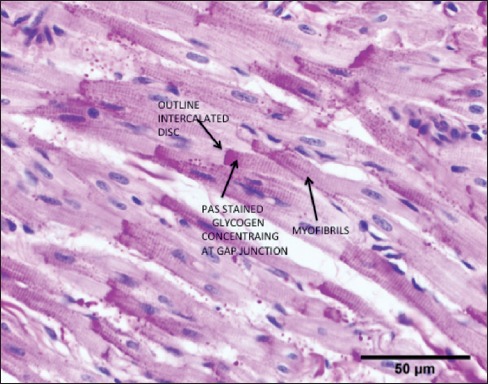
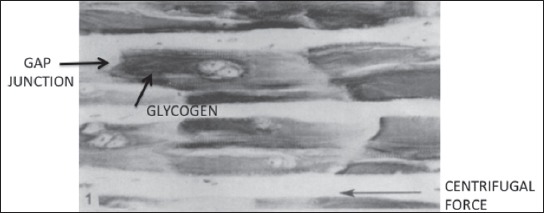
The underlying role of intracellular glycogen in atrial fibrillation is unknown. Experimental models developed in the goat have shown an increase of intracellular glycogen concentration in atrial myocytes resulting from prolonged pacing induced atrial fibrillation (AF). These observed glycogen molecules are as a result of structural remodeling and are known to replace the intracellular myofibrils causing myolysis in studies done in different animal models. The accumulation of glycogen is progressively and directly related to the duration of pacing-induced AF. Similar responses have been seen in clinically derived atrial tissues.
We intend to present an endocrine hypothesis supported by published evidence that stress acting through the hypothalamic-pituitary-adrenal axis (HPA) is a contributing metabolic factor responsible for the increase of glucose levels via the hormone cortisol. This excess glucose is then metabolized by the myocytes during each heart beat and stored as glycogen. A literature search was done, and published evidence supporting stress was shown to be the main factor for the formation of glucose leading to glycogen deposition to in the cardiac myocytes.
Stress on the HPA axis stimulates the adrenal glands to release the hormone cortisol in the blood stream; this in turn increases the cardiac tissue glycogen concentration. It is also known that during each beat, excess glucose is removed by the myocytes and stored as glycogen. As aforementioned, in the cardiac myocytes, dense glycogen content with/without loss of myofibrils has been detected in both human and animal models of AF.
We hypothesize that the increase of the intrinsic glycogen concentration and distribution is a result of a metabolic disruption caused by stress through the HPA Axis. For example, in atrial myocytes, the glycogen molecules impede the normal intercellular communications leading to areas of slow conduction favoring reentrant-based AF.
细胞内糖原在心房颤动中的潜在作用尚不清楚。在山羊身上建立的实验模型显示,长时间起搏诱发心房颤动(AF)会导致心房肌细胞内糖原浓度增加。这些观察到的糖原分子是结构重塑的结果,并且在不同动物模型的研究中已知其会取代细胞内肌原纤维,导致肌溶解。糖原的积累与起搏诱发的房颤持续时间呈渐进性直接相关。在临床来源的心房组织中也观察到了类似的反应。
我们打算提出一种内分泌假说,该假说有已发表的证据支持,即通过下丘脑 - 垂体 - 肾上腺轴(HPA)起作用的应激是一个促成代谢因素,通过皮质醇激素导致血糖水平升高。然后,这些多余的葡萄糖在每次心跳期间被心肌细胞代谢并储存为糖原。我们进行了文献检索,已发表的支持应激的证据表明,应激是导致葡萄糖形成并进而导致心肌细胞糖原沉积的主要因素。
HPA轴上的应激刺激肾上腺将皮质醇激素释放到血流中;这反过来又增加了心脏组织中的糖原浓度。还已知在每次心跳期间,多余的葡萄糖被心肌细胞清除并储存为糖原。如前所述,在AF的人类和动物模型中,均检测到心肌细胞中糖原含量密集,伴有或不伴有肌原纤维丢失。
我们假设内源性糖原浓度和分布的增加是应激通过HPA轴引起的代谢紊乱的结果。例如,在心房肌细胞中,糖原分子会阻碍正常的细胞间通讯,导致传导缓慢的区域,有利于基于折返的房颤。