Smit Marjon A, Maddalo Gianluca, Greig Kylie, Raaijmakers Linsey M, Possik Patricia A, van Breukelen Bas, Cappadona Salvatore, Heck Albert J R, Altelaar A F Maarten, Peeper Daniel S
Division of Molecular Oncology, The Netherlands Cancer Institute, Amsterdam, The Netherlands.
Biomolecular Mass Spectrometry and Proteomics, Bijvoet Center for Biomolecular Research and Utrecht Institute for Pharmaceutical Science, Utrecht University, Utrecht, The Netherlands Netherlands Proteomics Centre, Utrecht, The Netherlands Center for Biomembrane Research, Department of Biochemistry and Biophysics, Stockholm University, Stockholm, Sweden.
Mol Syst Biol. 2014 Dec 23;10(12):772. doi: 10.15252/msb.20145450.
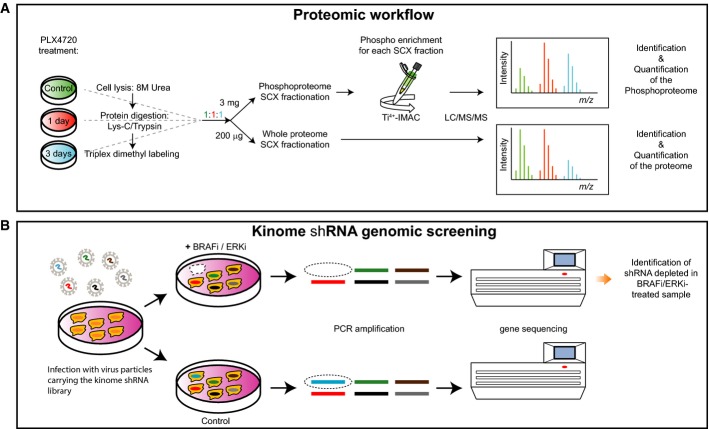
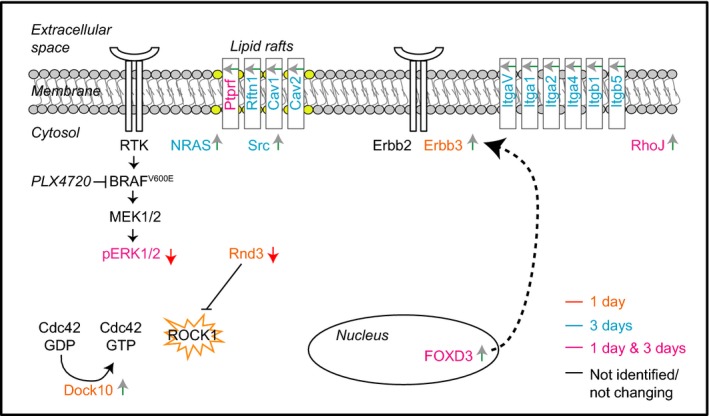
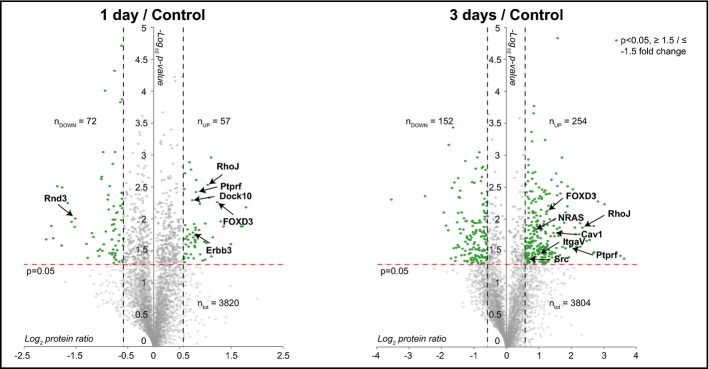
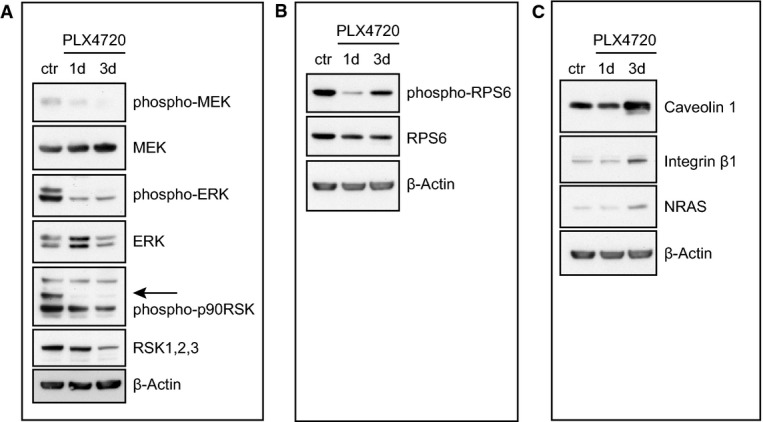
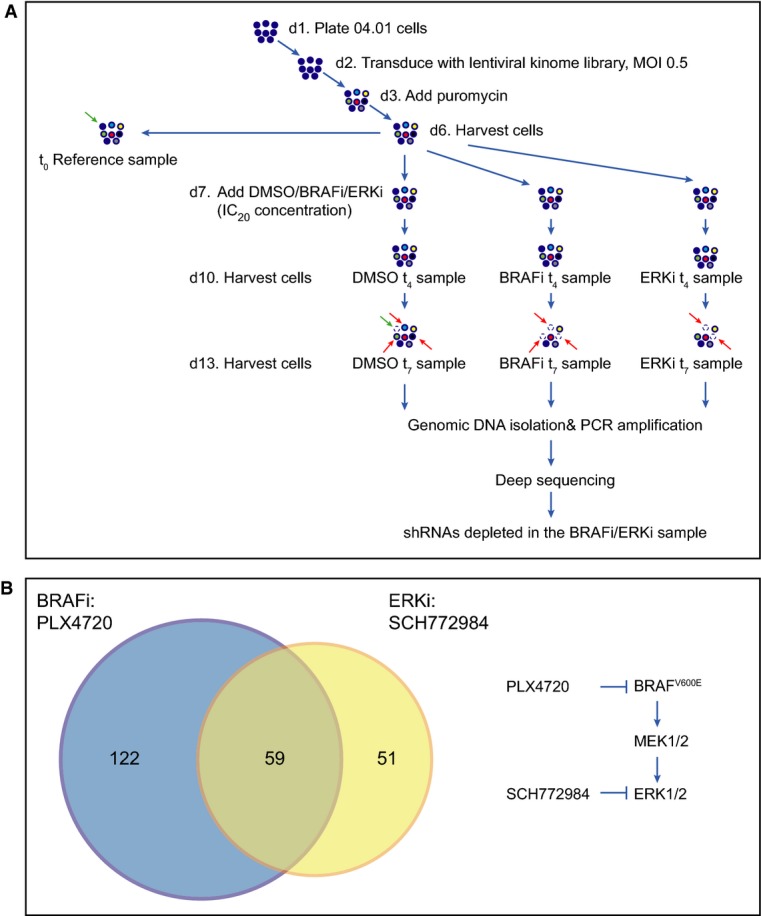
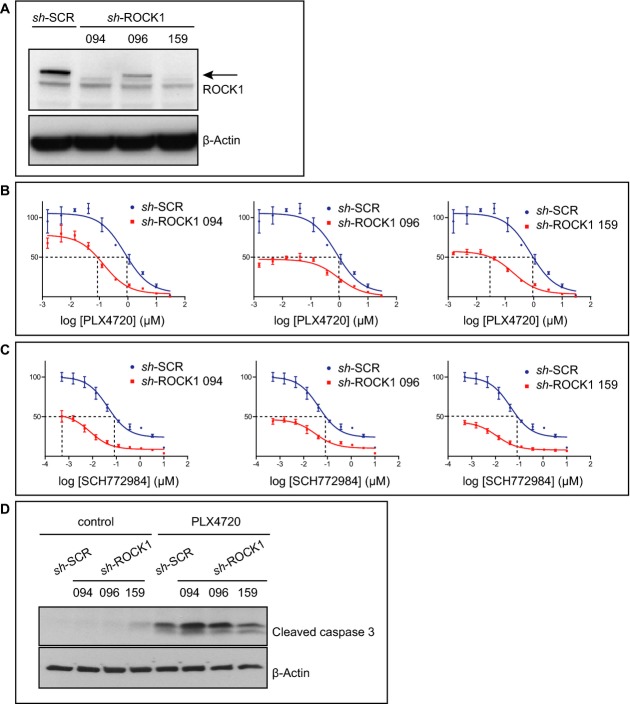
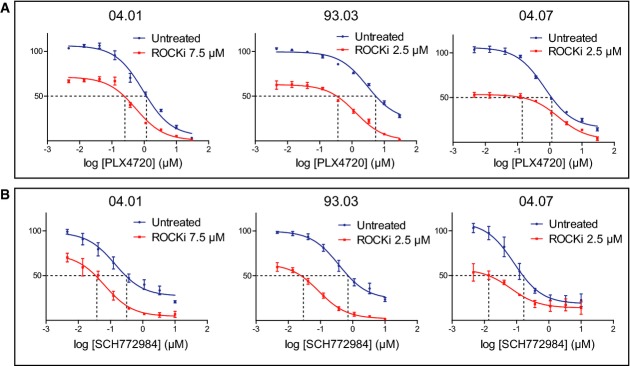
Treatment of BRAF mutant melanomas with specific BRAF inhibitors leads to tumor remission. However, most patients eventually relapse due to drug resistance. Therefore, we designed an integrated strategy using (phospho)proteomic and functional genomic platforms to identify drug targets whose inhibition sensitizes melanoma cells to BRAF inhibition. We found many proteins to be induced upon PLX4720 (BRAF inhibitor) treatment that are known to be involved in BRAF inhibitor resistance, including FOXD3 and ErbB3. Several proteins were down-regulated, including Rnd3, a negative regulator of ROCK1 kinase. For our genomic approach, we performed two parallel shRNA screens using a kinome library to identify genes whose inhibition sensitizes to BRAF or ERK inhibitor treatment. By integrating our functional genomic and (phospho)proteomic data, we identified ROCK1 as a potential drug target for BRAF mutant melanoma. ROCK1 silencing increased melanoma cell elimination when combined with BRAF or ERK inhibitor treatment. Translating this to a preclinical setting, a ROCK inhibitor showed augmented melanoma cell death upon BRAF or ERK inhibition in vitro. These data merit exploration of ROCK1 as a target in combination with current BRAF mutant melanoma therapies.
用特异性BRAF抑制剂治疗BRAF突变型黑色素瘤可导致肿瘤缓解。然而,大多数患者最终会因耐药而复发。因此,我们设计了一种综合策略,利用(磷酸化)蛋白质组学和功能基因组学平台来鉴定那些抑制后能使黑色素瘤细胞对BRAF抑制敏感的药物靶点。我们发现,在PLX4720(BRAF抑制剂)治疗后,许多已知与BRAF抑制剂耐药有关的蛋白质被诱导表达,包括FOXD3和ErbB3。有几种蛋白质表达下调,包括Rnd3,它是ROCK1激酶的负调节因子。对于我们的基因组学方法,我们使用激酶组文库进行了两项平行的shRNA筛选,以鉴定那些抑制后能对BRAF或ERK抑制剂治疗敏感的基因。通过整合我们的功能基因组学和(磷酸化)蛋白质组学数据,我们确定ROCK1是BRAF突变型黑色素瘤的一个潜在药物靶点。当与BRAF或ERK抑制剂联合治疗时,敲低ROCK1可增加黑色素瘤细胞的清除。将此转化到临床前环境中,一种ROCK抑制剂在体外BRAF或ERK抑制时显示出增强的黑色素瘤细胞死亡。这些数据值得探索将ROCK1作为与当前BRAF突变型黑色素瘤疗法联合使用的靶点。