Proietti Ilaria, Skroza Nevena, Bernardini Nicoletta, Tolino Ersilia, Balduzzi Veronica, Marchesiello Anna, Michelini Simone, Volpe Salvatore, Mambrin Alessandra, Mangino Giorgio, Romeo Giovanna, Maddalena Patrizia, Rees Catherine, Potenza Concetta
Dermatology Unit "Daniele Innocenzi", Department of Medical-Surgical Sciences and Bio-Technologies, Sapienza University of Rome, Fiorini Hospital, Polo Pontino, 04019 Terracina, Italy.
Department of Medico-Surgical Sciences and Biotechnologies, Sapienza University of Rome, 00185 Rome, Italy.
Cancers (Basel). 2020 Sep 29;12(10):2801. doi: 10.3390/cancers12102801.
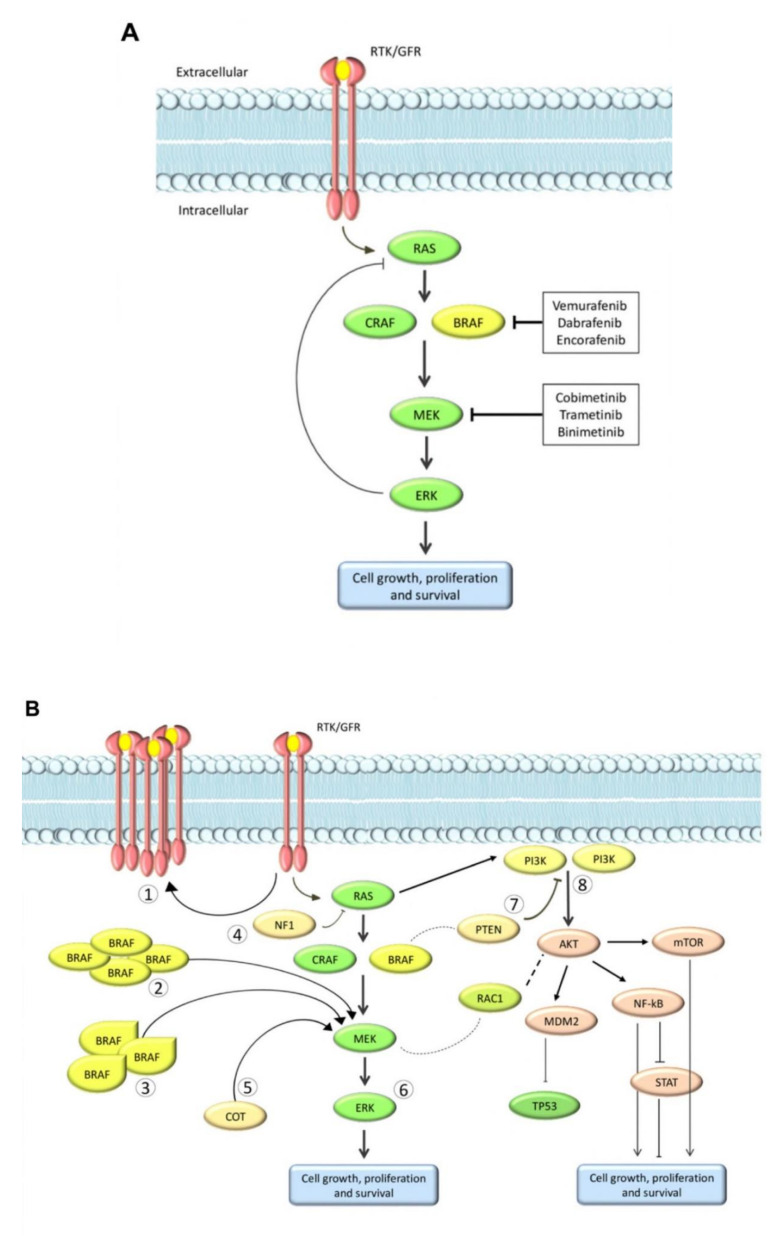
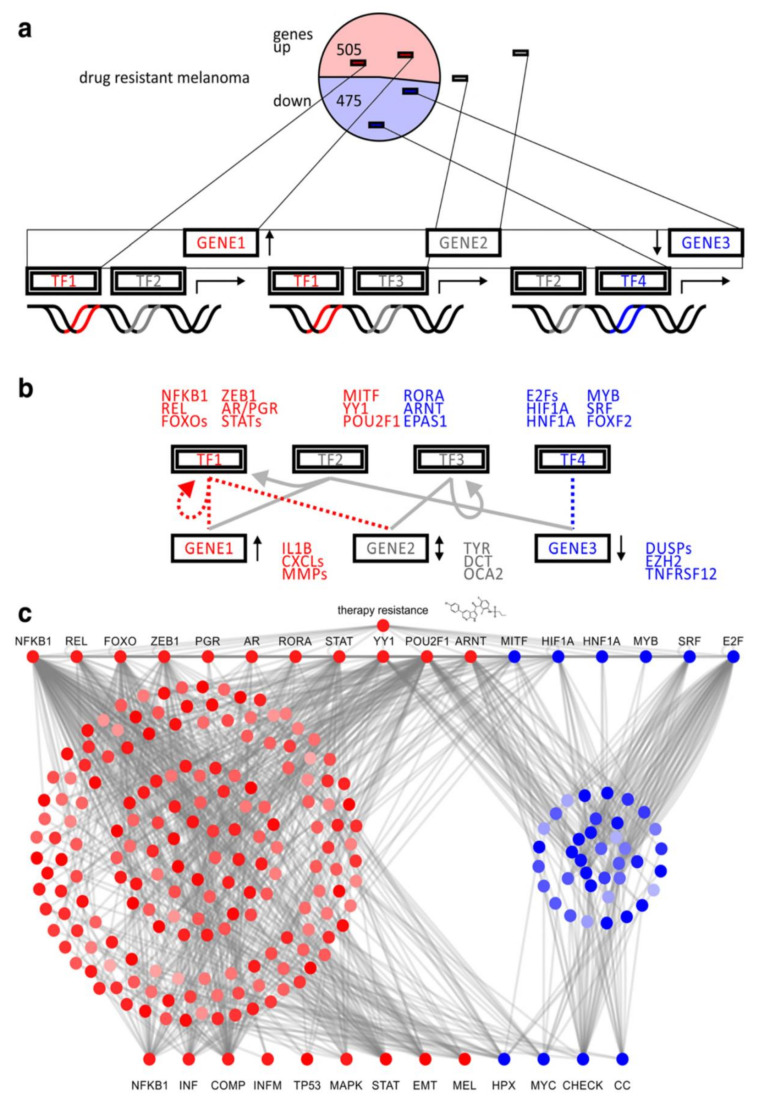
This systematic review investigated the literature on acquired v-raf murine sarcoma viral oncogene homolog B1 (BRAF) inhibitor resistance in patients with melanoma. We searched MEDLINE for articles on BRAF inhibitor resistance in patients with melanoma published since January 2010 in the following areas: (1) genetic basis of resistance; (2) epigenetic and transcriptomic mechanisms; (3) influence of the immune system on resistance development; and (4) combination therapy to overcome resistance. Common resistance mutations in melanoma are BRAF splice variants, amplification, neuroblastoma RAS viral oncogene homolog (NRAS) mutations and mitogen-activated protein kinase kinase 1/2 (MEK1/2) mutations. Genetic and epigenetic changes reactivate previously blocked mitogen-activated protein kinase (MAPK) pathways, activate alternative signaling pathways, and cause epithelial-to-mesenchymal transition. Once BRAF inhibitor resistance develops, the tumor microenvironment reverts to a low immunogenic state secondary to the induction of programmed cell death ligand-1. Combining a BRAF inhibitor with a MEK inhibitor delays resistance development and increases duration of response. Multiple other combinations based on known mechanisms of resistance are being investigated. BRAF inhibitor-resistant cells develop a range of 'escape routes', so multiple different treatment targets will probably be required to overcome resistance. In the future, it may be possible to personalize combination therapy towards the specific resistance pathway in individual patients.
本系统评价研究了黑色素瘤患者获得性v-raf鼠肉瘤病毒癌基因同源物B1(BRAF)抑制剂耐药性的相关文献。我们在MEDLINE数据库中检索了自2010年1月以来发表的关于黑色素瘤患者BRAF抑制剂耐药性的文章,涉及以下领域:(1)耐药的遗传基础;(2)表观遗传和转录组学机制;(3)免疫系统对耐药性发展的影响;(4)克服耐药性的联合治疗。黑色素瘤常见的耐药突变包括BRAF剪接变体、扩增、神经母细胞瘤RAS病毒癌基因同源物(NRAS)突变和丝裂原活化蛋白激酶激酶1/2(MEK1/2)突变。遗传和表观遗传变化会重新激活先前被阻断的丝裂原活化蛋白激酶(MAPK)通路,激活替代信号通路,并导致上皮-间质转化。一旦出现BRAF抑制剂耐药,肿瘤微环境会因程序性细胞死亡配体-1的诱导而恢复到低免疫原性状态。将BRAF抑制剂与MEK抑制剂联合使用可延迟耐药性的发展并延长反应持续时间。基于已知耐药机制的多种其他联合治疗正在研究中。BRAF抑制剂耐药细胞会形成一系列“逃逸途径”,因此可能需要多个不同的治疗靶点来克服耐药性。未来,有可能针对个体患者的特定耐药途径进行个性化联合治疗。