Department of Medicine, University of Illinois at Chicago Chicago, IL, USA.
Molecular Oncology Program, Centro Nacional de Investigaciones Oncológicas Madrid, Spain.
Front Physiol. 2014 Dec 4;5:464. doi: 10.3389/fphys.2014.00464. eCollection 2014.
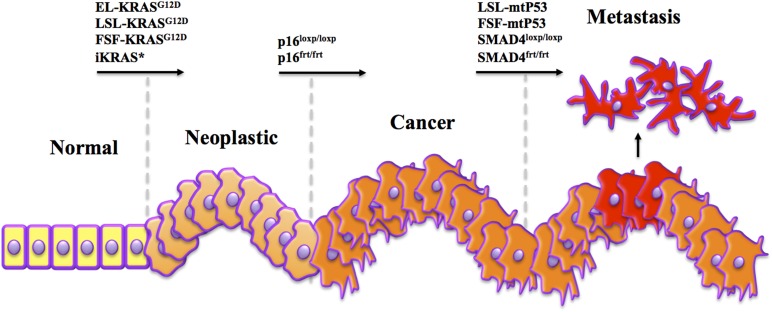
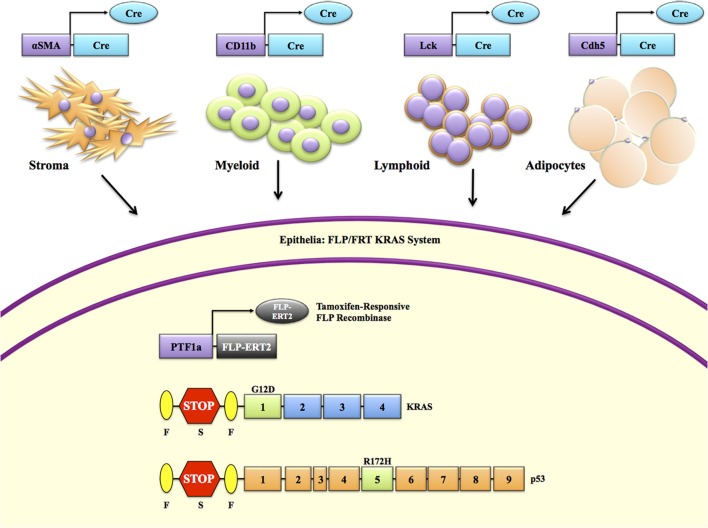
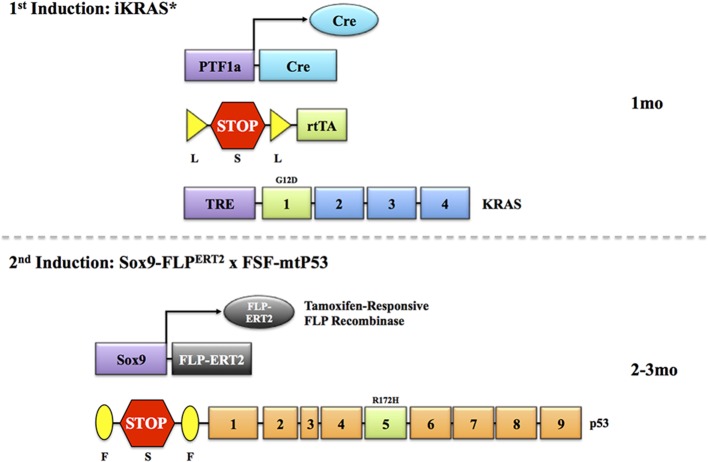
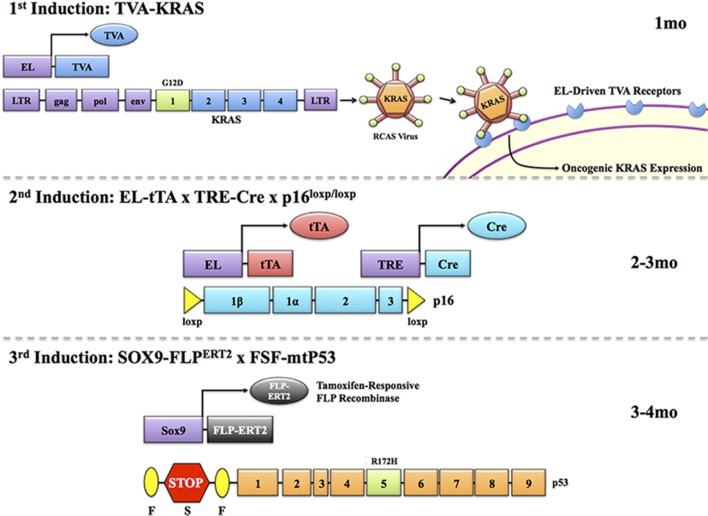
The study of pancreatic cancer has prompted the development of numerous mouse models that aim to recapitulate the phenotypic and mechanistic features of this deadly malignancy. This review accomplishes two tasks. First, it provides an overview of the models that have been used as representations of both the neoplastic and carcinoma phenotypes. Second, it presents new modeling schemes that ultimately will serve to more faithfully capture the temporal and spatial progression of the human disease, providing platforms for improved understanding of the role of non-epithelial compartments in disease etiology as well as evaluating therapeutic approaches.
这项胰腺癌研究促使人们开发出了许多旨在重现这种致命恶性肿瘤表型和机制特征的小鼠模型。本综述完成了两项任务。首先,它概述了用于代表肿瘤和癌表型的模型。其次,它提出了新的建模方案,这些方案最终将更忠实地捕捉人类疾病的时间和空间进展,为更好地了解非上皮细胞在疾病发病机制中的作用以及评估治疗方法提供平台。