Naghdi Lili, Ahonen Heidi, Macario Pasqualino, Bartel Lee
Pain Res Manag. 2015 Jan-Feb;20(1):e21-7. doi: 10.1155/2015/375174. Epub 2014 Dec 29.
The search for effective treatments for fibromyalgia (FM) has continued for years. The present study premises that thalamocortical dysrhythmia is implicated in fibromyalgia and that low-frequency sound stimulation (LFSS) can play a regulatory function by driving neural rhythmic oscillatory activity.
To assess the effect of LFSS on FM.
The present open-label study with no control group used a repeated-measures design with no noncompleters. Nineteen female volunteers (median age 51 years; median duration of FM 5.76 years) were administered 10 treatments (twice per week for five weeks). Treatments involved 23 min of LFSS at 40 Hz, delivered using transducers in a supine position. Measures (repeated before and after treatment) included the Fibromyalgia Impact Questionnaire, Jenkins Sleep Scale, Pain Disability Index, sitting and standing without pain (in minutes), cervical muscle range of motion and muscle tone. Mean percentages were calculated on end of treatment self-reports of improvement on pain, mood, insomnia and activities of daily living.
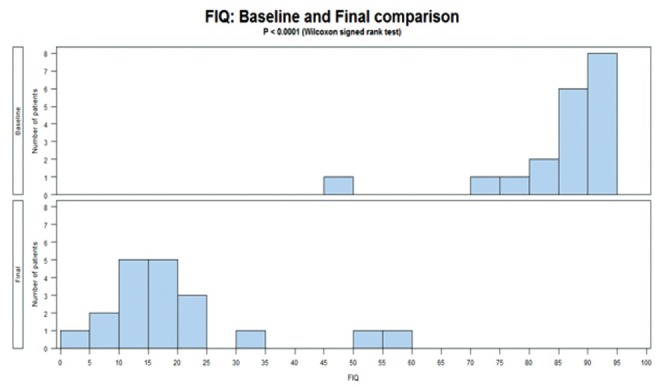
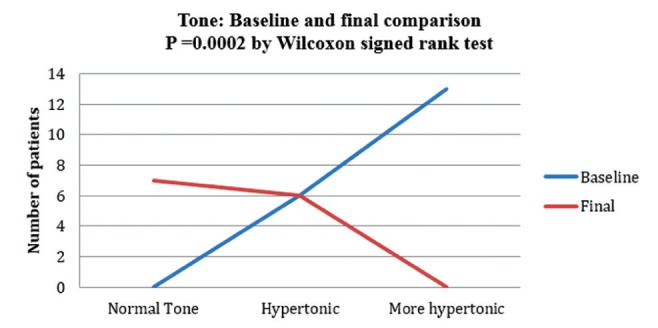
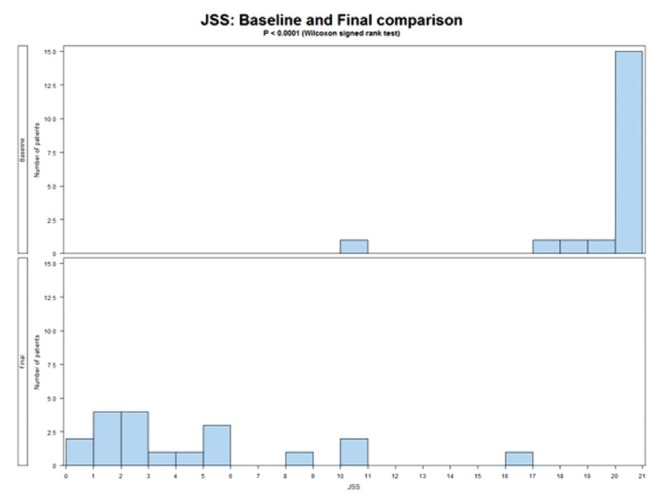
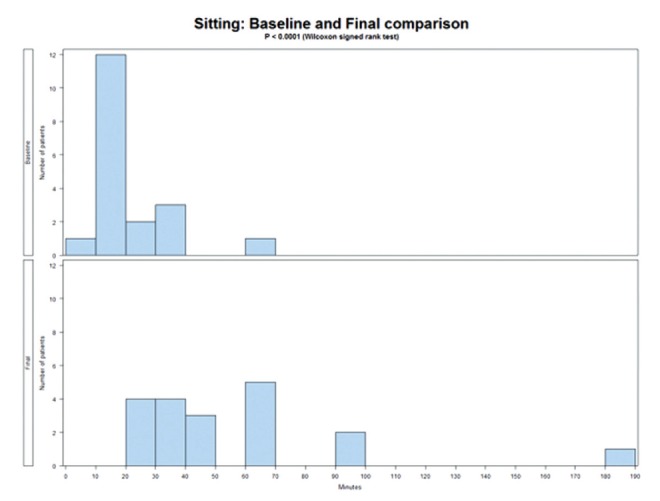
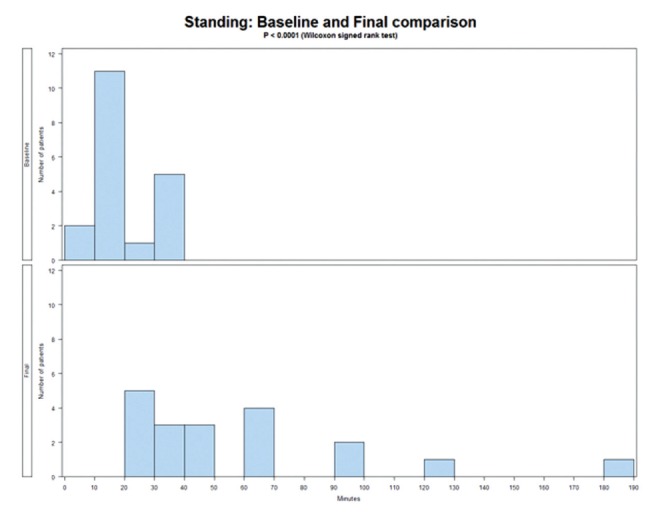
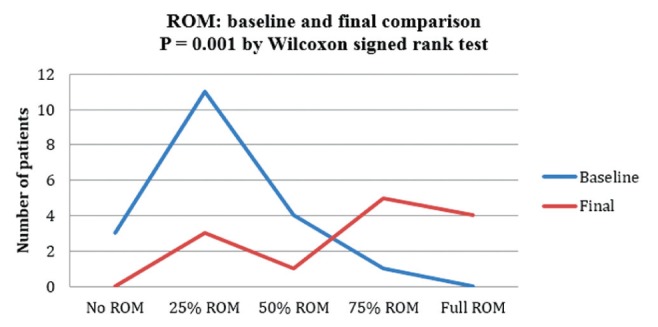
Significant improvements were observed with median scores: Fibromyalgia Impact Questionnaire, 81% (P<0.0001); Jenkins Sleep Scale, 90% (P<0.0001); and Pain Disability Index, 49.1% (P<0.0001). Medication dose was reduced in 73.68% of patients and completely discontinued in 26.32%. Time sitting and standing without pain increased significantly (P<0.0001). Cervical muscle range of motion increased from 25% to 75% (P=0.001), while muscle tone changed from hypertonic to normal (P=0.0002).
In the present study, the LFSS treatment showed no adverse effects and patients receiving the LFSS treatment showed statistically and clinically relevant improvement. Further phase 2 and 3 trials are warranted.
多年来一直在寻找纤维肌痛(FM)的有效治疗方法。本研究假定丘脑皮质节律失调与纤维肌痛有关,并且低频声音刺激(LFSS)可以通过驱动神经节律振荡活动发挥调节作用。
评估低频声音刺激对纤维肌痛的影响。
本项无对照组的开放标签研究采用重复测量设计,无未完成者。19名女性志愿者(年龄中位数51岁;纤维肌痛病程中位数5.76年)接受了10次治疗(每周两次,共五周)。治疗包括使用换能器在仰卧位进行23分钟的40赫兹低频声音刺激。测量指标(治疗前后重复测量)包括纤维肌痛影响问卷、詹金斯睡眠量表、疼痛残疾指数、无痛坐立时间(分钟)、颈部肌肉活动范围和肌张力。根据治疗结束时患者关于疼痛、情绪、失眠和日常生活活动改善情况的自我报告计算平均百分比。
观察到中位数评分有显著改善:纤维肌痛影响问卷,改善81%(P<0.0001);詹金斯睡眠量表,改善90%(P<0.0001);疼痛残疾指数,改善49.1%(P<0.0001)。73.68%的患者药物剂量减少,26.32%的患者药物完全停用。无痛坐立时间显著增加(P<0.0001)。颈部肌肉活动范围从25%增加到75%(P=0.001),而肌张力从高张力变为正常(P=0.0002)。
在本研究中,低频声音刺激治疗未显示出不良反应,接受低频声音刺激治疗的患者在统计学和临床上均有显著改善。有必要进行进一步的2期和3期试验。