Gardiner M D, Vincent T L, Driscoll C, Burleigh A, Bou-Gharios G, Saklatvala J, Nagase H, Chanalaris A
Kennedy Institute of Rheumatology, Nuffield Department of Orthopaedics, Rheumatology and Musculoskeletal Sciences, University of Oxford, Old Road Campus, Roosevelt Drive, Headington, Oxford, OX3 7FY, UK.
Osteoarthritis Cartilage. 2015 Apr;23(4):616-28. doi: 10.1016/j.joca.2014.12.014. Epub 2014 Dec 26.
Identify gene changes in articular cartilage of the medial tibial plateau (MTP) at 2, 4 and 8 weeks after destabilisation of the medial meniscus (DMM) in mice. Compare our data with previously published datasets to ascertain dysregulated pathways and genes in osteoarthritis (OA).
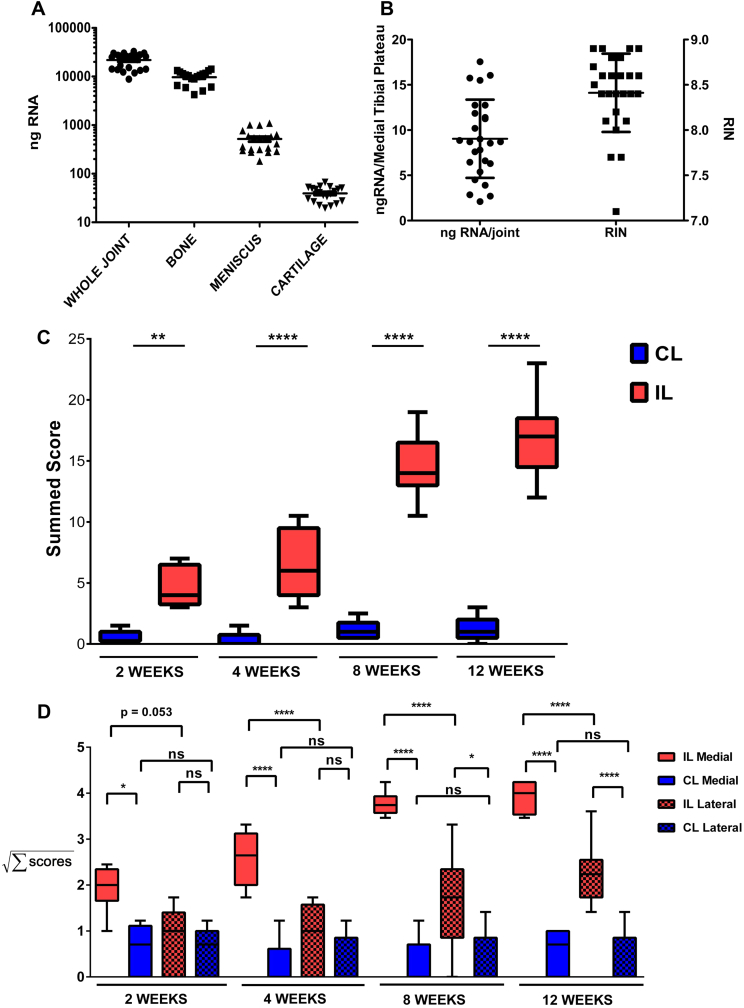
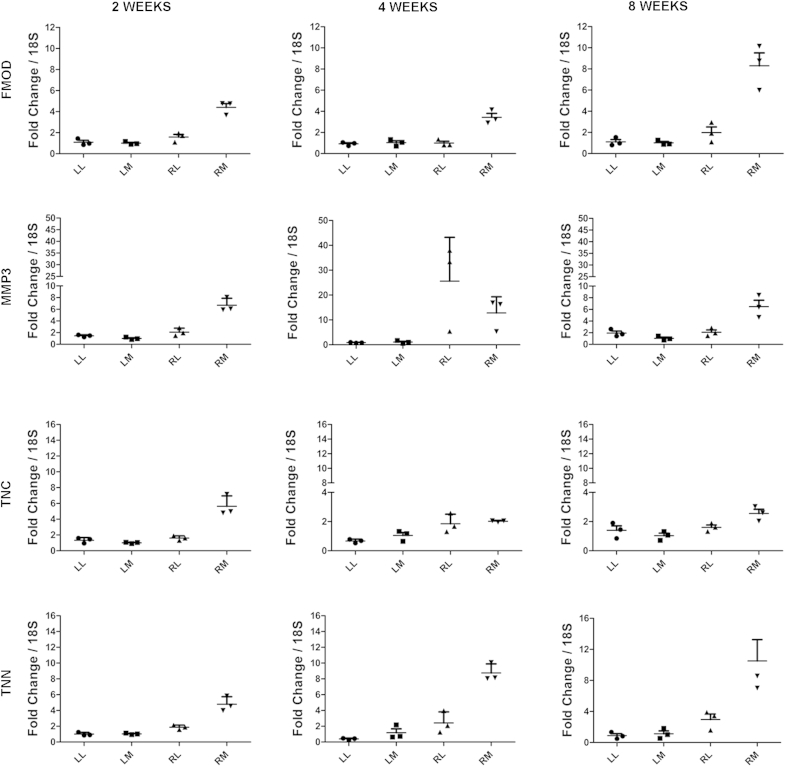
RNA was extracted from the ipsilateral and contralateral MTP cartilage, amplified, labelled and hybridized on Illumina WGv2 microarrays. Results were confirmed by real-time polymerase chain reaction (PCR) for selected genes.
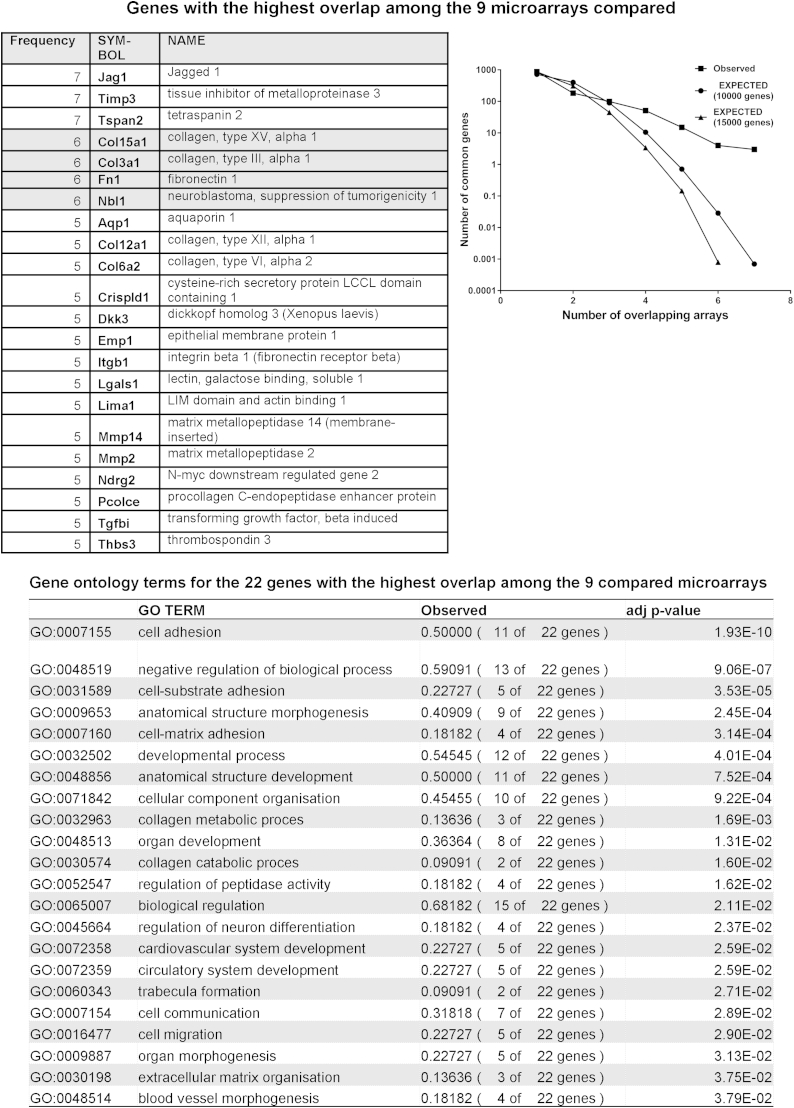
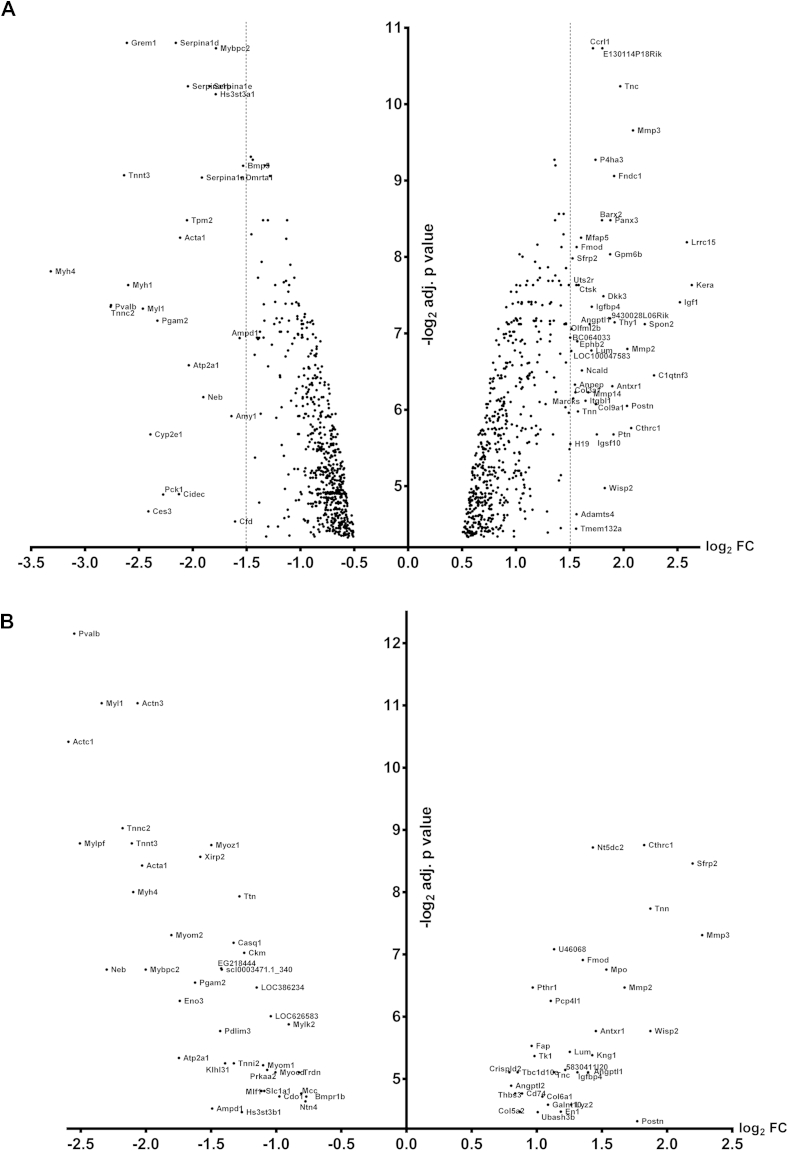
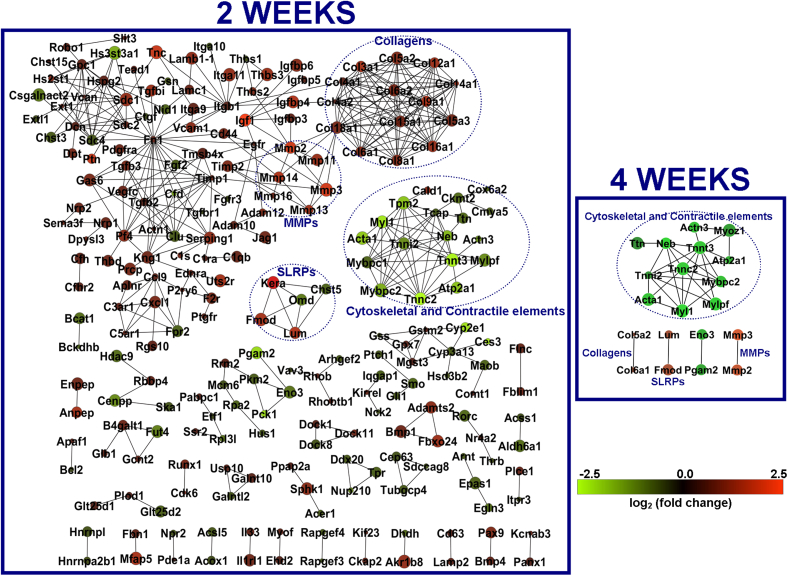
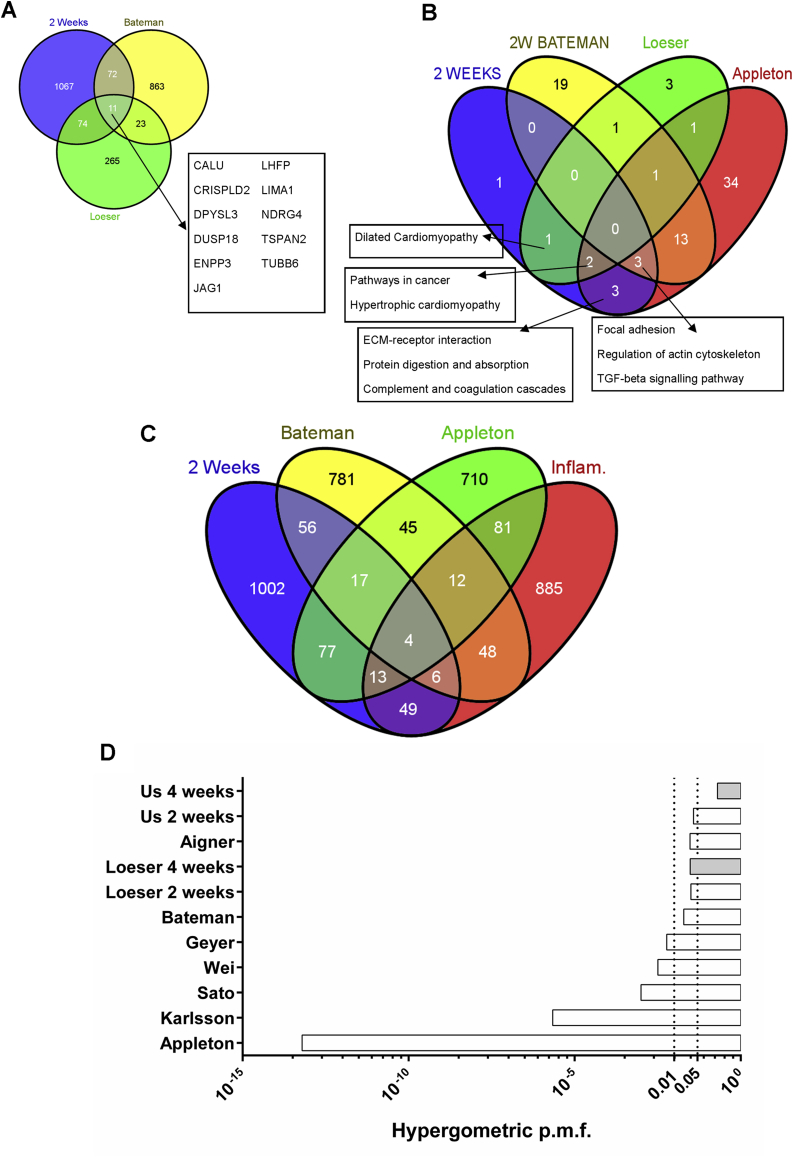
Transcriptional analysis and network reconstruction revealed changes in extracellular matrix and cytoskeletal genes induced by DMM. TGFβ signalling pathway and complement and coagulation cascade genes were regulated at 2 weeks. Fibronectin (Fn1) is a hub in a reconstructed network at 2 weeks. Regulated genes decrease over time. By 8 weeks fibromodulin (Fmod) and tenascin N (Tnn) are the only dysregulated genes present in the DMM operated knees. Comparison with human and rodent published gene sets identified genes overlapping between our array and eight other studies.
Cartilage contributes a minute percentage to the RNA extracted from the whole joint (<0.2%), yet is sensitive to changes in gene expression post-DMM. The post-DMM transcriptional reprogramming wanes over time dissipating by 8 weeks. Common pathways between published gene sets include focal adhesion, regulation of actin cytoskeleton and TGFβ. Common genes include Jagged 1 (Jag1), Tetraspanin 2 (Tspan2), neuroblastoma, suppression of tumourigenicity 1 (Nbl1) and N-myc downstream regulated gene 2 (Ndrg2). The concomitant genes and pathways we identify may warrant further investigation as biomarkers or modulators of OA.
确定小鼠内侧半月板不稳定(DMM)后2周、4周和8周时内侧胫骨平台(MTP)关节软骨中的基因变化。将我们的数据与先前发表的数据集进行比较,以确定骨关节炎(OA)中失调的信号通路和基因。
从同侧和对侧MTP软骨中提取RNA,进行扩增、标记,并在Illumina WGv2微阵列上杂交。通过实时聚合酶链反应(PCR)对选定基因的结果进行确认。
转录分析和网络重建揭示了DMM诱导的细胞外基质和细胞骨架基因的变化。TGFβ信号通路以及补体和凝血级联基因在2周时受到调控。纤连蛋白(Fn1)是2周时重建网络中的一个枢纽。随着时间的推移,受调控的基因数量减少。到8周时,纤维调节素(Fmod)和腱生蛋白N(Tnn)是DMM手术膝关节中仅有的失调基因。与已发表的人类和啮齿动物基因集进行比较,确定了我们的阵列与其他八项研究中重叠的基因。
软骨对从整个关节提取的RNA贡献的比例极小(<0.2%),但对DMM后的基因表达变化敏感。DMM后的转录重编程随着时间的推移而减弱,在8周时消失。已发表基因集之间的共同信号通路包括粘着斑、肌动蛋白细胞骨架调节和TGFβ。共同基因包括锯齿状蛋白1(Jag1)、四跨膜蛋白2(Tspan2)、神经母细胞瘤、抑瘤蛋白1(Nbl1)和N-myc下游调节基因2(Ndrg2)。我们确定的伴随基因和信号通路作为OA的生物标志物或调节剂可能值得进一步研究。