Song Yafeng, Forsgren Sture, Liu Jing-Xia, Yu Ji-Guo, Stål Per
Department of Integrative Medical Biology, Section for Anatomy, Umeå University, Umeå, Sweden.
Department of Surgical and Perioperative Sciences, Sports Medicine Unit, Umeå University, Umeå, Sweden.
PLoS One. 2014 Dec 29;9(12):e116455. doi: 10.1371/journal.pone.0116455. eCollection 2014.
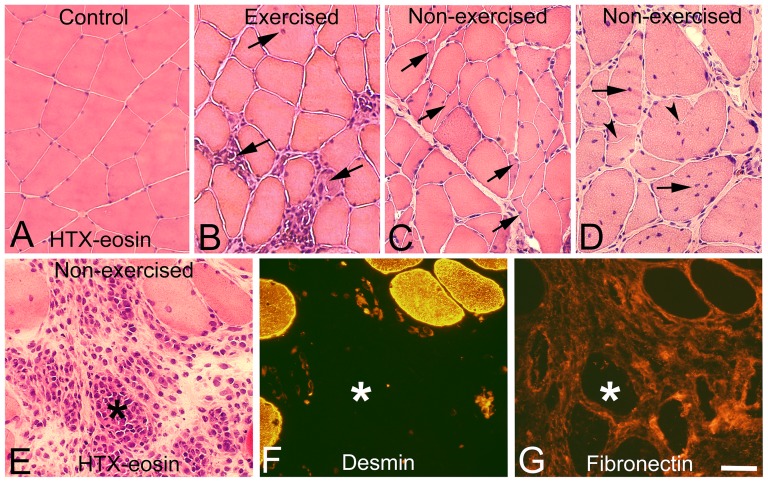
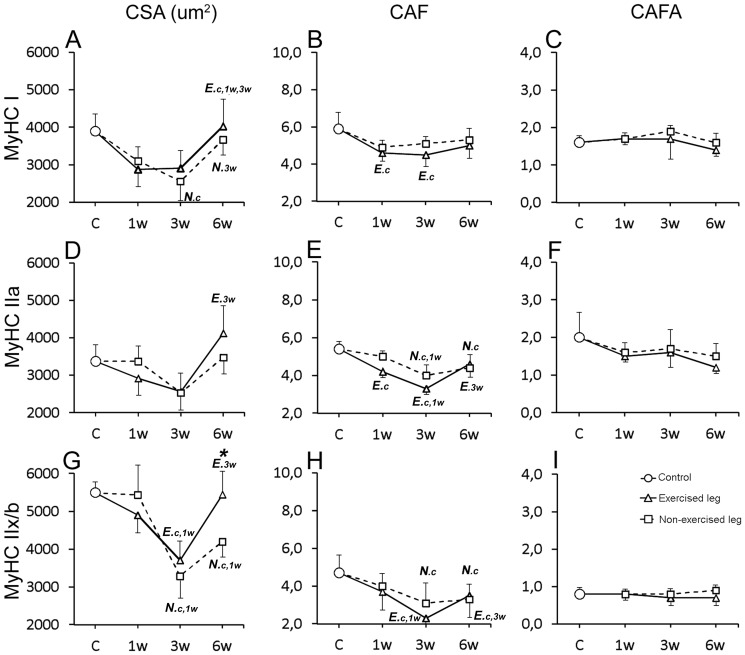
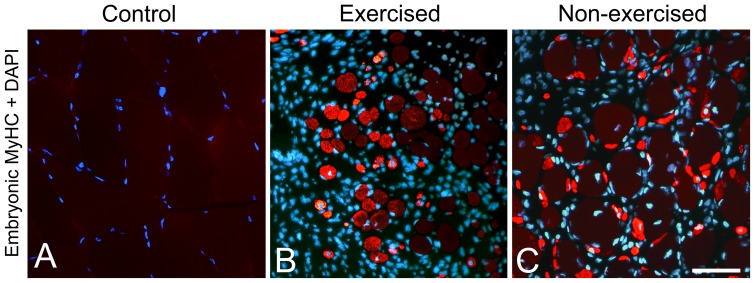
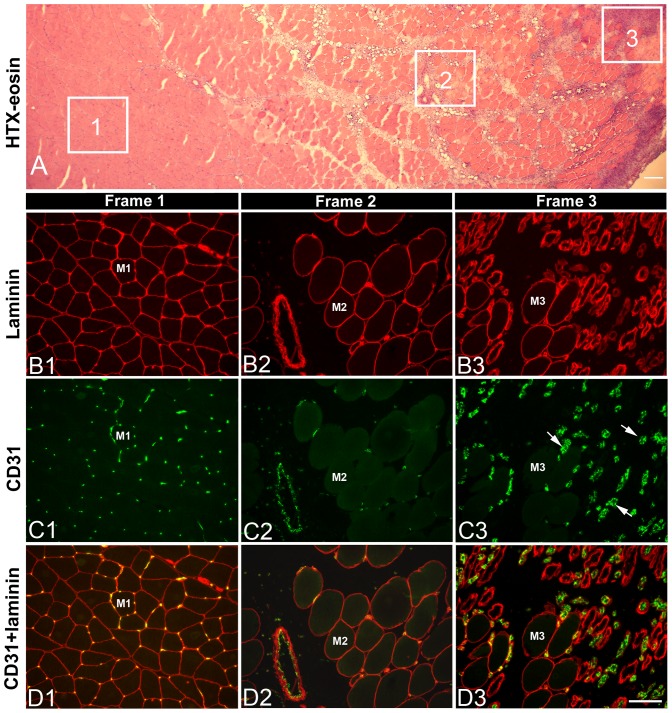
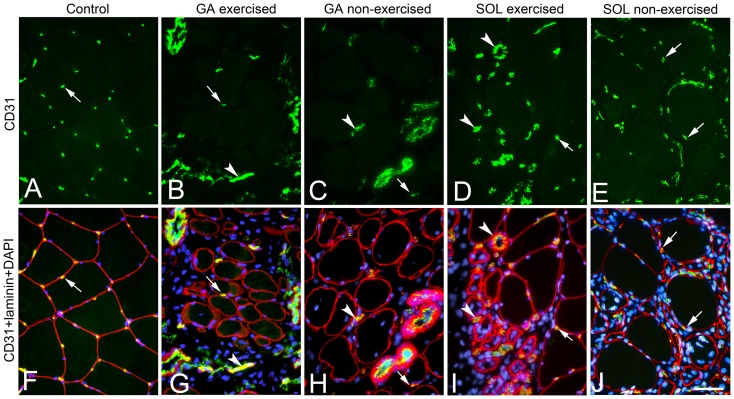
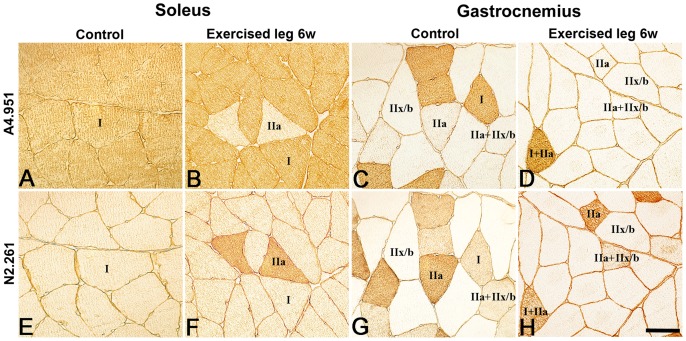
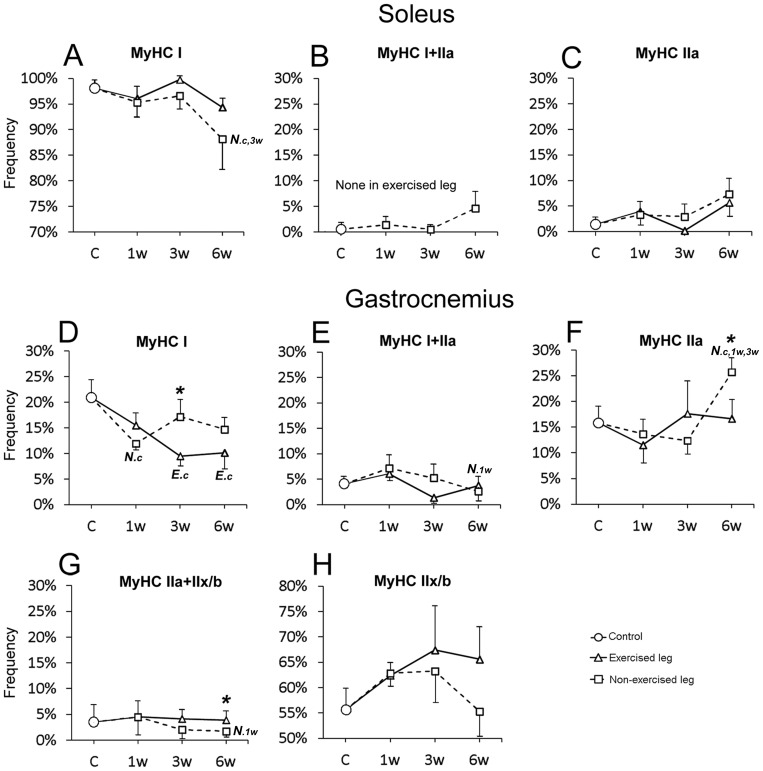
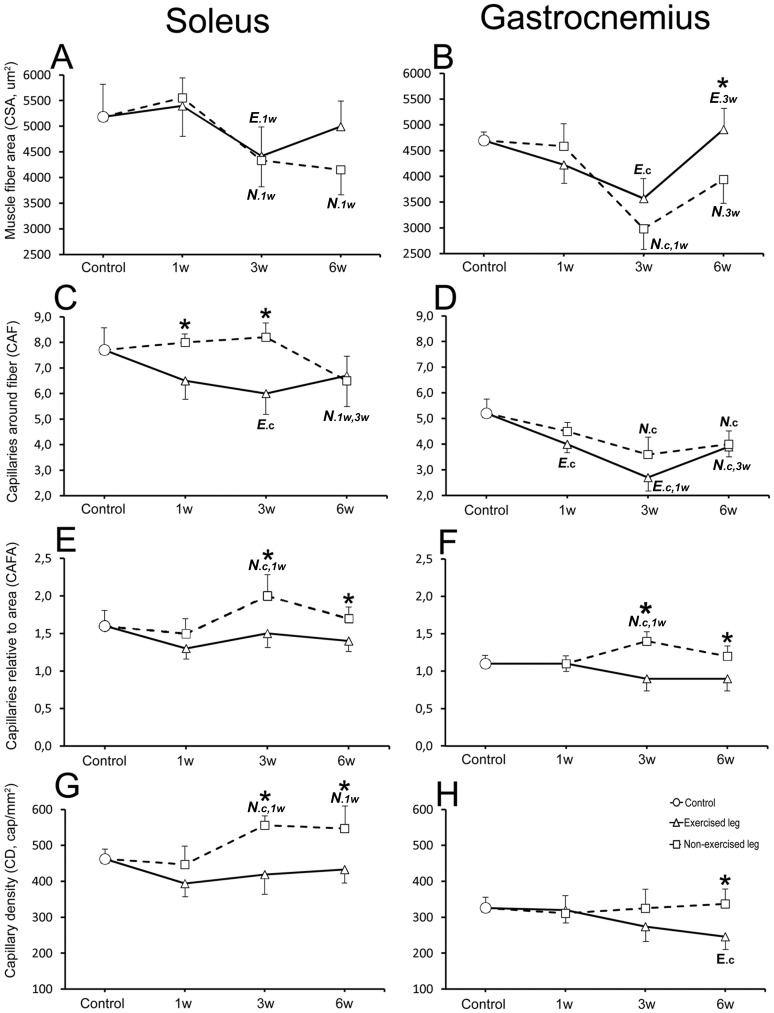
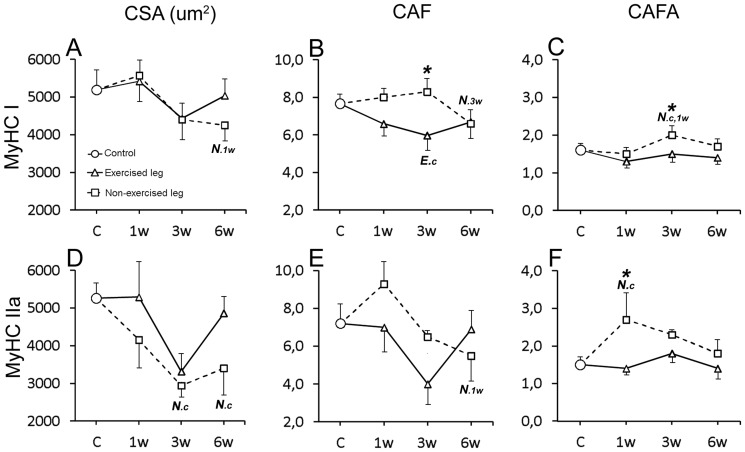
Unilateral strength training can cause cross-transfer strength effects to the homologous contralateral muscles. However, the impact of the cross-over effects on the muscle tissue is unclear. To test the hypothesis that unilateral muscle overuse causes bilateral alterations in muscle fiber composition and vascular supply, we have used an experimental rabbit model with unilateral unloaded overstrain exercise via electrical muscle stimulation (E/EMS). The soleus (SOL) and gastrocnemius (GA) muscles of both exercised (E) and contralateral non-exercised (NE) legs (n = 24) were morphologically analyzed after 1 w, 3 w and 6 w of EMS. Non-exercised rabbits served as controls (n = 6). After unilateral intervention the muscles of both E and NE legs showed myositis and structural and molecular tissue changes that to various degrees mirrored each other. The fiber area was bilaterally smaller than in controls after 3 w of E/EMS in both SOL (E 4420 and NE 4333 µm2 vs. 5183 µm2, p<0.05) and GA (E 3572 and NE 2983 µm2 vs. 4697 µm2, p<0.02) muscles. After 6 w of E/EMS, the percentage of slow MyHCI fibers was lower than in controls in the NE legs of SOL (88.1% vs. 98.1%, p<0.009), while the percentage of fast MyHCIIa fibers was higher in the NE legs of GA (25.7% vs. 15.8%, p = 0.02). The number of capillaries around fibers in the E and NE legs was lower (SOL 13% and 15%, respectively, GA 25% and 23%, respectively, p<0.05) than in controls. The overall alterations were more marked in the fast GA muscle than in the slow SOL muscle, which on the other hand showed more histopathological muscle changes. We conclude that unilateral repetitive unloaded overuse exercise via EMS causes myositis and muscle changes in fiber type proportions, fiber area and fiber capillarization not only in the exercised leg, but also in the homologous muscles in the non-exercised leg.
单侧力量训练可导致同源对侧肌肉产生交叉转移力量效应。然而,这种交叉效应在肌肉组织上的影响尚不清楚。为了验证单侧肌肉过度使用会导致肌肉纤维组成和血管供应出现双侧改变这一假设,我们使用了一种实验性兔模型,通过肌肉电刺激(E/EMS)进行单侧无负荷过度拉伸运动。在进行1周、3周和6周的EMS后,对运动侧(E)和对侧未运动侧(NE)腿部(n = 24)的比目鱼肌(SOL)和腓肠肌(GA)进行形态学分析。未运动的兔子作为对照(n = 6)。单侧干预后,运动侧和未运动侧腿部的肌肉均出现了肌炎以及结构和分子组织变化,且在不同程度上相互对应。在进行3周的E/EMS后,SOL(运动侧4420和未运动侧4333 µm² 对比 5183 µm²,p<0.05)和GA(运动侧3572和未运动侧2983 µm² 对比 4697 µm²,p<0.02)肌肉的纤维面积在双侧均小于对照组。在进行6周的E/EMS后,SOL未运动侧腿部慢肌肌球蛋白重链I(MyHCI)纤维的百分比低于对照组(88.1% 对比 98.1%,p<0.009),而GA未运动侧腿部快肌肌球蛋白重链IIa(MyHCIIa)纤维的百分比则高于对照组(25.7% 对比 15.8%,p = 0.02)。运动侧和未运动侧腿部纤维周围的毛细血管数量均低于对照组(SOL分别为13%和15%,GA分别为25%和23%,p<0.05)。总体而言,快速收缩的GA肌肉的改变比慢速收缩的SOL肌肉更为明显,而另一方面,SOL肌肉显示出更多的组织病理学变化。我们得出结论,通过EMS进行单侧重复性无负荷过度使用运动不仅会导致运动侧腿部出现肌炎以及肌肉纤维类型比例、纤维面积和纤维毛细血管化的变化,还会使未运动侧腿部的同源肌肉出现这些变化。