Hosoki Koa, Boldogh Istvan, Sur Sanjiv
aDepartment of Internal Medicine, Division of Allergy and Immunology bDepartment of Microbiology and Immunology, University of Texas Medical Branch, Galveston, Texas, USA.
Curr Opin Allergy Clin Immunol. 2015 Feb;15(1):79-88. doi: 10.1097/ACI.0000000000000136.
The aim of the present review was to discuss the effects of pollen components on innate immune responses.
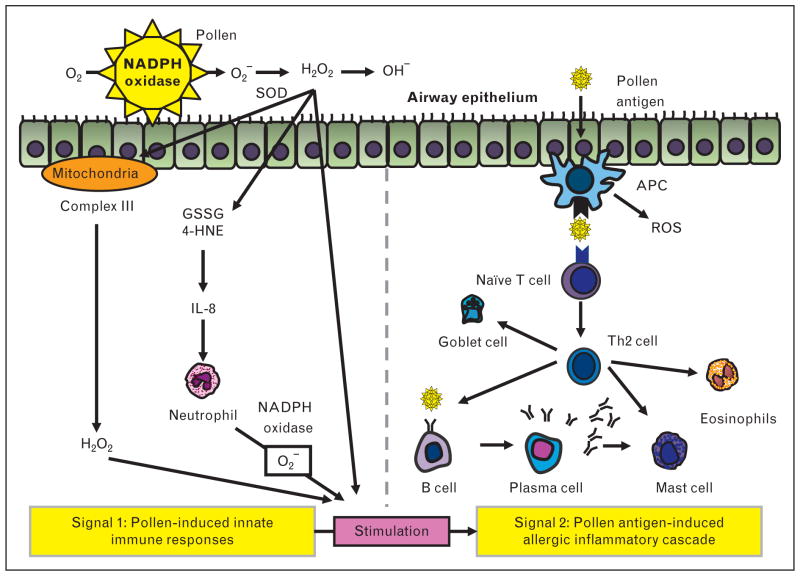
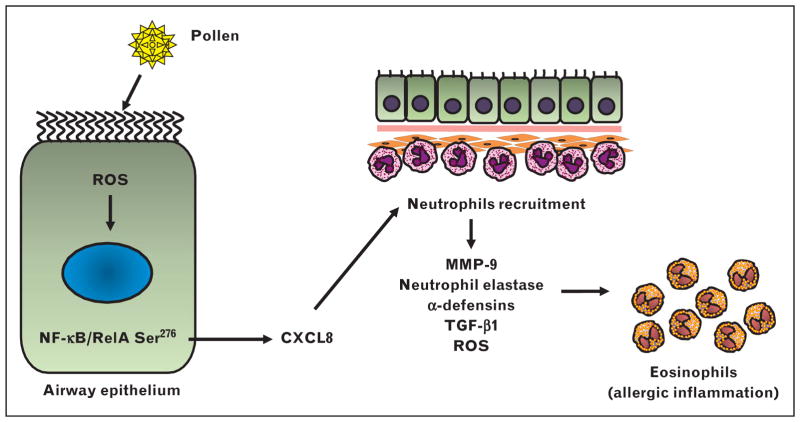
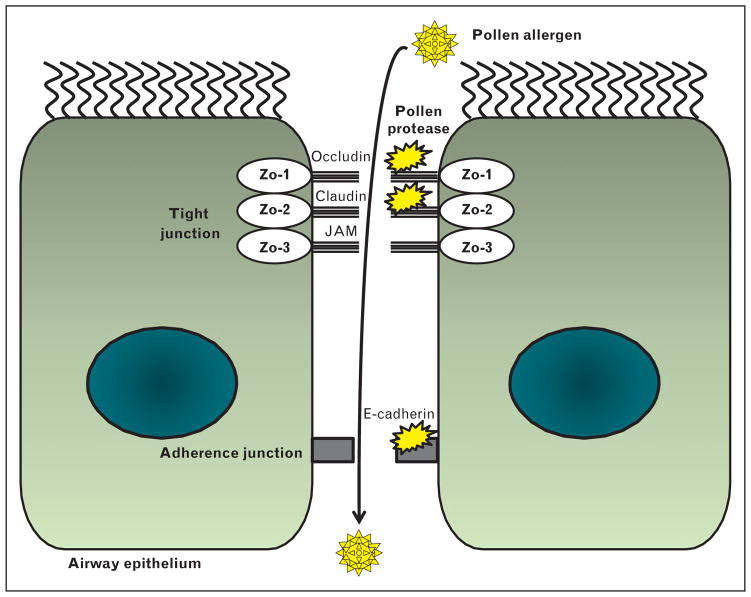
Pollens contain numerous factors that can stimulate an innate immune response. These include intrinsic factors in pollens such as nicotinamide adenine dinucleotide phosphate oxidases, proteases, aqueous pollen proteins, lipids, and antigens. Each component stimulates innate immune response in a different manner. Pollen nicotinamide adenine dinucleotide phosphate oxidases induce reactive oxygen species generation and recruit neutrophils that stimulate subsequent allergic inflammation. Pollen proteases damage epithelial barrier function and increase antigen uptake. Aqueous pollen extract proteins and pollen lipids modulate dendritic cell function and induce Th2 polarization. Clinical studies have shown that modulation of innate immune response to pollens with toll-like receptor 9- and toll-like receptor 4-stimulating conjugates is well tolerated and induces clear immunological effects, but is not very effective in suppressing primary clinical endpoints of allergic inflammation.
Additional research on innate immune pathways induced by pollen components is required to develop novel strategies that will mitigate the development of allergic inflammation.
本综述旨在探讨花粉成分对固有免疫反应的影响。
花粉含有多种可刺激固有免疫反应的因子。这些包括花粉中的内在因子,如烟酰胺腺嘌呤二核苷酸磷酸氧化酶、蛋白酶、水性花粉蛋白、脂质和抗原。每种成分以不同方式刺激固有免疫反应。花粉烟酰胺腺嘌呤二核苷酸磷酸氧化酶诱导活性氧生成并募集嗜中性粒细胞,后者刺激随后的过敏性炎症。花粉蛋白酶破坏上皮屏障功能并增加抗原摄取。水性花粉提取物蛋白和花粉脂质调节树突状细胞功能并诱导Th2极化。临床研究表明,用Toll样受体9和Toll样受体4刺激缀合物调节对花粉的固有免疫反应耐受性良好,并诱导明显的免疫学效应,但在抑制过敏性炎症的主要临床终点方面效果不佳。
需要对花粉成分诱导的固有免疫途径进行更多研究,以开发减轻过敏性炎症发展的新策略。