
环境因素对镰状细胞病患者每日急诊入院情况的影响
Environmental influences on daily emergency admissions in sickle-cell disease patients.
作者信息
Mekontso Dessap Armand, Contou Damien, Dandine-Roulland Claire, Hemery François, Habibi Anoosha, Charles-Nelson Anaïs, Galacteros Frederic, Brun-Buisson Christian, Maitre Bernard, Katsahian Sandrine
机构信息
From the AP-HP, Hôpital H. Mondor - A. Chenevier, Service de Réanimation Médicale, CARMAS research group (AMD, DC, CB-B); Université Paris Est, Faculté de médecine (AMD, DC, FG, CB-B, BM); Inserm, U955, Equipe 8 (AMD, BM); AP-HP, Hôpital H. Mondor - A. Chenevier, Unité de Recherche Clinique (CD-R, AC-N, SK); AP-HP, Hôpital H. Mondor - A. Chenevier, Service d'Information Médicale (FH); AP-HP, Hôpital H. Mondor - A. Chenevier, Unité des Maladies du Globule Rouge (AH, FG); and AP-HP, Hôpital H. Mondor - A. Chenevier, Unité de Pneumologie, Créteil 94000, France (BM); AP-HP, Hôpital Européen Georges Pompidou (SK); Inserm UMRS1138, Centre de Recherche des Cordeliers, Equipe 22, Université Paris Descartes (SK).
出版信息
Medicine (Baltimore). 2014 Dec;93(29):e280. doi: 10.1097/MD.0000000000000280.
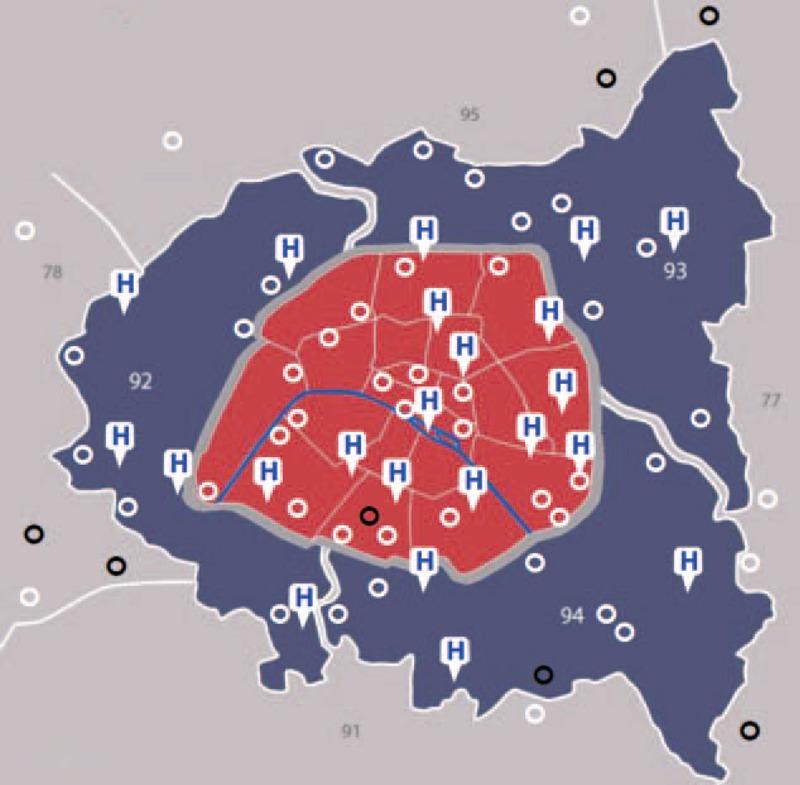
Previous reports have suggested a role for weather conditions and air pollution on the variability of sickle cell disease (SCD) severity, but large-scale comprehensive epidemiological studies are lacking. In order to evaluate the influence of air pollution and climatic factors on emergency hospital admissions (EHA) in SCD patients, we conducted an 8-year observational retrospective study in 22 French university hospitals in Paris conurbation, using distributed lag non-linear models, a methodology able to flexibly describe simultaneously non-linear and delayed associations, with a multivariable approach. During the 2922 days of the study, there were 17,710 EHA, with a mean daily number of 6.1 ± 2.8. Most environmental factors were significantly correlated to each other. The risk of EHA was significantly associated with higher values of nitrogen dioxide, atmospheric particulate matters, and daily mean wind speed; and with lower values of carbon monoxide, ozone, sulfur dioxide, daily temperature (minimal, maximal, mean, and range), day-to-day mean temperature change, daily bright sunshine, and occurrence of storm. There was a lag effect for 12 of 15 environmental factors influencing hospitalization rate. Multivariate analysis identified carbon monoxide, day-to-day temperature change, and mean wind speed, along with calendar factors (weekend, summer season, and year) as independent factors associated with EHA. In conclusion, most weather conditions and air pollutants assessed were correlated to each other and influenced the rate of EHA in SCD patients. In multivariate analysis, lower carbon monoxide concentrations, day-to-day mean temperature drop and higher wind speed were associated with increased risk of EHA.
以往的报告表明,天气状况和空气污染在镰状细胞病(SCD)严重程度的变异性方面起到一定作用,但缺乏大规模的综合流行病学研究。为了评估空气污染和气候因素对SCD患者急诊入院(EHA)的影响,我们在巴黎市区的22家法国大学医院进行了一项为期8年的观察性回顾性研究,采用分布滞后非线性模型,这是一种能够灵活同时描述非线性和延迟关联的方法,并采用多变量方法。在研究的2922天中,有17710次急诊入院,平均每日入院人数为6.1±2.8。大多数环境因素之间存在显著相关性。急诊入院风险与二氧化氮、大气颗粒物和日平均风速的较高值显著相关;与一氧化碳、臭氧、二氧化硫、日温度(最低、最高、平均和范围)、每日平均温度变化、每日日照时数和风暴发生的较低值显著相关。影响住院率的15个环境因素中有12个存在滞后效应。多变量分析确定一氧化碳、每日温度变化和平均风速,以及日历因素(周末、夏季和年份)为与急诊入院相关的独立因素。总之,评估的大多数天气状况和空气污染物相互关联,并影响SCD患者的急诊入院率。在多变量分析中,较低的一氧化碳浓度、每日平均温度下降和较高的风速与急诊入院风险增加相关。



 Zotero 插件