Huby Russell D J, Glaves Philip, Jackson Richard
Department Molecular Toxicology, Global Safety Assessment, AstraZeneca, Macclesfield, Cheshire, United Kingdom.
PLoS One. 2014 Dec 30;9(12):e115792. doi: 10.1371/journal.pone.0115792. eCollection 2014.
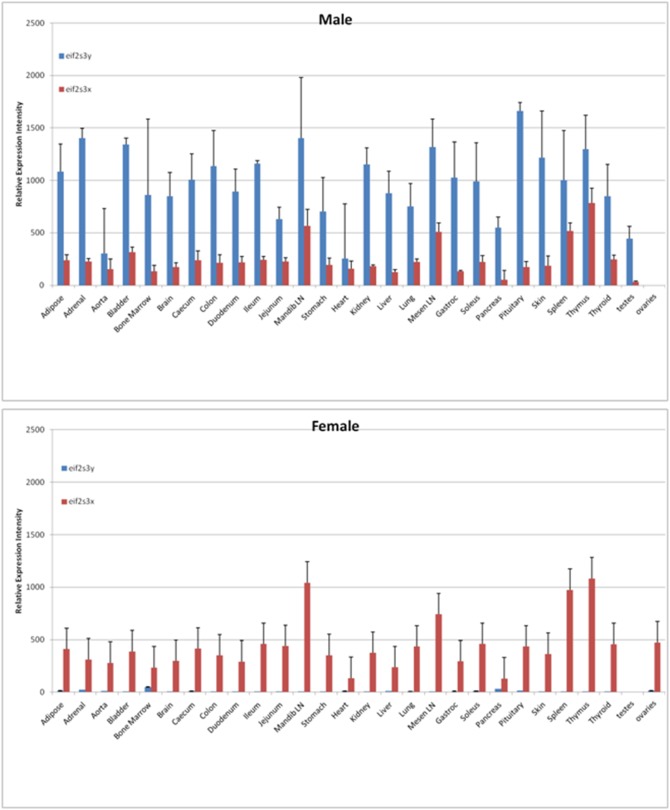
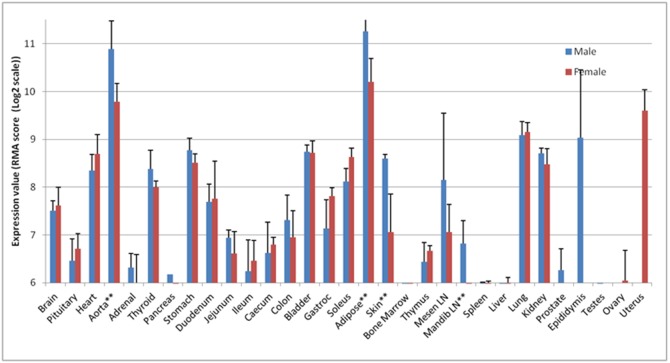
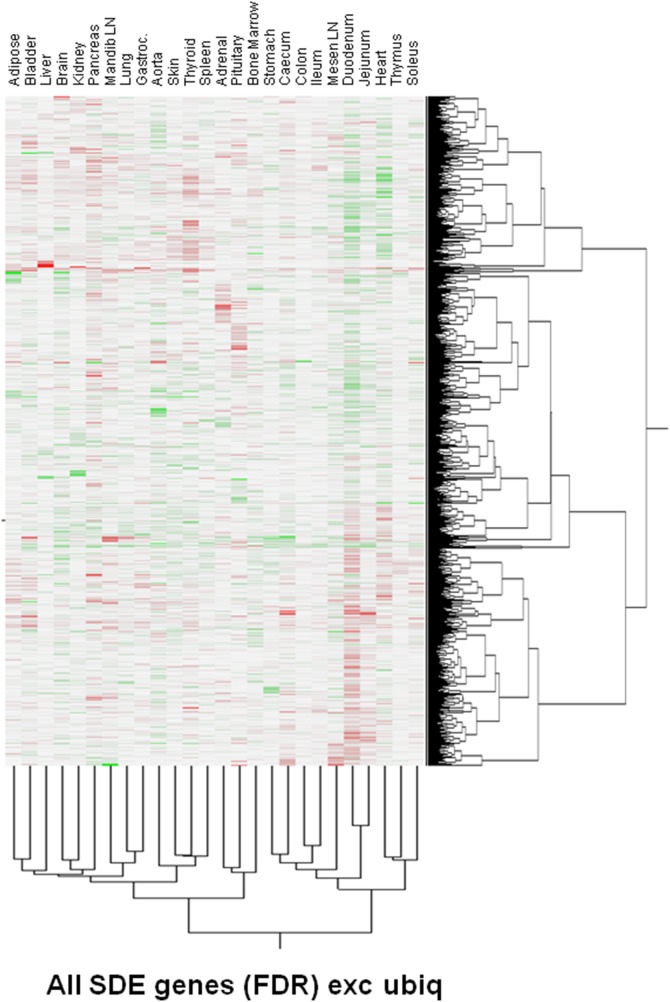
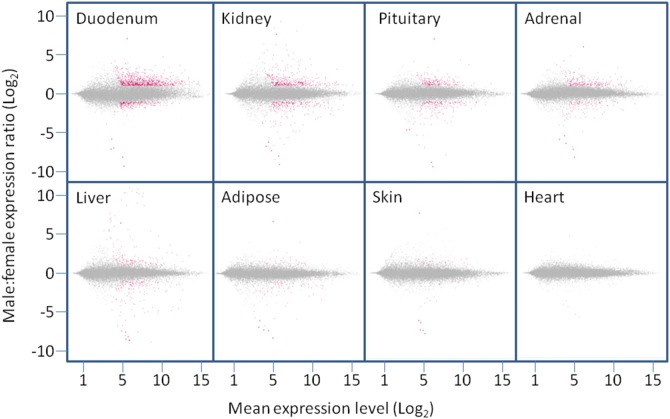
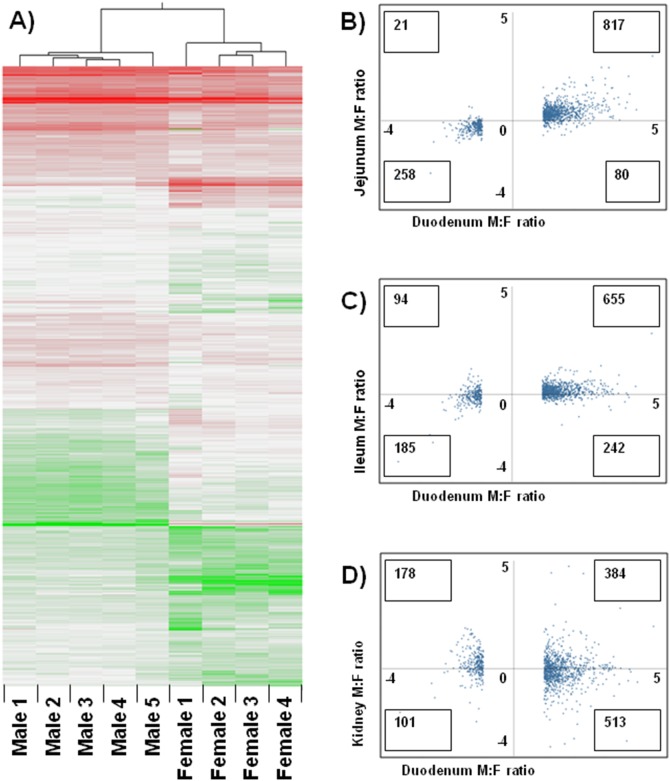
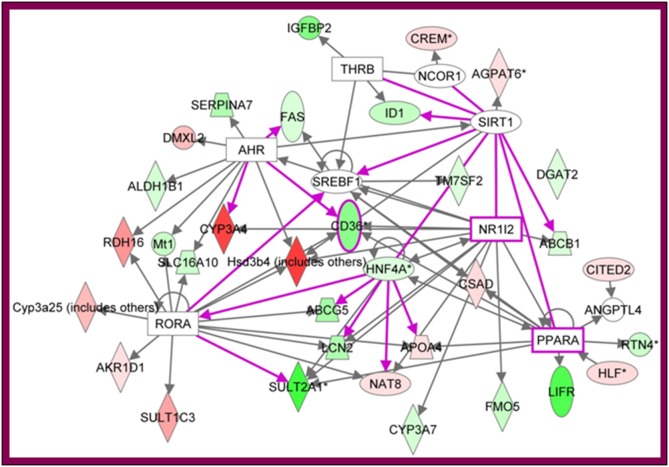
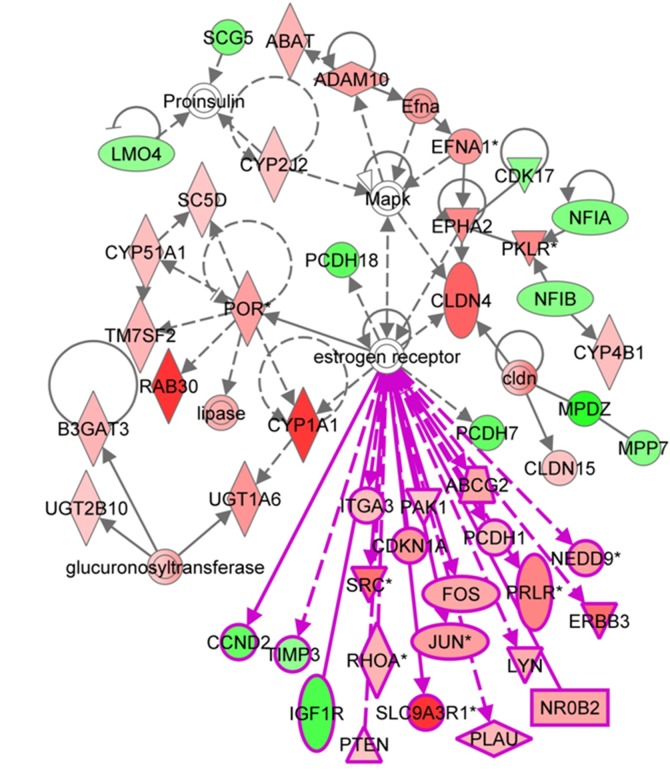
The sexually dimorphic expression of genes across 26 somatic rat tissues was using Affymetrix RAE-230 genechips. We considered probesets to be sexually dimorphically expressed (SDE) if they were measurably expressed above background in at least one sex, there was at least a two-fold difference in expression (dimorphism) between the sexes, and the differences were statistically significant after correcting for false discovery. 14.5% of expressed probesets were SDE in at least one tissue, with higher expression nearly twice as prevalent in males compared to females. Most were SDE in a single tissue. Surprisingly, nearly half of the probesets that were (SDE) in multiple tissues were oppositely sex biased in different tissues, and most SDE probesets were also expressed without sex bias in other tissues. Two genes were widely SDE: Xist (female-only) and Eif2s3y (male-only). The frequency of SDE probesets varied widely between tissues, and was highest in the duodenum (6.2%), whilst less than 0.05% in over half of the surveyed tissues. The occurrence of SDE probesets was not strongly correlated between tissues. Within individual tissues, however, relational networks of SDE genes were identified. In the liver, networks relating to differential metabolism between the sexes were seen. The estrogen receptor was implicated in differential gene expression in the duodenum. To conclude, sexually dimorphic gene expression is common, but highly tissue-dependent. Sexually dimorphic gene expression may provide insights into mechanisms underlying phenotypic sex differences. Online data are provided as a resource for further analyses (GEO reference GSE63362).
利用Affymetrix RAE - 230基因芯片研究了26种大鼠体细胞组织中基因的性别二态性表达。如果探针集在至少一种性别中表达量高于背景水平,两性之间的表达差异至少为两倍(二态性),并且在校正错误发现后差异具有统计学意义,我们就认为这些探针集是性别二态性表达(SDE)的。在至少一种组织中,14.5%的表达探针集是SDE,其中雄性中高表达的情况几乎是雌性的两倍。大多数SDE探针集只在一种组织中呈现性别二态性表达。令人惊讶的是,在多个组织中呈现SDE的探针集中,近一半在不同组织中的性别偏向相反,并且大多数SDE探针集在其他组织中也无性别偏向地表达。有两个基因广泛呈现SDE:Xist(仅在雌性中表达)和Eif2s3y(仅在雄性中表达)。SDE探针集的频率在不同组织间差异很大,十二指肠中最高(6.2%),而超过一半的被调查组织中该频率低于0.05%。不同组织间SDE探针集的出现没有很强的相关性。然而,在单个组织内,鉴定出了SDE基因的关系网络。在肝脏中,发现了与两性间代谢差异相关的网络。雌激素受体与十二指肠中的基因差异表达有关。总之,性别二态性基因表达很常见,但高度依赖于组织。性别二态性基因表达可能为表型性别差异的潜在机制提供见解。在线数据作为进一步分析的资源提供(GEO参考编号GSE63362)。