Fiallos Estefania, Judkins Jonathon, Matlaf Lisa, Prichard Mark, Dittmer Dirk, Cobbs Charles, Soroceanu Liliana
California Pacific Medical Center Research Institute, San Francisco, California, United States of America.
Department of Pediatrics and Infectious Disease, University of Alabama at Birmingham, Birmingham, Alabama, United States of America.
PLoS One. 2014 Dec 30;9(12):e116178. doi: 10.1371/journal.pone.0116178. eCollection 2014.
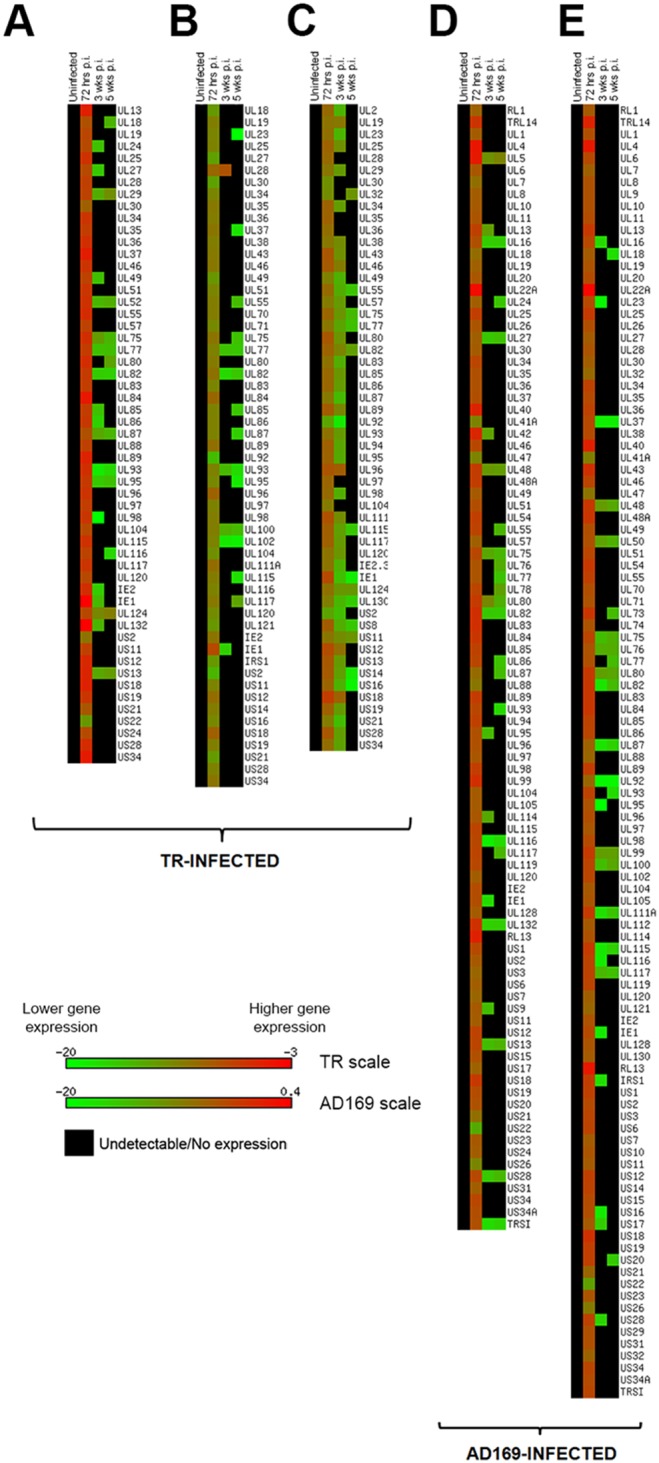
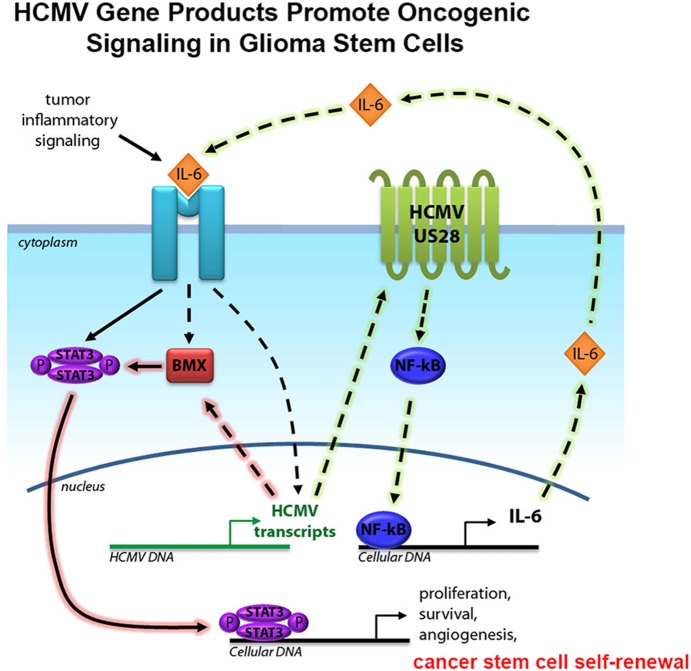
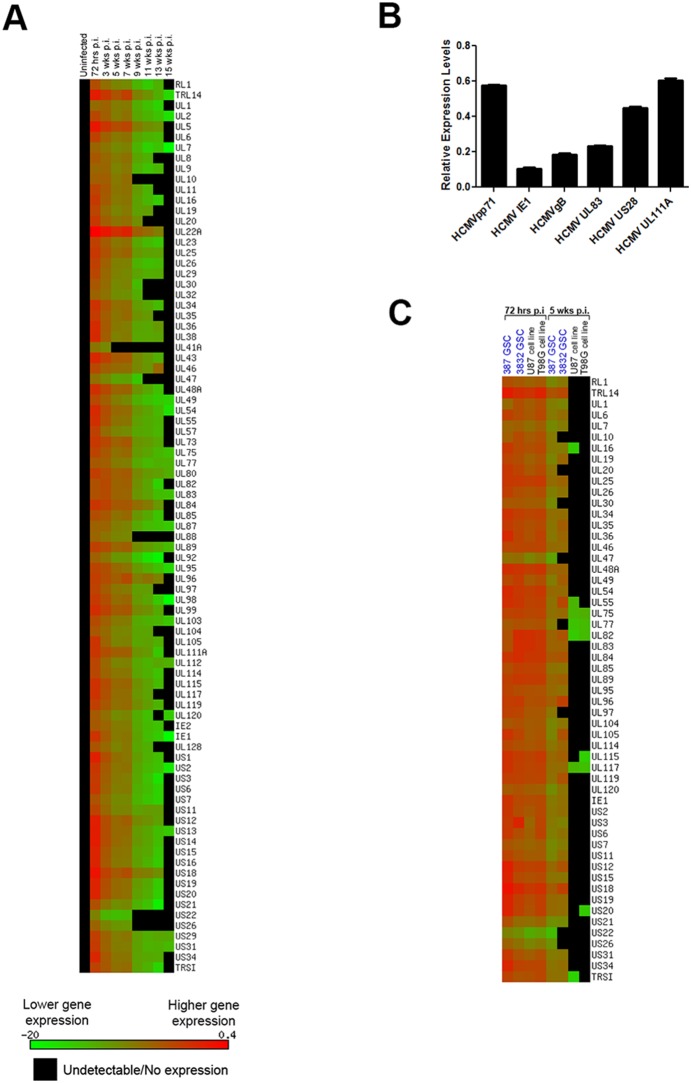
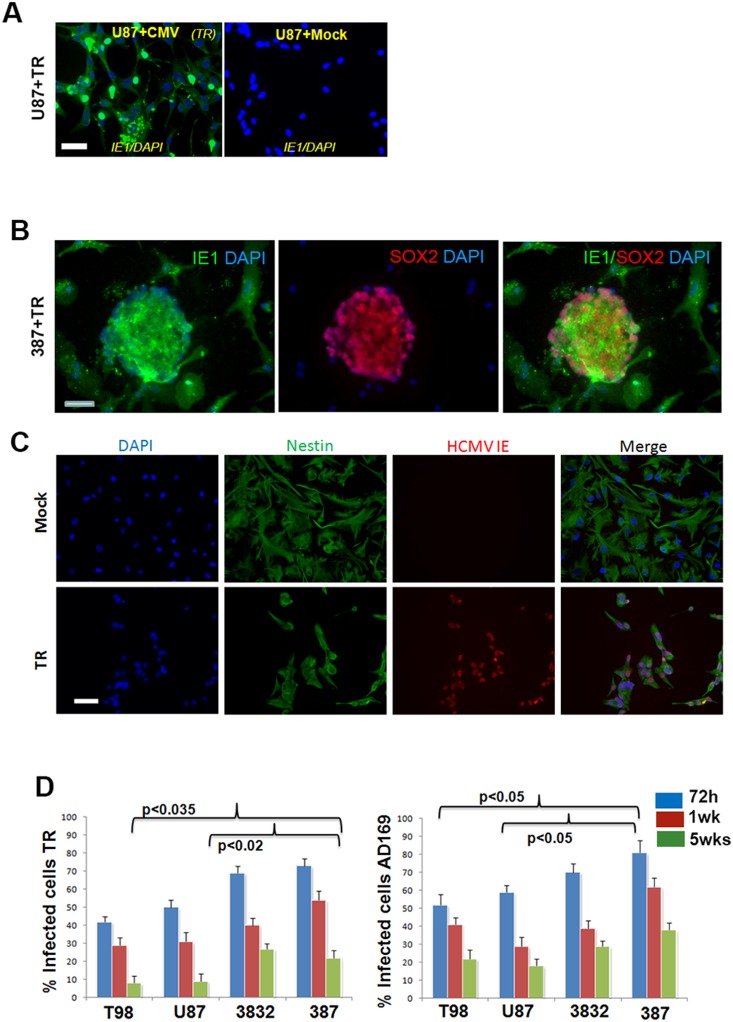
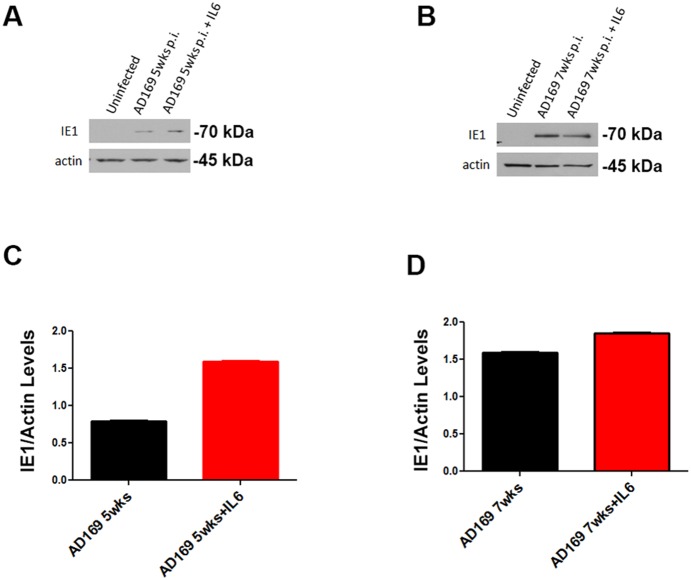
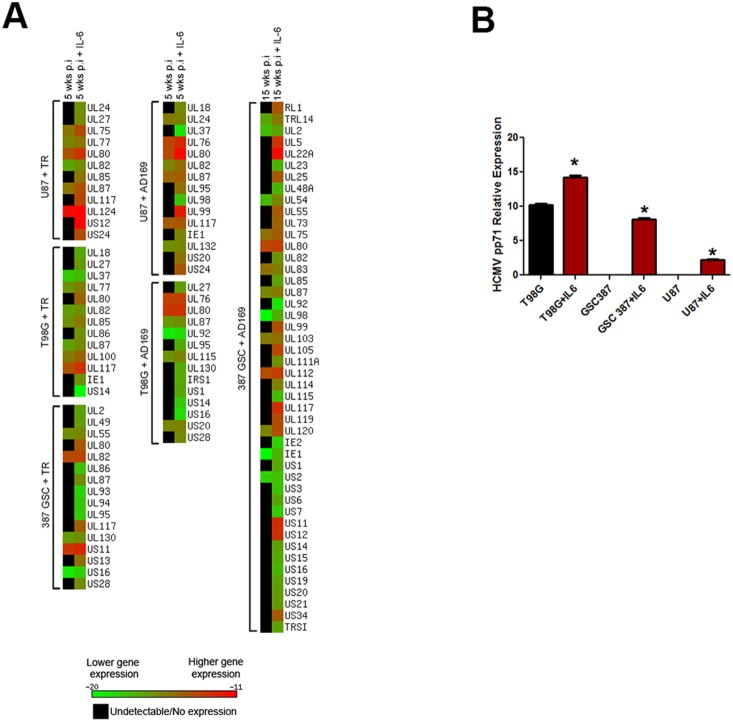
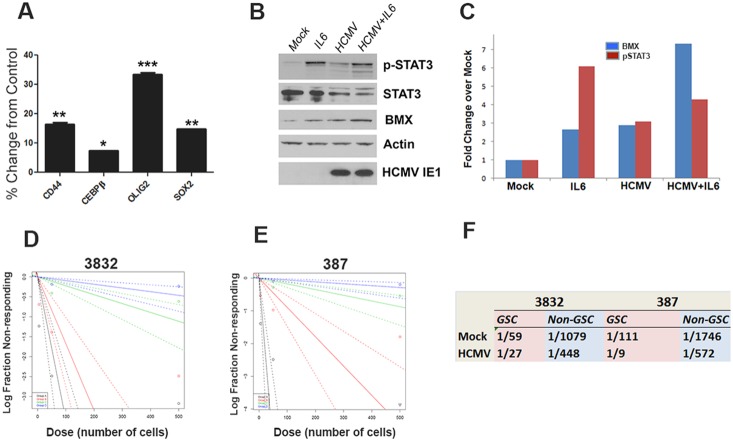
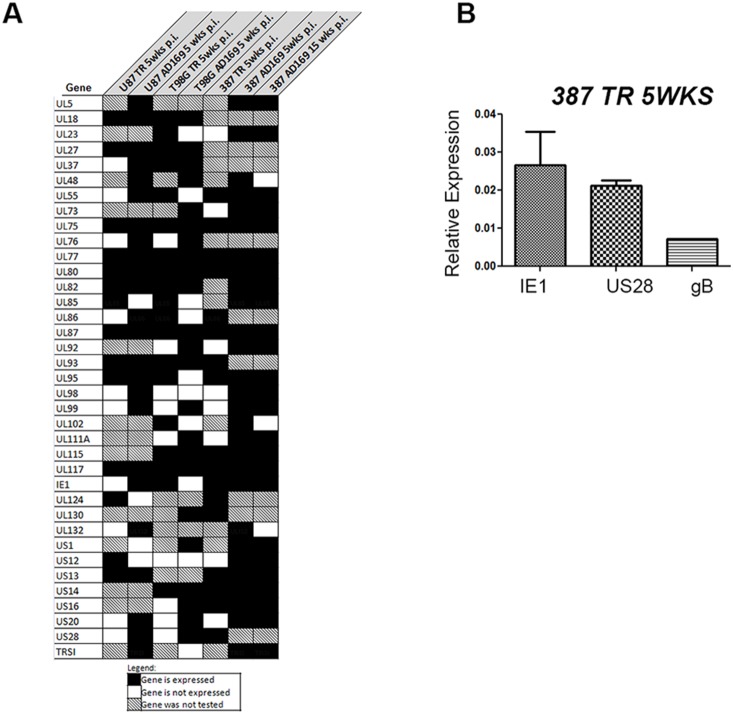
The most common adult primary brain tumor, glioblastoma (GBM), is characterized by fifteen months median patient survival and has no clear etiology. We and others have identified the presence of human cytomegalovirus (HCMV) gene products endogenously expressed in GBM tissue and primary cells, with a subset of viral genes being consistently expressed in most samples. Among these viral genes, several have important oncomodulatory properties, regulating tumor stemness, proliferation, immune evasion, invasion and angiogenesis. These findings lead us to hypothesize that a specific HCMV gene signature may be associated with GBM pathogenesis. To investigate this hypothesis, we used glioma cell lines and primary glioma stem-like cells (GSC) infected with clinical and laboratory HCMV strains and measured relative viral gene expression levels along several time points up to 15 weeks post-infection. While HCMV gene expression was detected in several infected glioma lines through week 5 post-infection, only HCMV-infected GSC expressed viral gene products 15 weeks post-infection. Efficiency of infection across time was higher in GSC compared to cell lines. Importantly, HCMV-infected GSC outlived their uninfected counterparts, and this extended survival was paralleled by increased tumorsphere frequency and upregulation of stemness regulators, such as SOX2, p-STAT3, and BMX (a novel HCMV target identified in this study). Interleukin 6 (IL-6) treatment significantly upregulated HCMV gene expression in long-term infected glioma cultures, suggesting that pro-inflammatory signaling in the tumor milieu may further augment HCMV gene expression and subsequent tumor progression driven by viral-induced cellular signaling. Together, our data support a critical role for long-term, low-level HCMV infection in promoting survival, stemness, and proliferation of GSC that could significantly contribute to GBM pathogenesis.
最常见的成人原发性脑肿瘤——胶质母细胞瘤(GBM),其特征是患者中位生存期为15个月,且病因不明。我们和其他研究人员已确定在GBM组织和原代细胞中内源性表达人巨细胞病毒(HCMV)基因产物,并且在大多数样本中,有一部分病毒基因持续表达。在这些病毒基因中,有几种具有重要的肿瘤调节特性,可调节肿瘤干性、增殖、免疫逃逸、侵袭和血管生成。这些发现使我们推测,特定的HCMV基因特征可能与GBM发病机制有关。为了验证这一假设,我们使用临床和实验室HCMV毒株感染胶质瘤细胞系和原代胶质瘤干细胞样细胞(GSC),并在感染后长达15周的多个时间点测量相对病毒基因表达水平。虽然在感染后第5周内在多个受感染的胶质瘤细胞系中检测到了HCMV基因表达,但仅在感染后15周的HCMV感染的GSC中表达了病毒基因产物。与细胞系相比,GSC随时间推移的感染效率更高。重要的是,HCMV感染的GSC比未感染的GSC存活时间更长,这种延长的生存期与肿瘤球频率增加以及干性调节因子(如SOX2、p-STAT3和BMX,本研究中鉴定的一种新型HCMV靶点)的上调相平行。白细胞介素6(IL-6)处理显著上调了长期感染胶质瘤培养物中的HCMV基因表达,这表明肿瘤微环境中的促炎信号可能进一步增强HCMV基因表达以及由病毒诱导的细胞信号驱动的后续肿瘤进展。总之,我们的数据支持长期、低水平的HCMV感染在促进GSC的存活、干性和增殖中起关键作用,这可能对GBM发病机制有显著贡献。