Li Tao, Xie Junjie, Shen Chuan, Cheng Dongfeng, Shi Yuan, Wu Zhichong, Zhan Qian, Deng Xiaxing, Chen Hao, Shen Baiyong, Peng Chenghong, Li Hongwei, Zhu Zhecheng
Department of Hepato-Bilio-Pancreatic Surgery, Shanghai Institute of Digestive Surgery, Rui Jin Hospital affiliated with Shanghai Jiaotong University, Ruijin er Road, No. 197, 200025, Shanghai, People's Republic of China.
PLoS One. 2014 Dec 30;9(12):e115577. doi: 10.1371/journal.pone.0115577. eCollection 2014.
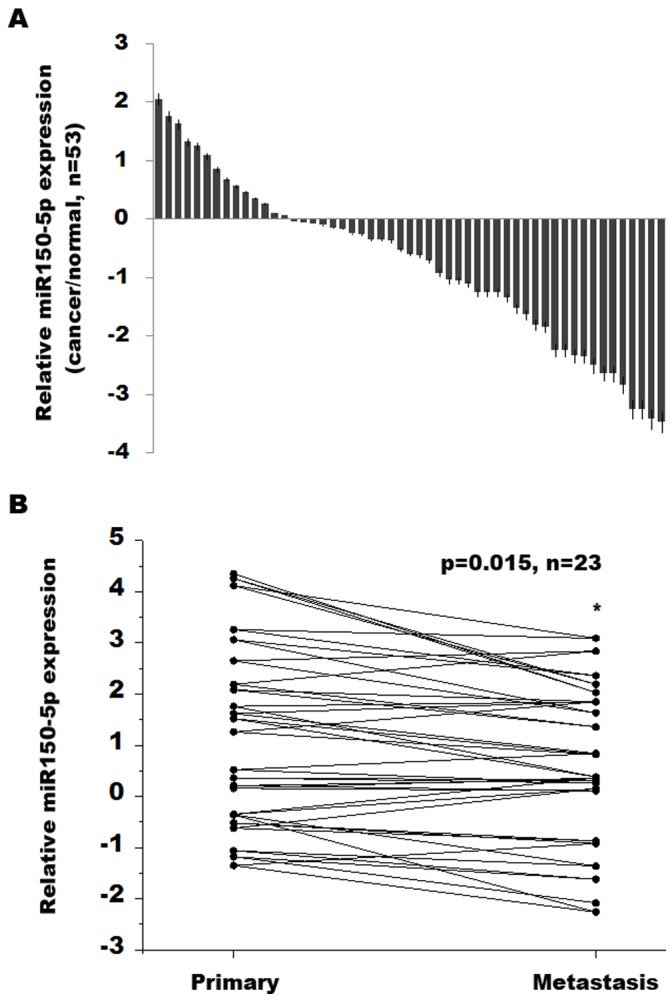
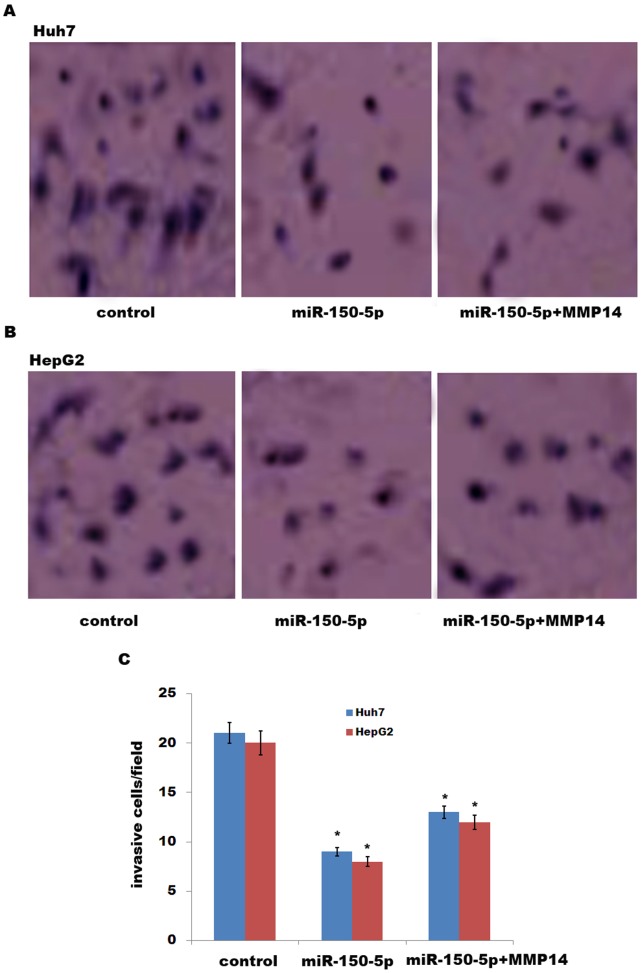
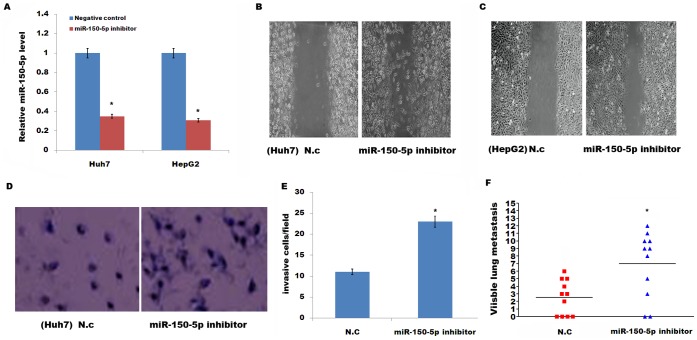
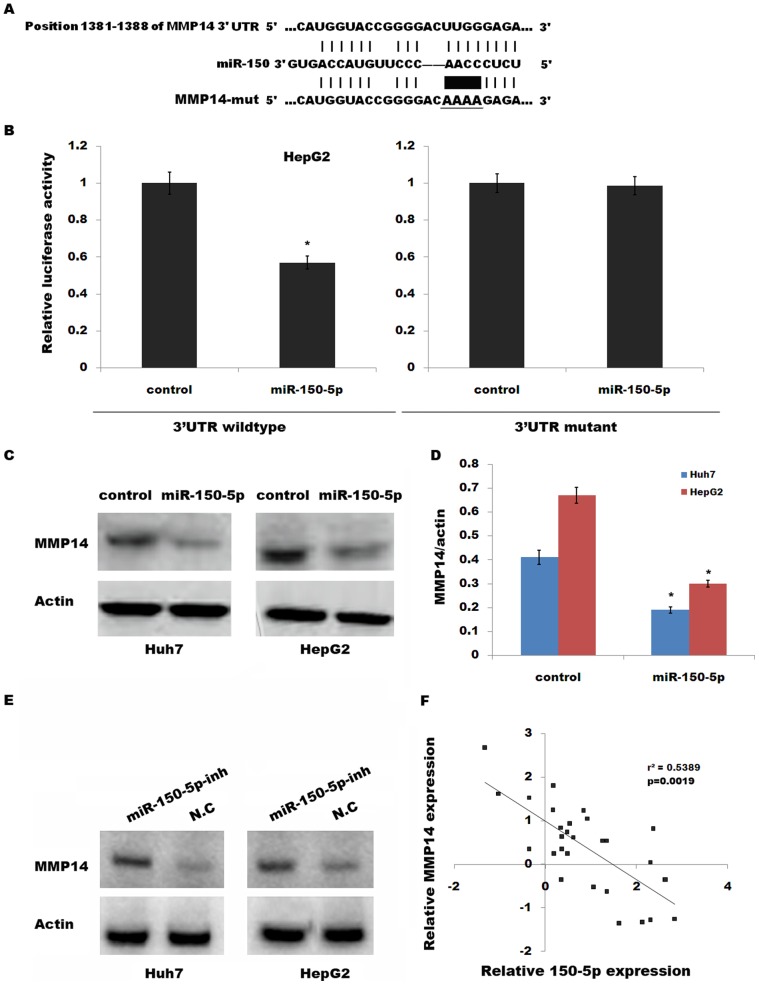
Hepatocellular carcinoma (HCC) is one of the leading causes of cancer-related mortality worldwide. Despite progress in diagnostics and treatment of HCC, its prognosis remains poor because the molecular mechanisms underlying hepatocarcinogenesis are not well understood. In the study, we focused on identifying the role of miRNAs in HCC progression. miRNA microarray was used to analyze the differentially expressed miRNAs, and the results were validated by qPCR. We found that the miR-150-5p expression is down-regulated in HCC tissues compared with pair non-tumor tissues. miR-150-5p expression is also decreased in metastatic cancer tissues compared with pair primary tissues, indicating that miR-150-5p may be involved in HCC metastasis. Functionally, miR-150-5p inhibition significantly promotes hepatoma cell migration and invasion, whereas miR-150-5p overexpression suppresses cancer cell migration and invasion in vitro. The matrix metalloproteinase 14 (MMP14) is identified as a new target gene of miR-150-5p. miR-150-5p markedly inhibits MMP14 expression in hepatoma cells, and miR-150-5p expression is negative correlation with MMP14 expression in vivo. More important, re-expression of MMP14 in hepatoma cells partially reverses the effect of miR-150-5p in inhibiting cell invasion.
肝细胞癌(HCC)是全球癌症相关死亡的主要原因之一。尽管在HCC的诊断和治疗方面取得了进展,但其预后仍然很差,因为肝癌发生的分子机制尚未完全了解。在本研究中,我们专注于确定miRNA在HCC进展中的作用。使用miRNA微阵列分析差异表达的miRNA,并通过qPCR验证结果。我们发现,与配对的非肿瘤组织相比,miR-150-5p在HCC组织中的表达下调。与配对的原发组织相比,转移性癌组织中miR-150-5p的表达也降低,这表明miR-150-5p可能参与HCC转移。在功能上,抑制miR-150-5p可显著促进肝癌细胞的迁移和侵袭,而在体外过表达miR-150-5p则可抑制癌细胞的迁移和侵袭。基质金属蛋白酶14(MMP14)被确定为miR-150-5p的一个新靶基因。miR-150-5p可显著抑制肝癌细胞中MMP14的表达,且在体内miR-150-5p的表达与MMP14的表达呈负相关。更重要的是,在肝癌细胞中重新表达MMP14可部分逆转miR-150-5p抑制细胞侵袭的作用。