Pallant Louise, Barutzki Dieter, Schaper Roland, Thompson R C Andrew
School of Veterinary and Life Sciences, Murdoch University, Murdoch, WA, 6150, Australia.
Veterinary Laboratory Freiburg, P.O. Box 100120, 79120, Freiburg i. Br, Germany.
Parasit Vectors. 2015 Jan 6;8:2. doi: 10.1186/s13071-014-0615-2.
Giardia is now considered the most common enteric parasite in well cared for dogs and cats in developed countries. The ecology, epidemiology and clinical impact of infections with this parasite in such animals is still not fully understood due to variable results across different studies.
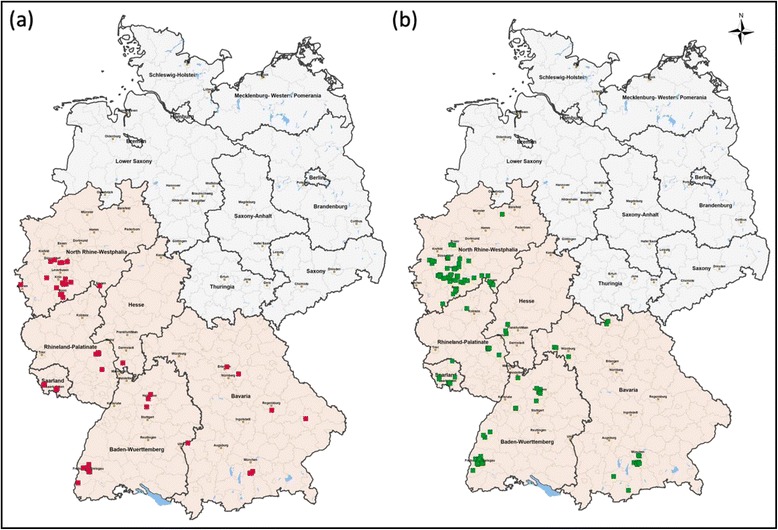
Faecal samples were collected between 2009 and 2012 from privately owned cats and dogs in Germany presented to local veterinarians for a variety of reasons. Giardia positive samples were identified by microscopy and coproantigen methods. Total faecal DNA was extracted from Giardia positive samples and multilocus genotyping methods (18S rDNA, β-giardin, GDH) were applied. Relationships between host age, sex, and breed, season of presentation and the different species of Giardia detected were assessed.
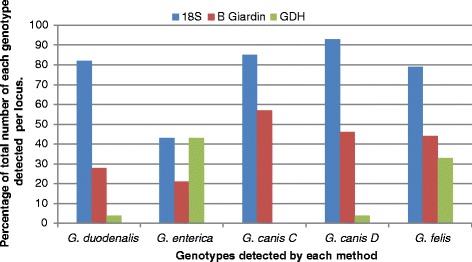
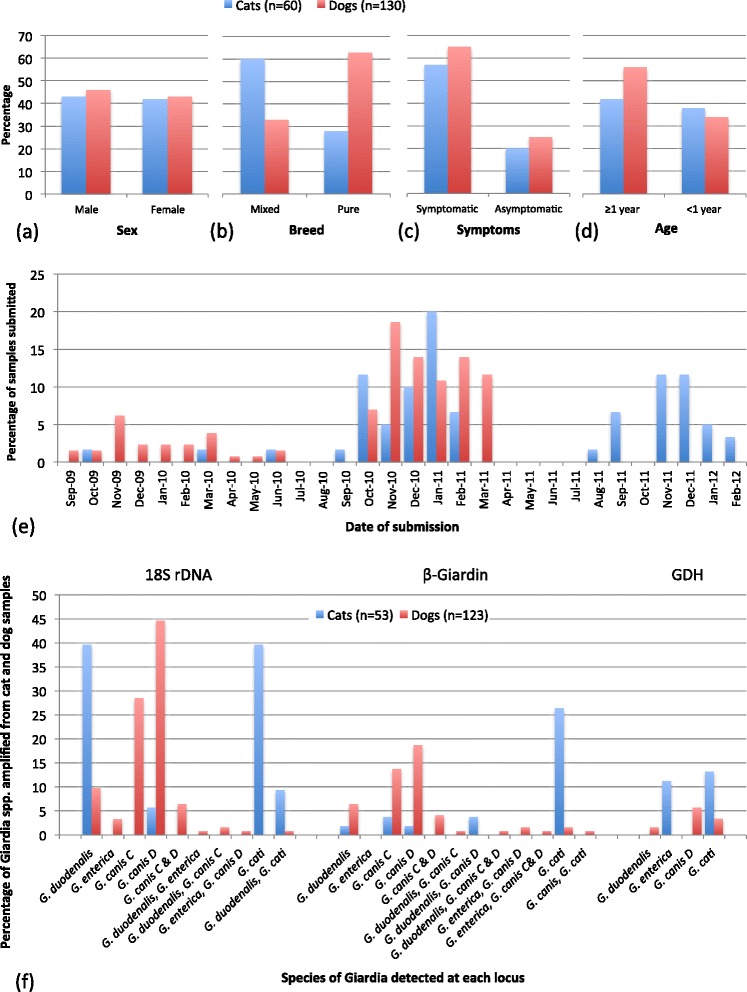
A total of 60 cat and 130 dog samples were identified as Giardia positive. Potentially zoonotic Giardia was identified in both animal species. Cats had a similarly high rate of infection with the G. duodenalis and G. cati. Cats less than 1 year were more likely to have G. duodenalis than cats older than 1 year. Pure breed cats demonstrated a greater proportion of zoonotic species than mixed breed cats. In samples from dogs, G. canis (C and D genotypes) were identified most commonly. Male dogs were more likely to have G. canis (genotype D) than female dogs. The 18S rDNA PCR protocol was the most successful followed by the β-giardin and GDH (amplifying from 92%, 42% and 13% of samples respectively).
The potentially zoonotic species G. duodenalis and G. enterica were found in cat and dog samples, with G. duodenalis found in greater numbers; however, this may be due to the detection techniques utilised. Cats appeared to show a relationship between G. duodenalis and G. cati with age and breed, which may be explained by different housing habitats for pure and mixed breed cats. The different success rates for the three loci utilised highlights the usefulness of the 18S locus as a screening tool, as well as the importance of using multiple loci for genotyping to fully determine the level of multiple infection of Giardia present.
贾第虫现在被认为是发达国家中精心照料的犬猫最常见的肠道寄生虫。由于不同研究结果存在差异,这种寄生虫在这些动物中的生态学、流行病学和临床影响仍未被完全了解。
在2009年至2012年间,从德国因各种原因前往当地兽医处就诊的私人饲养的猫和狗身上采集粪便样本。通过显微镜检查和粪便抗原方法鉴定贾第虫阳性样本。从贾第虫阳性样本中提取总粪便DNA,并应用多位点基因分型方法(18S rDNA、β-贾第虫蛋白、谷氨酸脱氢酶)。评估宿主年龄、性别、品种、就诊季节与检测到的不同贾第虫种类之间的关系。
总共60份猫样本和130份狗样本被鉴定为贾第虫阳性。在这两种动物中都鉴定出了潜在的人畜共患贾第虫。猫感染十二指肠贾第虫和猫贾第虫的比例相似。1岁以下的猫比1岁以上的猫更易感染十二指肠贾第虫。纯种猫中出现人畜共患种类的比例高于混种猫。在狗的样本中,犬贾第虫(C和D基因型)最为常见。雄性狗比雌性狗更易感染犬贾第虫(D基因型)。18S rDNA PCR方法最为成功,其次是β-贾第虫蛋白和谷氨酸脱氢酶方法(分别从92%、42%和13%的样本中扩增出结果)。
在猫和狗的样本中发现了潜在的人畜共患种类十二指肠贾第虫和肠贾第虫,其中十二指肠贾第虫数量更多;然而,这可能是由于所采用的检测技术导致的。猫似乎在十二指肠贾第虫和猫贾第虫与年龄和品种之间表现出一种关系,这可能是由于纯种猫和混种猫不同的居住环境所致。所使用的三个基因座不同的成功率突出了18S基因座作为筛查工具的有用性,以及使用多个基因座进行基因分型以全面确定存在的贾第虫多重感染水平的重要性。