Bunyakul Natinan, Baeumner Antje J
Department of Clinical Chemistry, Faculty of Medical Technology, Mahidol University, Nakhon Pathom 73170, Thailand.
Institute of Analytical Chemistry, Chemo- and Biosensors, University of Regensburg, Regensburg 93053, Germany.
Sensors (Basel). 2014 Dec 30;15(1):547-64. doi: 10.3390/s150100547.
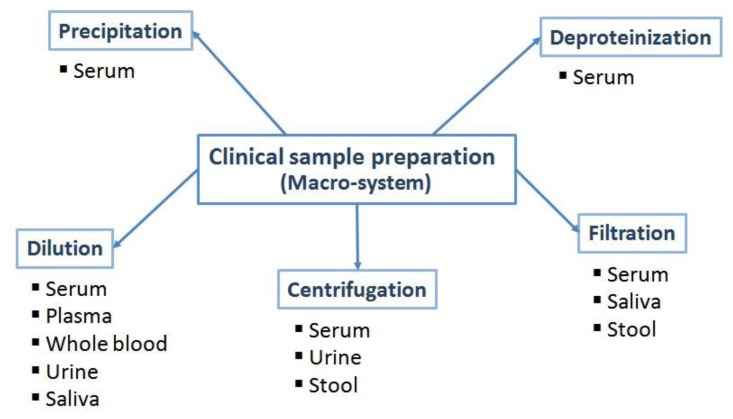
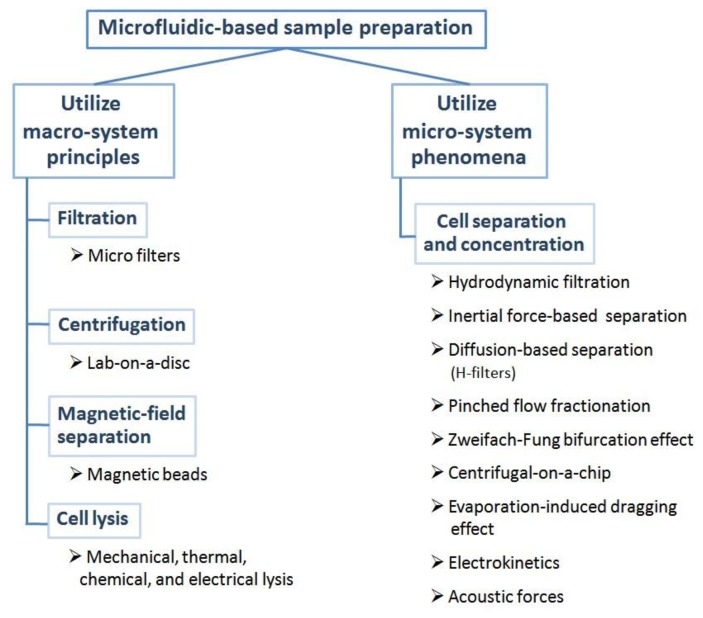
Clinical analyses benefit world-wide from rapid and reliable diagnostics tests. New tests are sought with greatest demand not only for new analytes, but also to reduce costs, complexity and lengthy analysis times of current techniques. Among the myriad of possibilities available today to develop new test systems, amperometric biosensors are prominent players-best represented by the ubiquitous amperometric-based glucose sensors. Electrochemical approaches in general require little and often enough only simple hardware components, are rugged and yet provide low limits of detection. They thus offer many of the desirable attributes for point-of-care/point-of-need tests. This review focuses on investigating the important integration of sample preparation with (primarily electrochemical) biosensors. Sample clean up requirements, miniaturized sample preparation strategies, and their potential integration with sensors will be discussed, focusing on clinical sample analyses.
临床分析受益于快速可靠的诊断测试,这在全球范围内都是如此。人们一直在寻求新的测试方法,其需求不仅在于新的分析物,还在于降低当前技术的成本、复杂性和冗长的分析时间。在当今开发新测试系统的众多可能性中,安培生物传感器是突出的参与者——基于安培法的葡萄糖传感器无处不在,是其最佳代表。一般来说,电化学方法所需甚少,通常只需要简单的硬件组件,坚固耐用且检测限低。因此,它们具有许多即时检测/即时需求测试所需的特性。本综述重点研究样品制备与(主要是电化学)生物传感器的重要整合。将讨论样品净化要求、小型化样品制备策略及其与传感器的潜在整合,重点是临床样品分析。