Glasgow Nicholas J, Bonning Michael, Mitchell Rob
BMC Med Educ. 2014;14 Suppl 1(Suppl 1):S13. doi: 10.1186/1472-6920-14-S1-S13. Epub 2014 Dec 11.
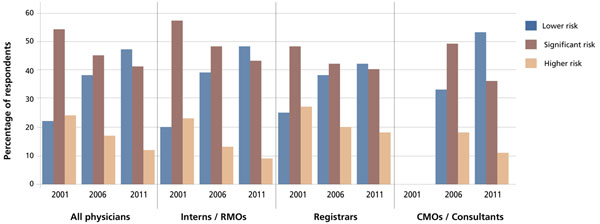
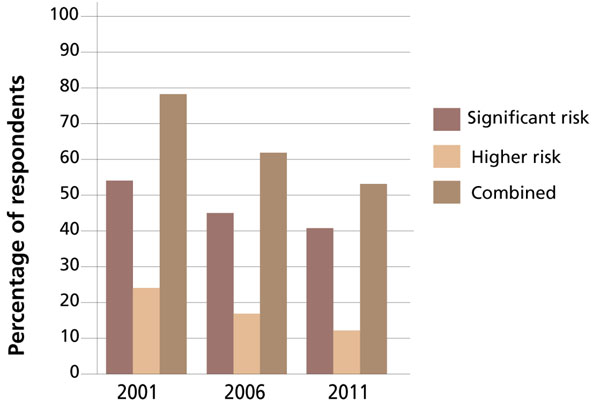
The working hours of junior doctors have been a focus of discussion in Australia since the mid-1990s. Several national organizations, including the Australian Medical Association (AMA), have been prominent in advancing this agenda and have collected data (most of which is self-reported) on the working hours of junior doctors over the last 15 years. Overall, the available data indicate that working hours have fallen in a step-wise fashion, and AMA data suggest that the proportion of doctors at high risk of fatigue may be declining. It is likely that these changes reflect significant growth in the number of medical graduates, more detailed specifications regarding working hours in industrial agreements, and a greater focus on achieving a healthy work-life balance. It is notable that reductions in junior doctors' working hours have occurred despite the absence of a national regulatory framework for working hours. Informed by a growing international literature on working hours and their relation to patient and practitioner safety, accreditation bodies such as the Australian Commission on Safety and Quality in Health Care (ACSQHC) and the Australian Medical Council (AMC) are adjusting their standards to encourage improved work and training practices.
自20世纪90年代中期以来,澳大利亚初级医生的工作时长一直是讨论的焦点。包括澳大利亚医学协会(AMA)在内的几个全国性组织在推进这一议程方面发挥了重要作用,并在过去15年里收集了有关初级医生工作时长的数据(其中大部分是自我报告的数据)。总体而言,现有数据表明工作时长呈逐步下降趋势,AMA的数据显示,面临高疲劳风险的医生比例可能在下降。这些变化可能反映了医学毕业生数量的显著增长、行业协议中关于工作时长的更详细规定,以及对实现健康工作与生活平衡的更多关注。值得注意的是,尽管缺乏全国性的工作时长监管框架,但初级医生的工作时长仍有所减少。受关于工作时长及其与患者和从业者安全关系的国际文献不断增加的影响,澳大利亚医疗保健安全与质量委员会(ACSQHC)和澳大利亚医学委员会(AMC)等认证机构正在调整其标准,以鼓励改进工作和培训做法。